

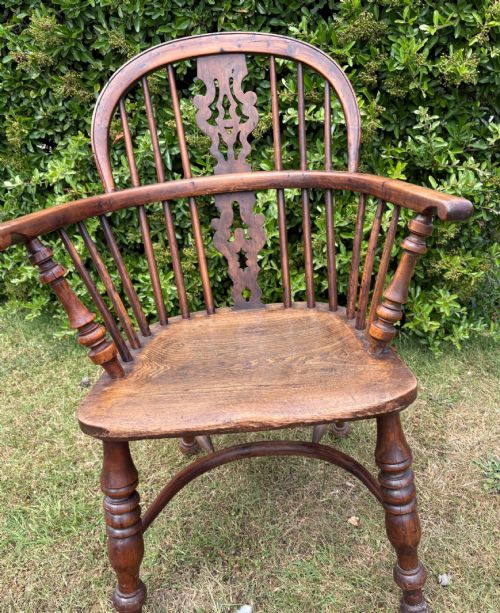
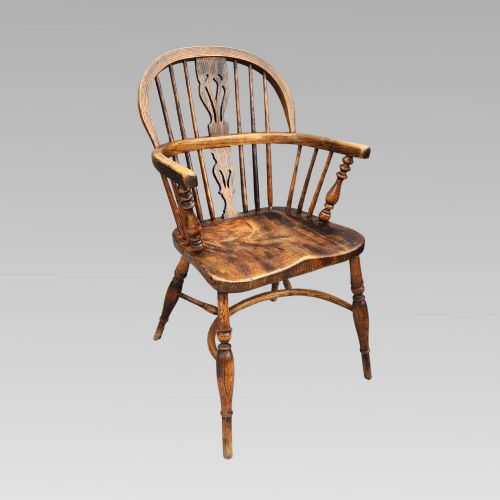
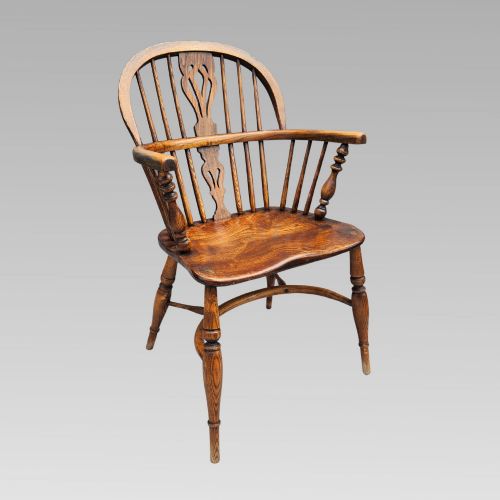
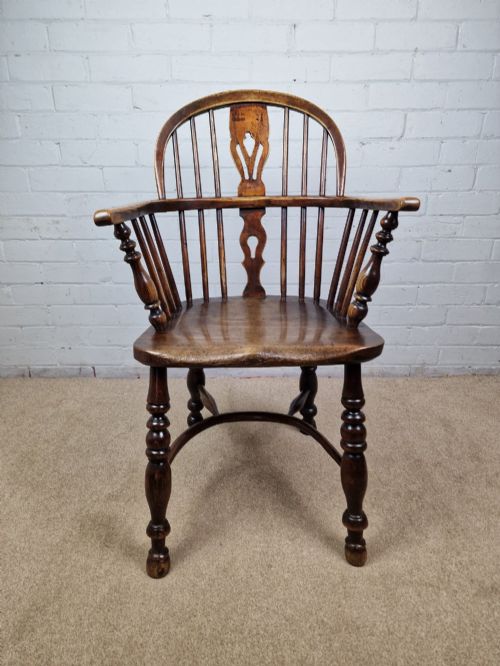
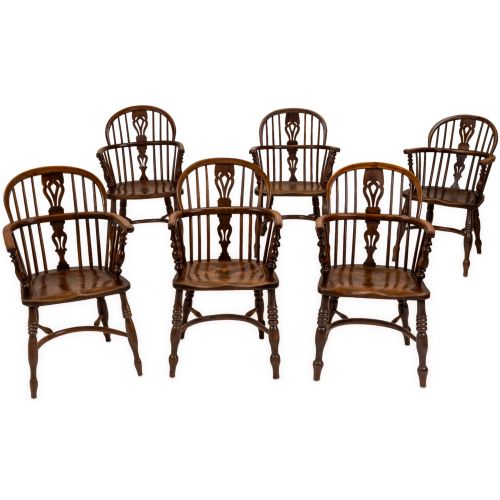

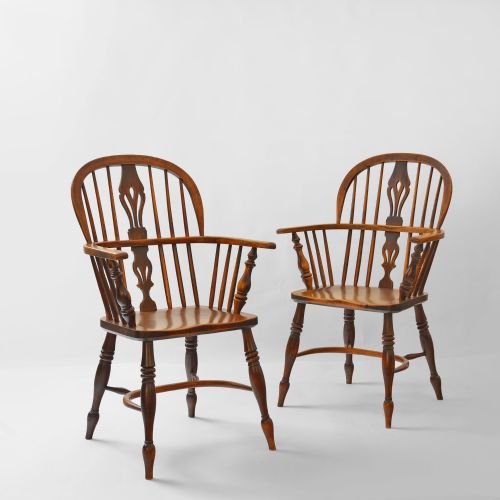


Crinoline Stretcher Armchair
A crinoline stretcher armchair is a traditional wooden seating form prized for its distinctive curved undercarriage and regional vernacular charm.
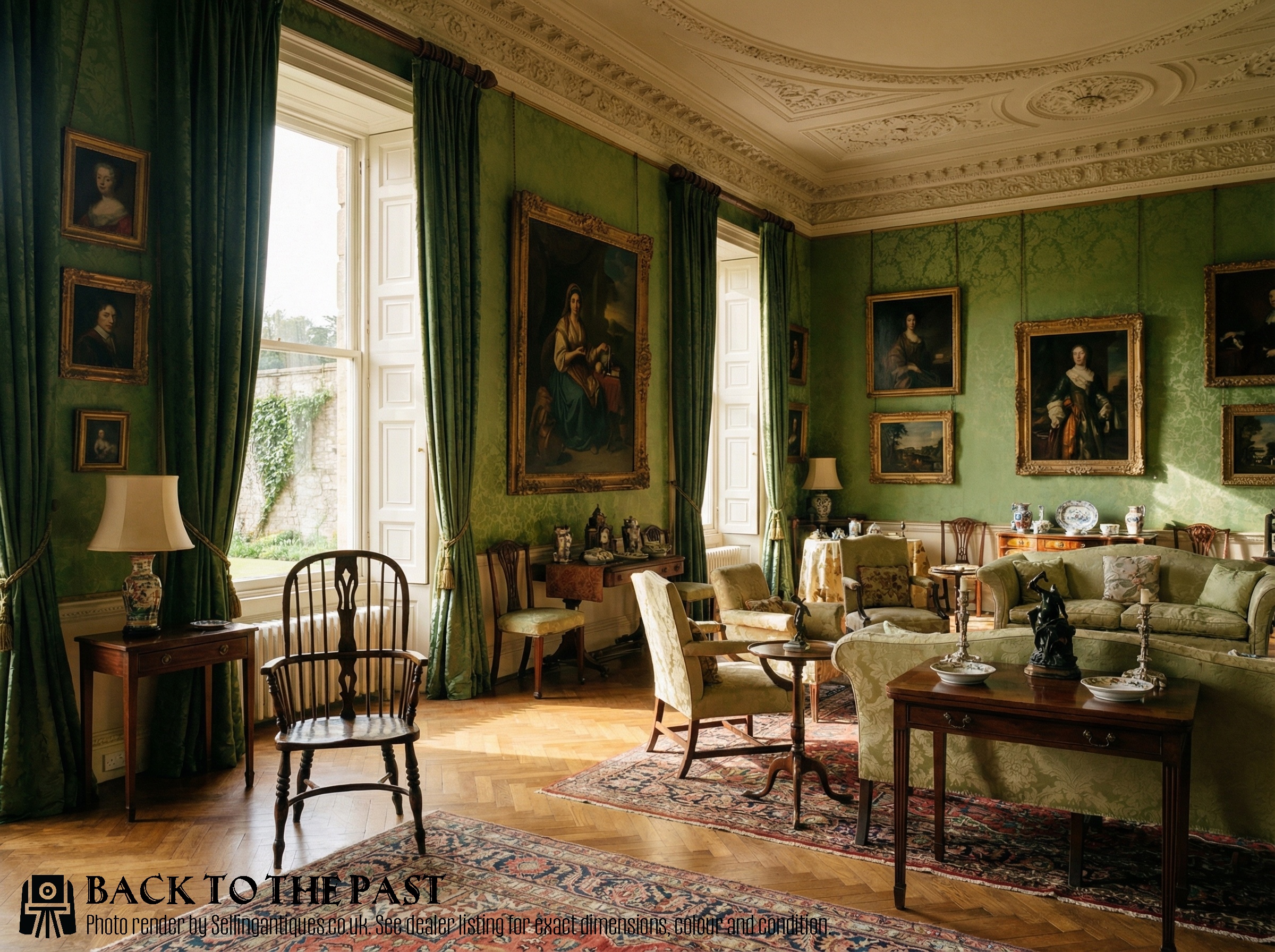
Crinoline Stretcher Armchair
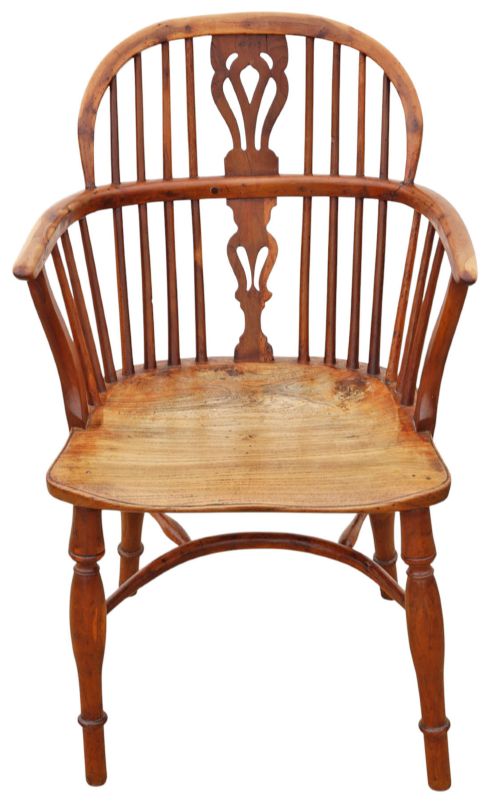
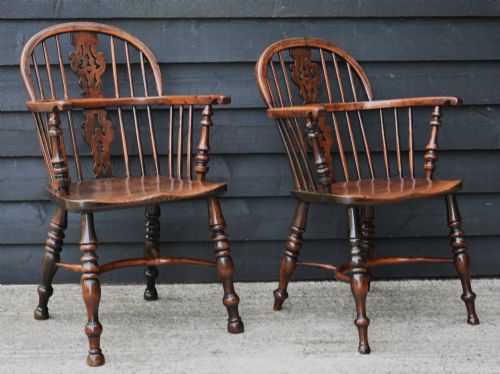
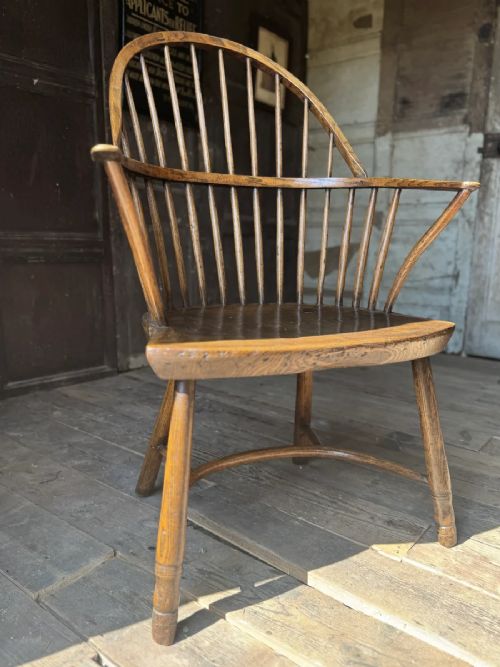
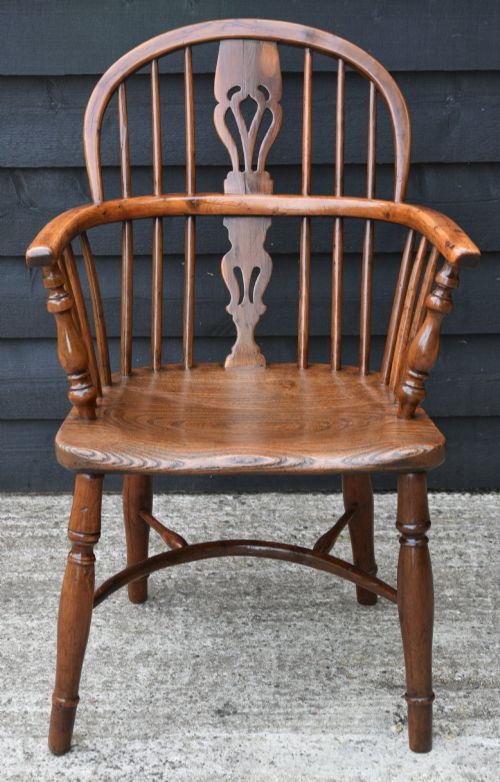
When someone searches for a crinoline stretcher armchair, they are looking for a Windsor chair defined by a curved hoop stretcher that connects the legs and provides structural stability. The versions most commonly met on this page span the Georgian and Victorian periods, often originating from English country workshops.
These seating pieces typically take the form of low back or high back armchairs, sometimes referred to as carvers or elbow-chairs. Examples range from single library seats to matched pairs and larger sets intended for dining tables.
Regional variations appear frequently, including West Country and Nottinghamshire pieces alongside works from specific makers based in Worksop. The form combines robust vernacular construction with distinctive timber combinations suited to domestic interiors.
How they were made
Maker-craftsmen built these chairs using a combination of solid timbers, pairing figured yew wood or elm for seats and backs with ash, beech, or oak for spindles and legs. The curved crinoline stretcher was steam-bent or shaped to tie the legs together securely beneath the saddle-shaped seat.
Traditional bodging techniques involved turning components on pole lathes in woodland settings before assembly. Seats were deeply sculpted from a single solid block of elm, while spindles and back splats were mortised and tenoned directly into the heavy wooden base.
Listings feature elm, yew, ash, beech, and oak across 18th, 19th, and 20th-century periods.
What varies in quality
Quality in these chairs rests upon the selection and figuring of the timber, particularly the rich grain visible in yew wood seats and burr back splats. Superior examples display balanced proportions, graceful comb or low back sweeps, and crisp turning on the legs and stretchers.
The integrity of the original construction and the survival of matching sets or documented regional makers elevate certain pieces above standard vernacular seating. Greater refinement in the shaping of the arm bows and the depth of the saddle seat distinguishes the finest work.
Gabbitass Worksop·Rockley·Allsop Worksop·Fred Walker
The Crinoline Stretcher Armchair Glossary
- Crinoline stretcher
- A curved wooden brace connecting the legs of a Windsor chair in a semicircular loop. This design echoes the shape of mid-19th-century crinoline petticoats while adding rigidity to the undercarriage.
- Windsor chair
- A wooden seating form featuring a solid sculpted seat into which the legs and back sticks are wedged directly. These chairs developed strong regional styles across English rural workshops.
- Carver
- An armchair designed to match a set of single dining chairs, typically featuring wider arms. They were often placed at the heads of a table.
- Spindle back
- A chair back constructed from a series of vertical turned wooden rods. These slender members support the user while keeping the upper frame light.
- Vernacular
- Everyday utilitarian furniture built by local craftsmen using regional traditions and readily available native timbers. Such pieces reflect the specific materials of their geographic origin.
Crinoline Stretcher Armchair: Frequently Asked Questions
What is a crinoline stretcher armchair?
A crinoline stretcher armchair is a traditional Windsor chair featuring a characteristic curved wooden brace linking the legs beneath the seat.
This structural hoop provides extra stability while creating the distinct silhouette collectors look for in English country seating.
How can I tell the age of these chairs?
Dating relies on examining the timber species, construction wear, tool marks, and overall regional style conventions.
Georgian examples often display different turning details and timber patination compared to later Victorian vernacular pieces.
Where were these chairs made?
These chairs originated in rural English workshops, with notable production centres in the West Country and Nottinghamshire.
Local craftsmen utilised native woods such as yew, elm, ash, and beech available in their surrounding woodlands.
How do I live with a Windsor chair?
Windsor chairs suit various interior settings, functioning well as desk seats, fireside chairs, or paired around a dining table.
Keep them away from direct heat sources and sudden humidity changes to protect the joined solid timbers.