


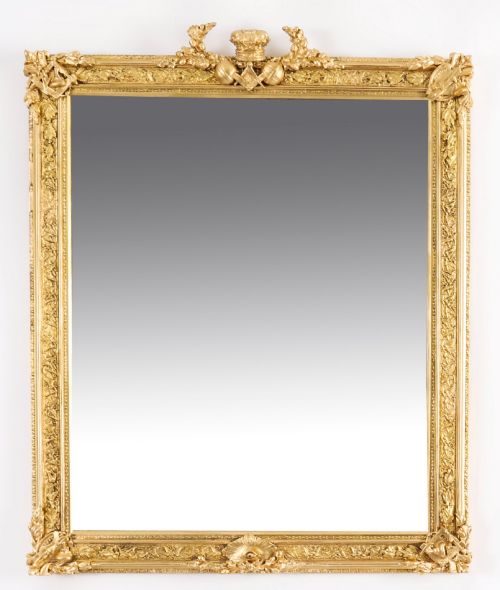
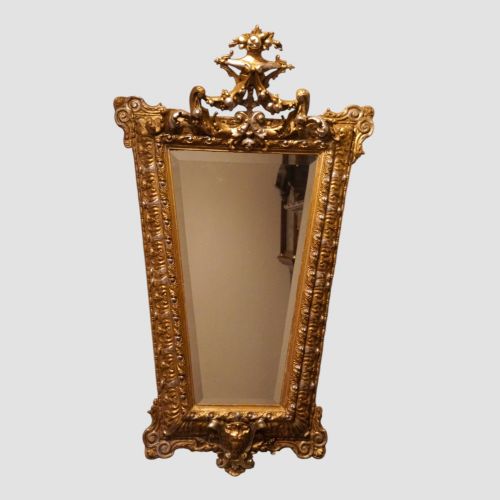
Crest Carved Giltwood Mirror
A crest carved giltwood mirror brings warmth and reflective depth to a room through traditional gilded surfaces and sculpted wooden crests.
Crest Carved Giltwood Mirror
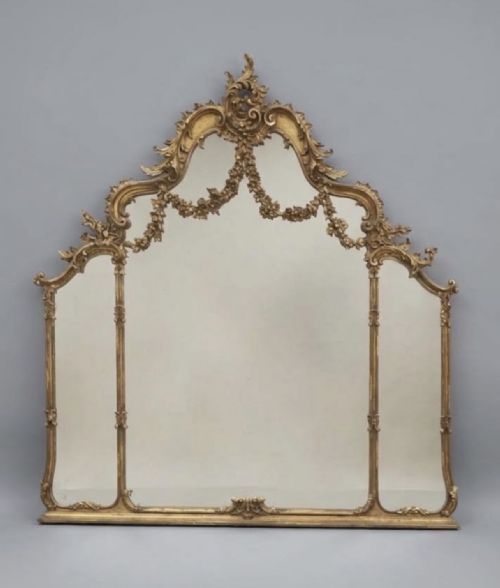
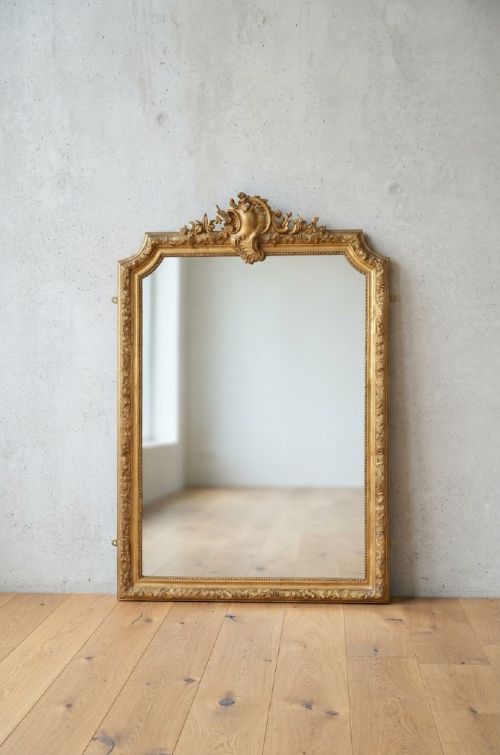
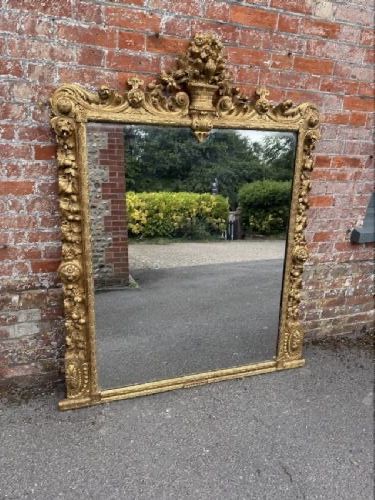
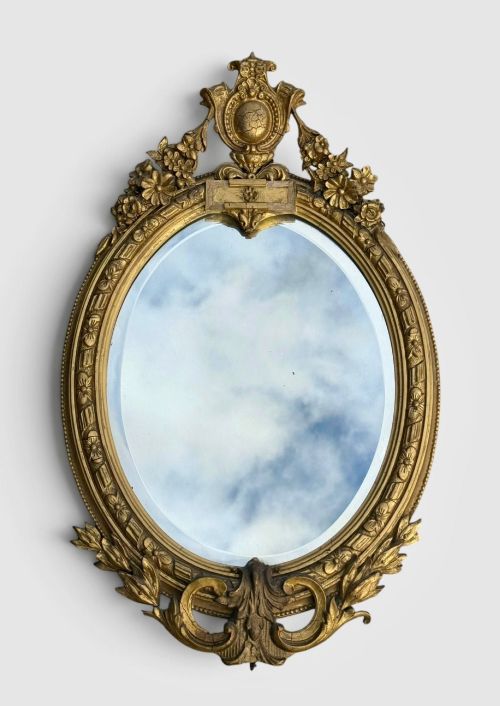
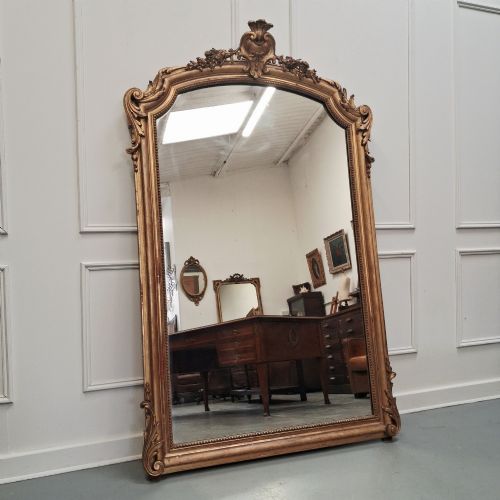
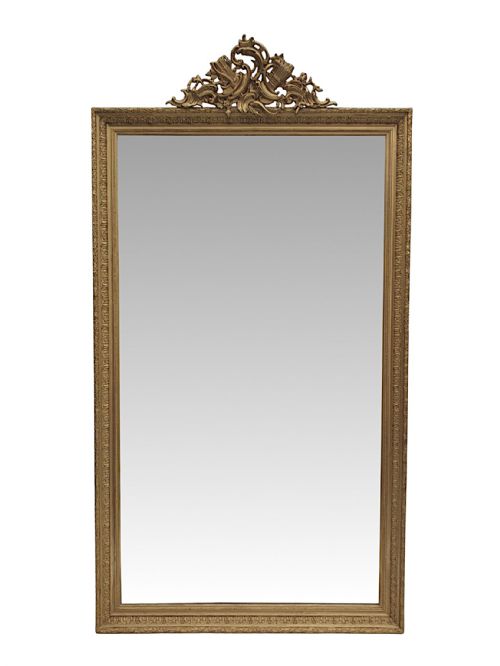
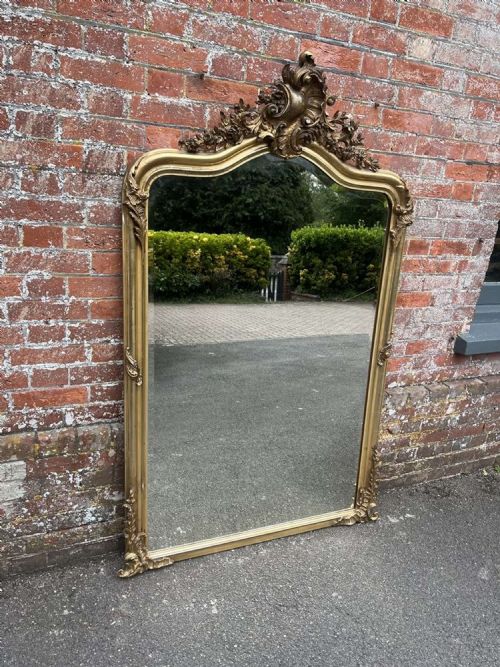
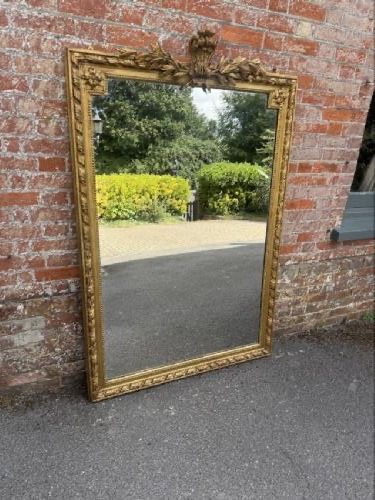
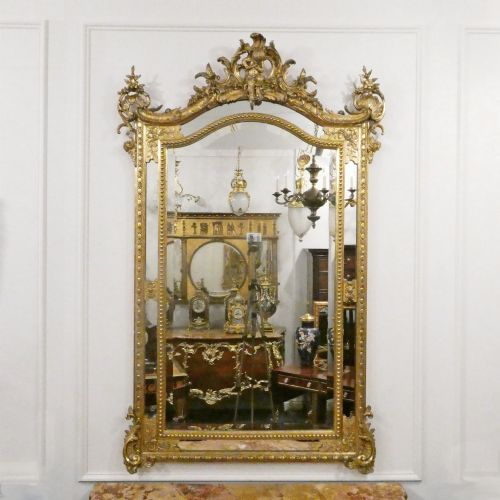
A crest carved giltwood mirror forms a commanding focal point in an interior, drawing the eye upwards to an ornate wooden surmount. These pieces range from compact convex glasses to large overmantels designed for grand chimneys.
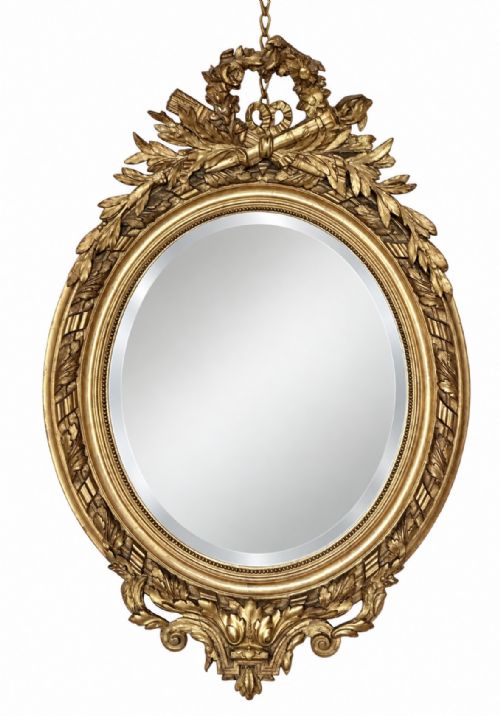
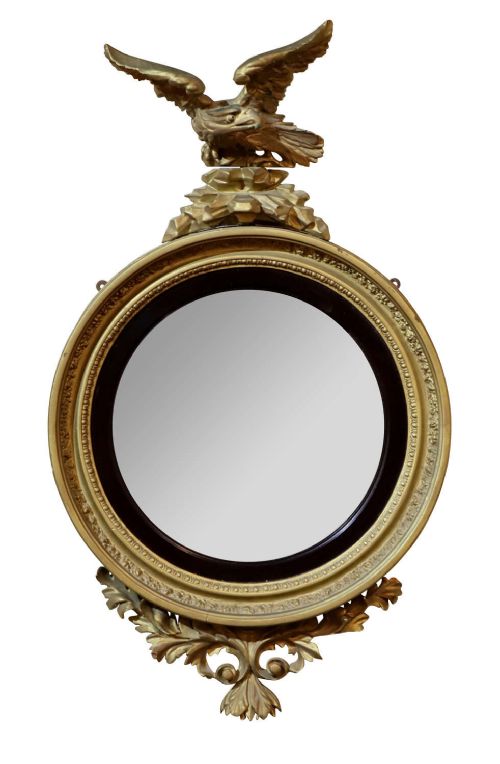
The selection here draws primarily on nineteenth-century French and English designs, alongside eighteenth-century Italian and Georgian examples. Forms include circular convex glasses with eagle crests, tall pier mirrors, and shaped top overmantels.
Buyers encounter regional variations such as French Louis XVI and Rococo revival styles, alongside Regency convex forms and Victorian gesso work. Each type reflects the decorative priorities of its period.
Materials and Construction
Carved wooden foundations, often executed in softwoods or hardwoods, provide the structural core for applied gesso layers. Artisans sculpted intricate crests and decorative motifs directly into this plaster and chalk preparation before gilding.
Gilding techniques involve the application of thin gold leaf or silver-gilt over bole, creating a luminous surface that catches the light. Many examples incorporate original mirror glass, occasionally retaining mercury plates or early bevelled edges.
The inventory spans the eighteenth, nineteenth, and early twentieth centuries, featuring French, English, and Italian origins.
Distinctions in Quality
The crispness of the carved woodwork and the depth of the gesso ornamentation define the visual merit of a piece. Superior examples display sharply defined motifs and balanced proportions within their crests.
The integrity of the original gilded surface and the preservation of the mirror plate distinguish finer survivals. Patination acquired through age adds depth to the metallic finish without obscuring the underlying craftsmanship.
The Crest Carved Giltwood Mirror Glossary
- Giltwood
- Wood coated with gold leaf or metal powder. This finish gives the frame its characteristic metallic glow.
- Gesso
- A plaster mix applied to wood frames to create a smooth surface for carving and gilding. It allows for intricate relief details.
- Convex mirror
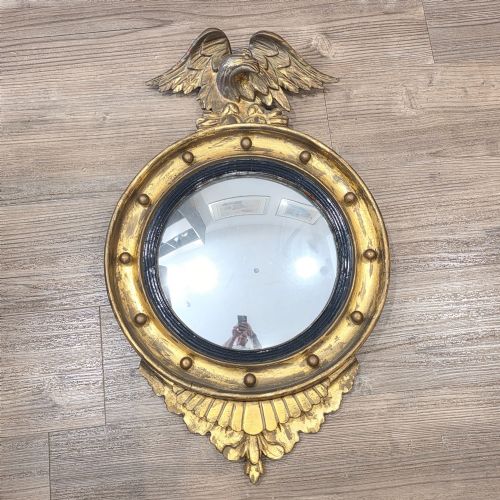
- A round mirror with a curved glass plate that provides a wide-angle reflection of the room. These frequently feature eagle crests.
- Overmantel mirror
- A large horizontal mirror designed to sit above a fireplace mantel. They often feature shaped or arched tops.
- Pier mirror
- A tall, narrow mirror designed to hang on the wall space between windows. They frequently incorporate painted or carved details.
Crest Carved Giltwood Mirror: Frequently Asked Questions
Where should I hang a giltwood overmantel mirror?
Position the mirror centrally above a fireplace mantel to reflect light and anchor the room's main living space.
Ensure the wall fixings match the substantial weight of the carved wooden and gesso frame.
How do I identify a Regency convex mirror?
Look for a circular frame enclosing a curved glass plate, frequently surmounted by a carved bird or eagle.
These pieces often include reeded ebonised inner rings and ball-decorated bezels typical of the early nineteenth century.
What is the difference between gesso and carved wood?
Carved wood forms the structural base of the frame, shaped directly with chisels and gouges by the artisan.
Gesso is a plaster mixture applied over the wood to build up fine surface details and relief ornamentation before gilding.
How do I care for antique giltwood surfaces?
Dust the frame gently with a soft, dry brush to prevent the accumulation of particles without disturbing the delicate gold leaf.
Avoid liquid cleaners and moisture, which can damage the underlying gesso and historical metallic finish.