

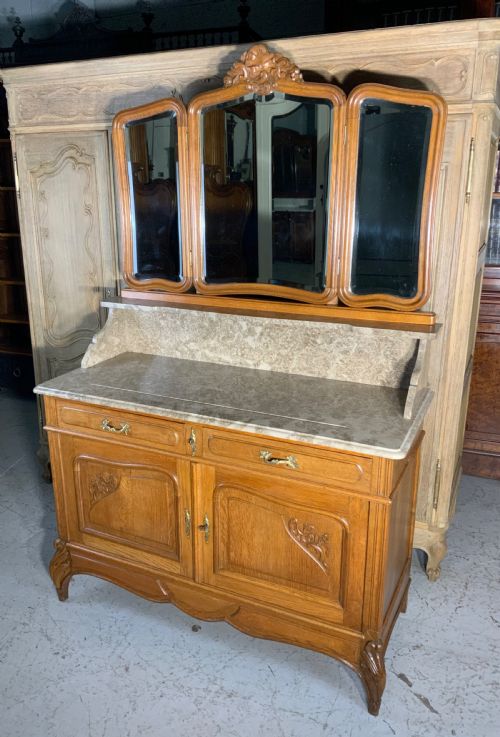
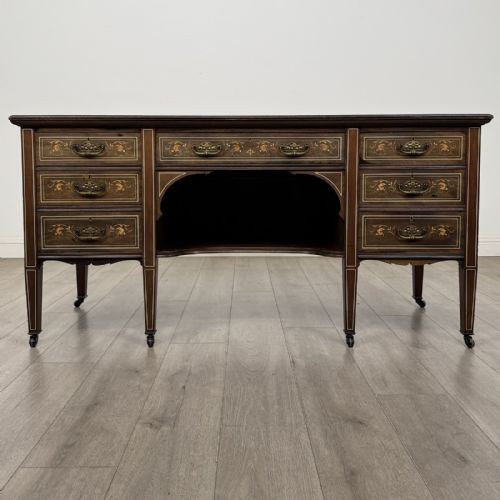
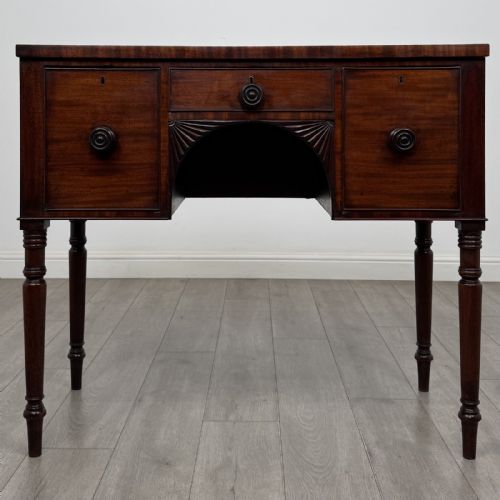
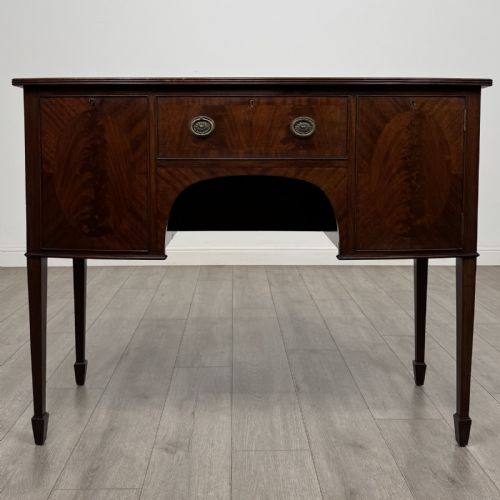



Credenza Desk
A credenza desk bridges formal display and practical writing space, offering fitted drawers and cabinets crafted in rich timbers like mahogany and satinwood.
Credenza Desk
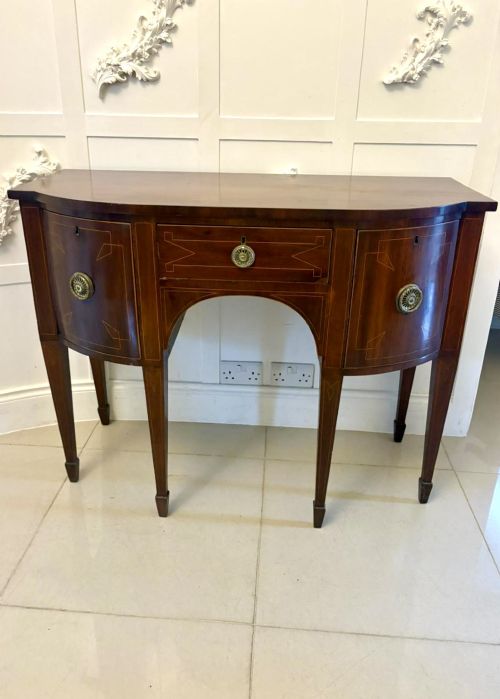
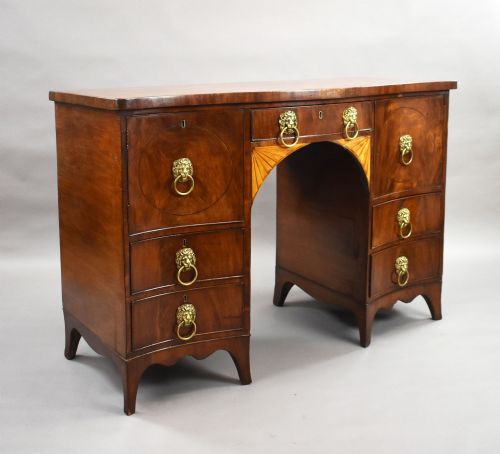
When searching for a credenza desk, buyers encounter a mix of 18th century, Regency, Georgian, and Victorian forms that combine storage with writing surfaces. The pieces on this page span sideboards, chiffoniers, and kneehole desks originating from Georgian, Regency, Victorian, and Edwardian periods.
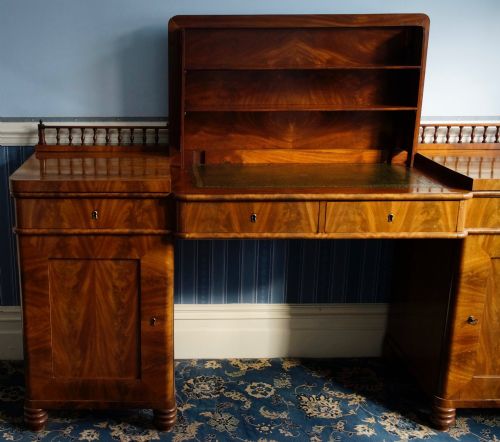
Most entries follow traditional sideboard and chiffonier designs featuring integrated writing drawers or secretaire compartments. These pieces merge the low profile of a server with functional writing spaces seen in cabinets and kneehole desks.
Examples range from George III mahogany bow fronts to rosewood chiffoniers with tiered shelves and writing drawers. The selection heavily represents British cabinet-making traditions alongside Anglo-Indian padouk pieces and French Empire console tables.
Materials and construction
Cabinet makers utilised dense hardwoods such as mahogany, walnut, rosewood, and padouk for the primary structures. These durable timbers provided stable carcases for complex bow-fronted and serpentine shapes.
Detailing relied on contrasting veneers and stringing using boxwood, satinwood, and ebony. Hardware typically involved cast brass for handles, galleries, and key escutcheons, complemented by inset leather writing surfaces.
Credenza Desk Retail Price Guide 2026
Typical asking prices for credenza desk among the pieces listed under this phrase on Sellingantiques today, from the lower quarter to the upper quarter. They describe what is for sale here now, not the wider market.
Listings feature woods including mahogany, rosewood, walnut, satinwood, padouk, boxwood, ebony, and pine alongside brass and leather.
Assessing craftsmanship and execution
Quality rests in the precision of the timber selection, such as figured mahogany or burr walnut matched symmetrically across drawer fronts. Finer examples display meticulous boxwood stringing and delicate inlay work rather than painted substitutes.
Structural integrity appears in the seamless integration of writing drawers within sideboard frames and the crisp execution of carved details like pedestal bases and brass galleries.
John McClean·Gillows
The Credenza Desk Glossary
- Secretaire
- A cabinet or desk featuring a drop-down writing flap that conceals smaller drawers and pigeonholes. This form allows a sideboard or chiffonier to function as a writing desk.
- Chiffonier
- A small sideboard or low cabinet, often fitted with a shelf-back or tiered superstructure. Regency versions frequently incorporate writing drawers into this compact footprint.
- Stringing
- A narrow inlay of contrasting wood used to outline drawer fronts and panels. Boxwood and ebony are common choices for this linear decoration on mahogany furniture.
- Bow front
- A convex curved cabinet front that swells outward in the centre. This shape requires advanced woodworking skill to bend and fit solid timbers and veneers.
- Pedestal base
- A heavy supporting structure at either end of a sideboard or desk, often enclosing cupboards. In larger pieces, these pedestals provide substantial internal storage.
Credenza Desk: Frequently Asked Questions
What is a credenza desk?
A credenza desk is a hybrid form that combines the low cabinetry of a sideboard or chiffonier with integrated writing drawers or secretaire compartments.
These pieces provide concealed workspace while maintaining the formal appearance of dining room furniture.
How do I date a credenza desk?
Dating relies on identifying period characteristics in the timber, hardware, and structural silhouette. Georgian and Regency pieces feature architectural lines and stringing, whereas Victorian examples tend to be heavier with oak or burr walnut.
Secondary woods, brass gallery designs, and inlay styles further narrow down the decade of manufacture.
Where were these pieces used?
Historically, these hybrid furniture forms stood in principal reception rooms, libraries, and dining parlours where formal hosting met administrative tasks.
Today, they function effectively in modern home offices or living spaces as statement storage units with writing utility.
How do I care for antique timber?
Maintenance involves keeping wooden surfaces away from direct sunlight and maintaining stable room humidity to prevent veneer cracking. Regular dusting with a dry cloth preserves the polished patina of mahogany, rosewood, and walnut.
Leather writing inserts benefit from occasional specialist conditioning to keep the material supple.