
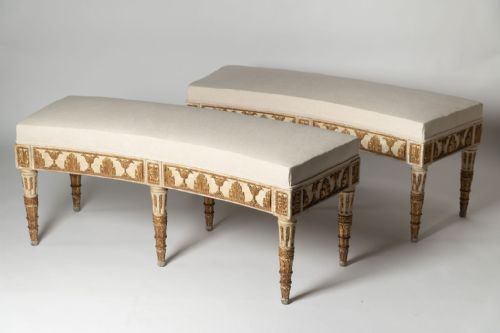
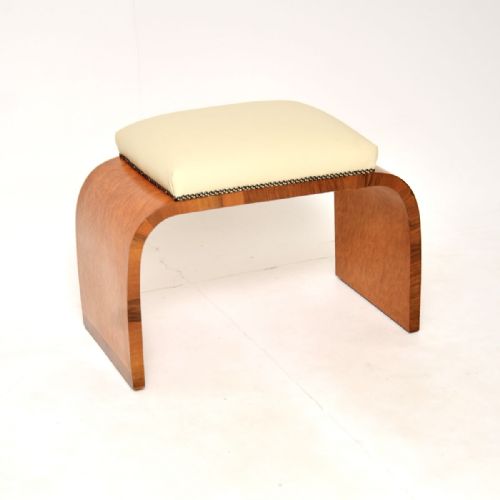
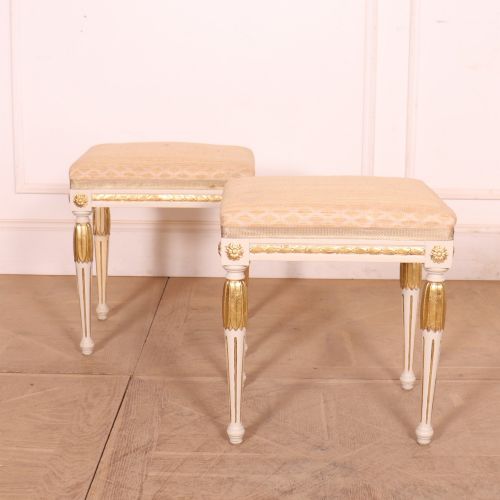


Cream Upholstered Ottoman Bench
A cream upholstered ottoman bench brings period seating and low-profile comfort to a room, drawing on centuries of craftsmanship.
Cream Upholstered Ottoman Bench
A cream upholstered ottoman bench sits within a lineage of footstools, dressing stools, and window seats recorded across the nineteenth and twentieth centuries. These forms serve functional roles at the foot of a bed or beneath a window, combining a padded top with a supportive wooden frame.
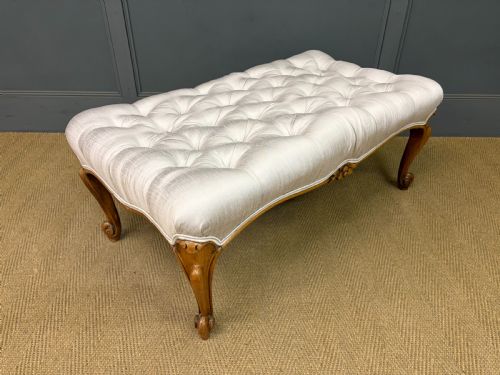
The materials and styles span Victorian rosewood and mahogany frames, Art Deco burr walnut, and painted Continental designs. Buyers encounter everything from deep-buttoned Victorian examples on castors to open-framed Regency and French window seats.
Makers such as Miles & Edwards contributed specific forms like the curule footstool, while Swedish and Italian workshops produced carved and painted variations. Pieces range from grand scale parcel gilt footstools to low Swedish stools intended for domestic spaces.
Materials and construction
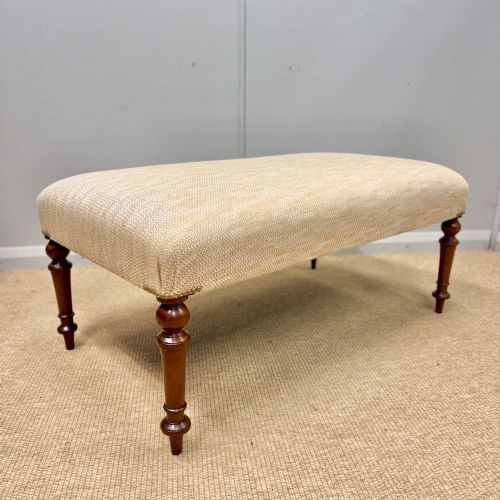
Timbers form the backbone of these frames, utilising solid mahogany, rosewood, walnut, and burr walnut alongside painted wood, ebonized finishes, and giltwood. Workshops selected dense hardwoods to support structural loads, particularly on cabriole legs and ball and claw details.
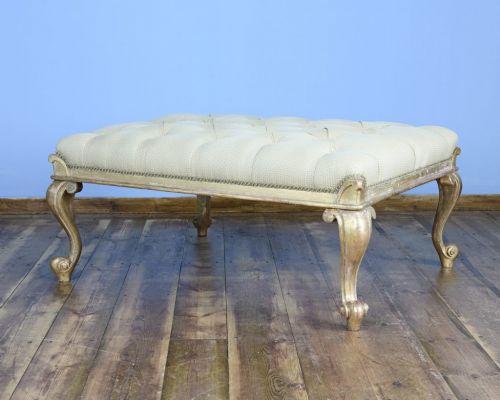
Upholstery methods incorporate fabric, linen, and leather, often secured with deep buttoning or decorative trim. Metal elements such as brass castors appear on Victorian pieces to aid mobility.
Carving and gilding techniques define the decorative surfaces, from Baroque style giltwood to parcel gilt accents on Georgian and nineteenth-century frames.
A sturdy pine box manages to sneak into the seating line-up, proving that antique furniture often doubles as a handy hiding spot.
Judging the range
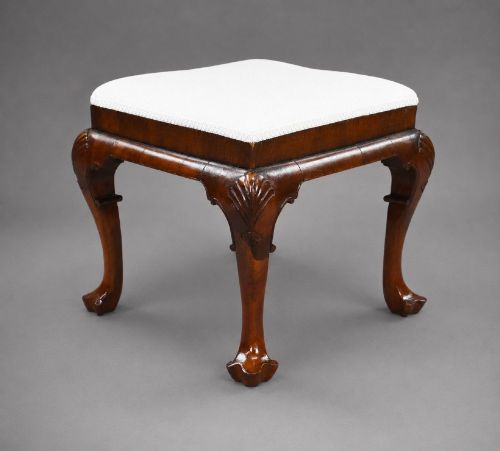
The quality of a piece rests on the integrity of the timber frame and the precision of the carving, whether executed in solid mahogany, burr walnut, or giltwood. Finer examples display crisp detail in cabriole legs, ball and claw motifs, and parcel gilt highlights.
Upholstery execution separates standard domestic items from grander commissions, visible in the tension of leather, linen, or fabric and the regularity of buttoning. Maker attribution, such as work bearing the stamp of Miles & Edwards, elevates the standing of a footstool.
Miles & Edwards
The Cream Upholstered Ottoman Bench Glossary
- Cabriole leg
- A furniture leg that curves outward and then tapers inward, mimicking an animal's curving leg. This form appears frequently on eighteenth-century revivals and nineteenth-century seating.
- Curule footstool
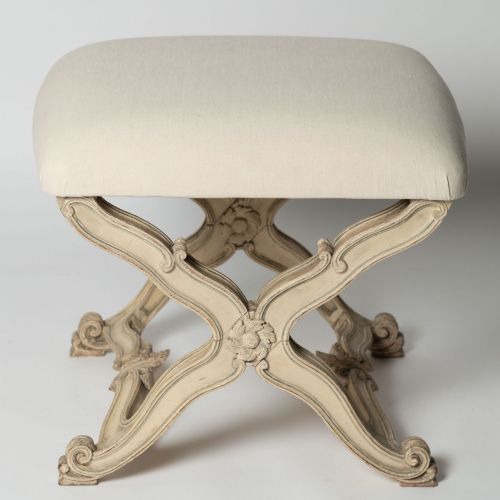
- An ancient Roman magistrate's chair shape featuring crossed concave legs forming an X frame. Examples by makers like Miles & Edwards utilise this classical geometry.
- Parcel gilt
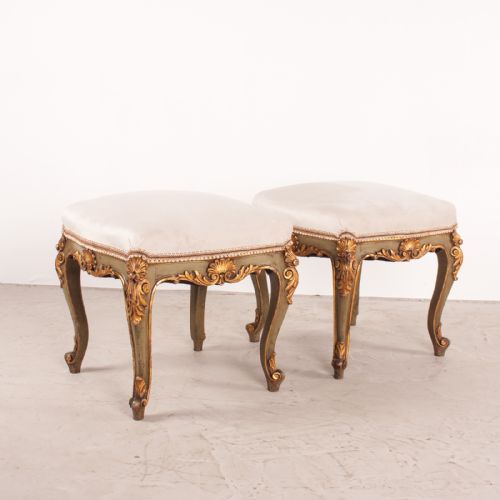
- Wood or gesso partially covered with gold leaf to highlight carved details and mouldings. This technique appears on grand scale Victorian and Georgian frames.
- Window seat
- A long stool or bench designed specifically to fit the recess of a window. These pieces often feature open frames or upholstered ends.
Cream Upholstered Ottoman Bench: Frequently Asked Questions
Where should I place an ottoman bench?
These pieces suit placement at the foot of a bed, beside a fireplace, or beneath a window as a window seat. Their compact height allows them to function as occasional seating or low rests.
Matching the wood tone and upholstery fabric, such as leather or linen, to existing furniture helps integrate the piece into a room's layout.
How do I identify a Victorian upholstered stool?
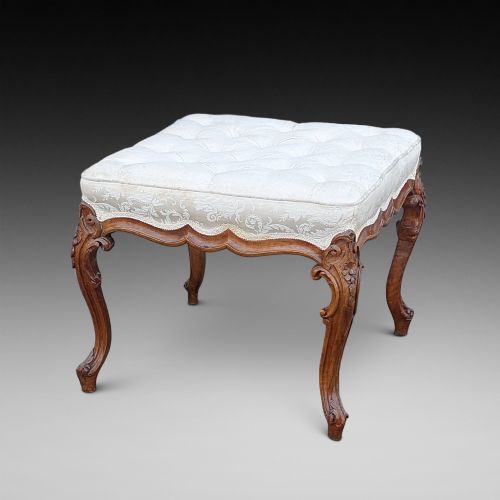
Victorian examples often feature dense timbers like rosewood or mahogany, frequently with deep buttoning and brass castors. Cabriole legs and ebonized finishes also signal this era.
Checking beneath the upholstery or frame often reveals construction methods specific to nineteenth-century workshops.
What is the difference between a footstool and a window seat?
A footstool is typically designed purely for resting feet, whereas a window seat functions primarily as a low bench for sitting by a window. Window seats often include open frames or armrests.
Both forms utilise upholstered tops and timber frames, but their intended domestic uses dictate their proportions.
Are Art Deco stools different from Victorian ones?
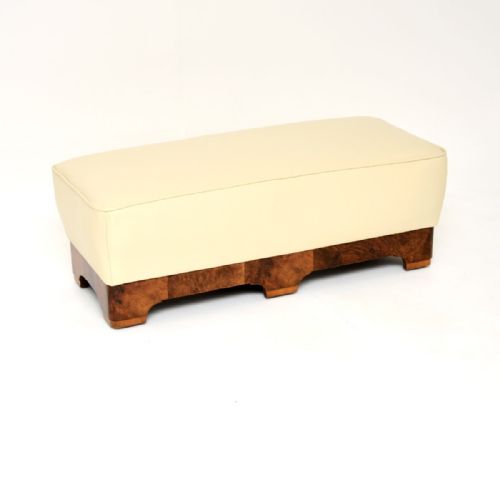
Art Deco pieces from the 1930s favour burr walnut and birds eye maple paired with leather, presenting clean geometric lines. Victorian designs lean towards heavily carved mahogany, rosewood, and buttoned fabric.
This shift in materials and silhouette marks the transition from ornate nineteenth-century revivals to twentieth-century modernism.