

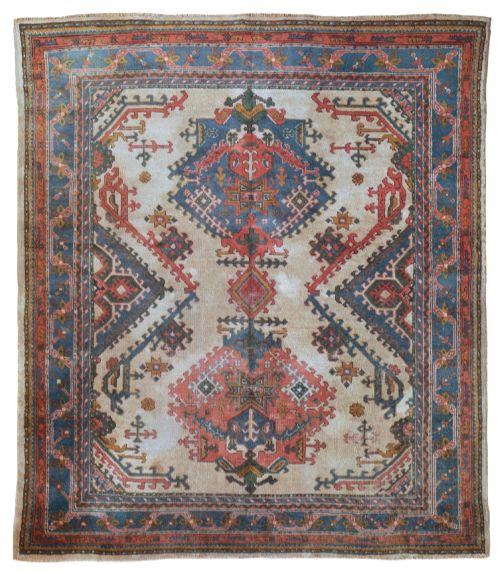


Cream Turkish Carpet
A cream turkish carpet brings warmth and traditional Anatolian character to a floor through soft neutral wool and historic village patterns.
Cream Turkish Carpet
When you search for a cream turkish carpet, you examine woven floor coverings originating from Anatolia and Turkey, dating from the nineteenth and early twentieth centuries. These pieces encompass village rugs, larger carpets, and specific regional prayer formats created by traditional weavers.
The specimens you meet on this page most frequently display ivory or pale ground tones paired with classical designs such as medallions, prayer arches, and banded motifs. Examples range from smaller Milas and Kula formats to substantial Ushak carpets.
The styles link directly to historical weaving centres across the region, including Ghiordes, Kirsehir, Bergama, and Panderma. Each piece reflects the specific decorative vocabulary and proportions typical of its particular Anatolian origin.
How they were made
The construction of these floor coverings relies primarily on wool and hand-spun wool, often paired with cotton for structural foundations like warps and wefts. Hand-spinning creates natural irregularities in the yarn texture, which absorbs dyestuffs with subtle tonal variations.
Weavers knotted the pile by hand onto stretched vertical looms, employing traditional Turkish symmetrical knots across regional workshops and village households. This method produces a durable textile surface designed for long-term domestic use.
Cream Turkish Carpet Retail Price Guide 2026
Typical asking prices for cream turkish carpet among the pieces listed under this phrase on Sellingantiques today, from the lower quarter to the upper quarter. They describe what is for sale here now, not the wider market.
Listings span from the early nineteenth century through the 1930s, featuring wool, cotton, and hand-spun wool across Anatolian and Ottoman styles.
What varies in quality
The standard of a weaving depends heavily on the density of the knotting and the precision with which the design is executed across the ivory ground. Finer weaves allow for sharper definition in complex medallions and border geometries.
Quality also rests in the handling of the wool and the subtlety of the colour palette, where softer pastel tones and harmonious contrasts elevate the visual presence of the textile.
The Cream Turkish Carpet Glossary
- Anatolian
- Pertaining to the geographic region of Asia Minor that constitutes the heartland of traditional Turkish rug production.
- Prayer rug
- A format characterised by a central mihrab or arch motif, traditionally used for individual devotional placement.
- Milas
- A town and surrounding weaving district in southwest Anatolia known for distinctive village prayer formats and soft palettes.
- Ushak
- A major carpet-producing town in western Anatolia famous for large-scale decorative carpets featuring prominent medallions.
- Kilim
- A flat-woven textile produced without a knotted pile, often featuring banded or geometric tribal designs.
Cream Turkish Carpet: Frequently Asked Questions
How do I date a cream turkish carpet?
Dating relies on assessing the structural materials, knot density, and natural wear patterns relative to known regional styles from the nineteenth and early twentieth centuries. Structural traits like hand-spun wool and specific village colour combinations offer reliable clues to age.
Comparing the border motifs and central medallion structures against documented examples from centres like Ushak or Milas helps narrow the period of production.
Where were these carpets originally made?
These textiles were produced across various regions of Anatolia, encompassing both settled urban workshops and remote tribal villages. Major centres included Ushak, Ghiordes, Kula, and Kirsehir.
Each district developed distinct colour choices and drawing styles that distinguish village pieces from larger commercial carpets.
How should I care for an old wool rug?
Protect the textile by placing it in low-traffic areas or utilising a quality underlay to prevent sliding and excessive friction. Gentle vacuuming without a rotating brush roll keeps dust from settling into the hand-spun wool pile.
Professional cleaning tailored for antique pile textiles should be employed periodically to maintain the integrity of the natural fibres.