





Cream Satsuma Urn
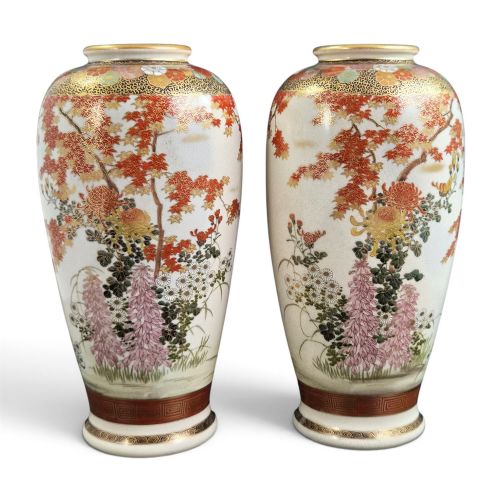
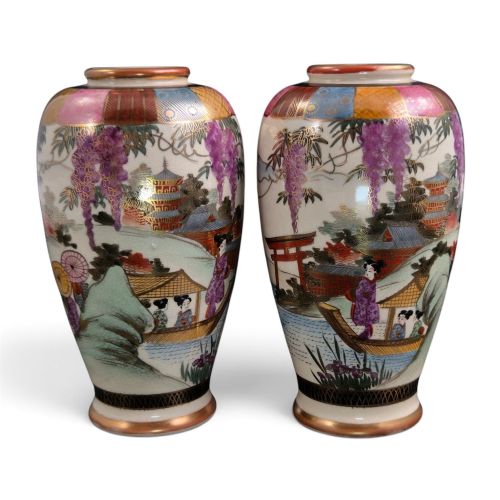
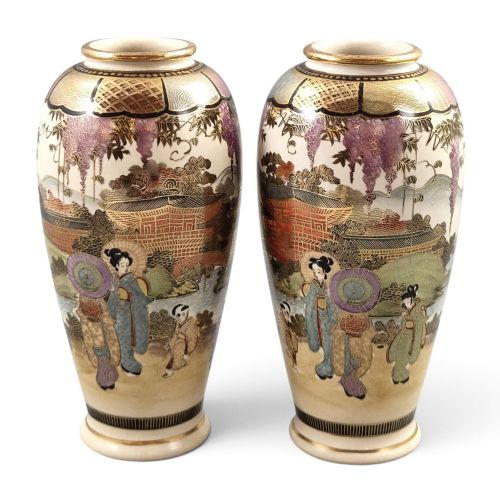
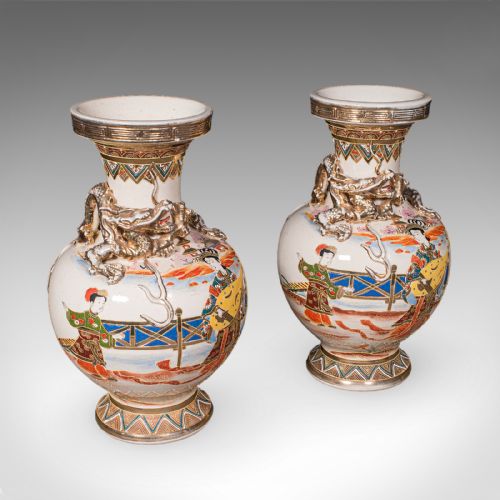
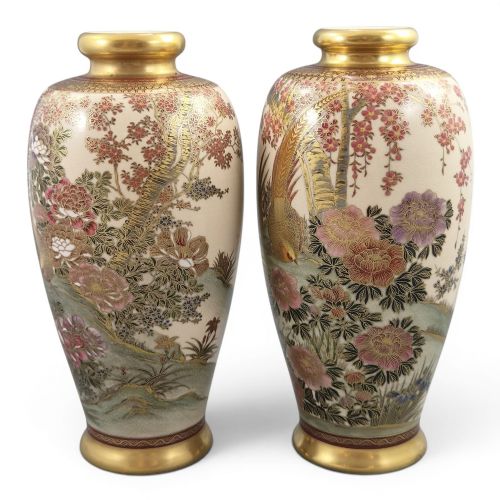
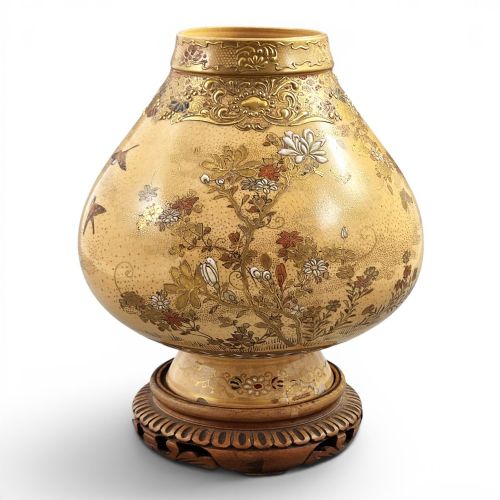
A cream satsuma urn brings the intricate ceramic artistry of Meiji and Taisho Japan directly into a room through delicate crackle glazes and layered hand-painting.
Cream Satsuma Urn
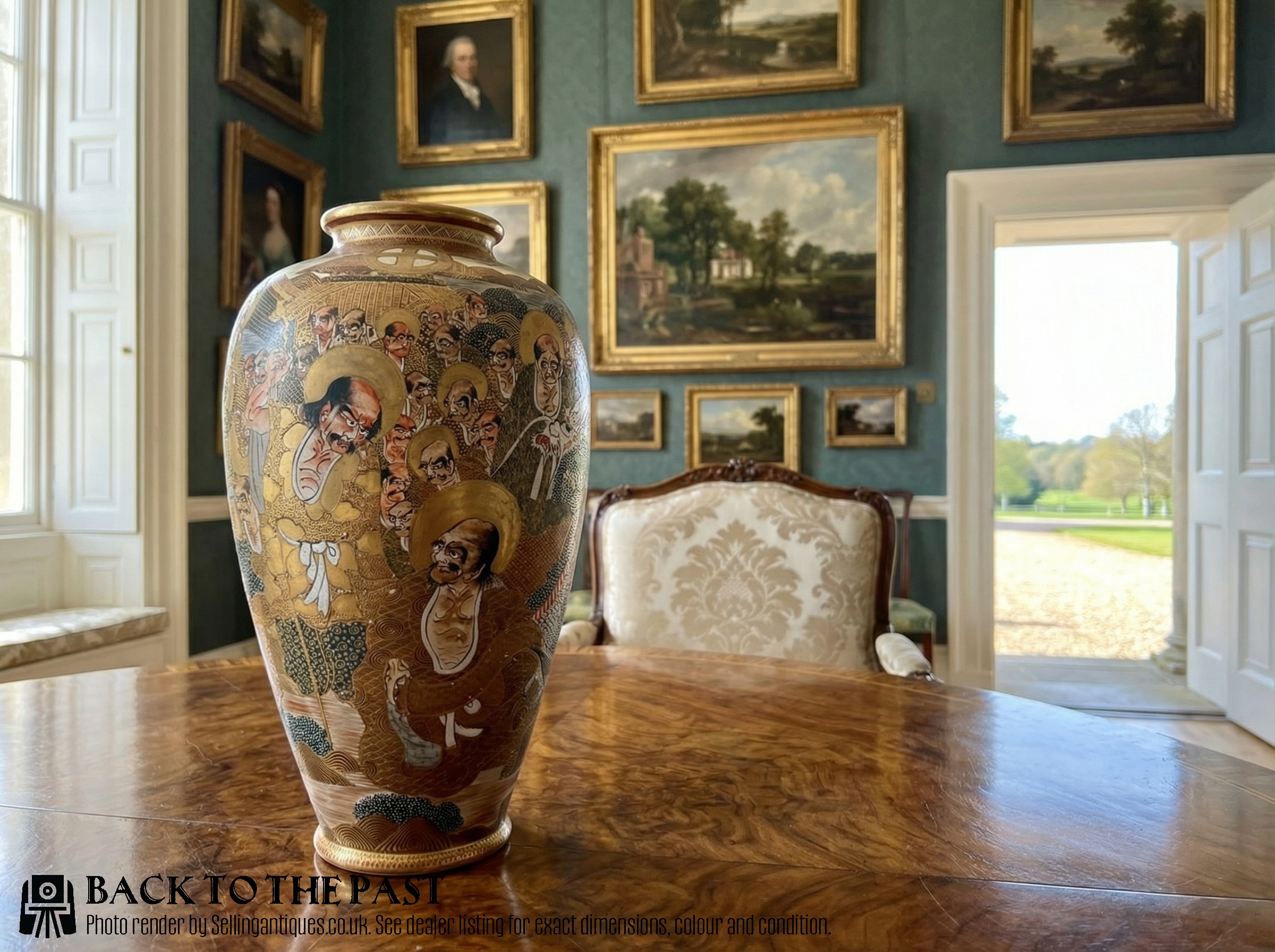
A cream satsuma urn represents a specific stylistic lineage within Japanese ceramic production, merging the traditional earthenware body with finely painted figural and landscape scenes.
The pieces on this page appear primarily across the Meiji, Taisho, and early Showa periods, taking the form of baluster vases, lidded jars, and occasional table lamps.
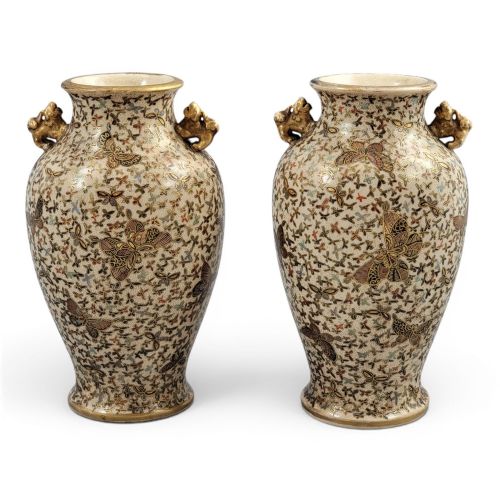
Makers from historic centres such as Kyoto and Kobe produced these works, often incorporating distinct motifs like wisteria gardens, samurai processions, and thousand butterflies designs.
Materials and Construction Techniques
Potters formed the vessels using an absorbent earthenware body covered in a characteristic cream-coloured glaze that developed a fine network of crackles during cooling.
Artisans applied detailed enamel pigments and gold leaf by hand, building up dense figural scenes and floral borders that required multiple firings in the kiln.
The documented forms range from miniature vases and lidded jars to large baluster shapes and converted table lamps.
Distinctions in Craftsmanship
The refinement of the hand-painted brushwork sets the baseline for quality, separating densely detailed figural processions from simpler, mass-produced floral repeats.
The application of gold leaf and the control of the glaze crackle influence the visual depth of the vessel, with superior pieces showing precise outlining and harmonious colour balance.
Maruni Kobe·Shozan·Manpei·Kinkozan·Chosei·Yamashu·Hakusan·Tagawa·Hattori·Hayakawa
The Cream Satsuma Urn Glossary
- Earthenware
- A porous ceramic body fired at lower temperatures, serving as the traditional base for satsuma wares before glazing.
- Meiji
- The historic Japanese period spanning from 1868 to 1912, associated with a vast increase in decorative arts produced for export.
- Gilt
- A thin layer of gold leaf or gold paint applied to highlight specific motifs, borders, and figural details on the ceramic surface.
- Shimazu
- The historic clan crest featuring a cross within a circle, frequently marked on the base or body of high-grade satsuma pottery.
Cream Satsuma Urn: Frequently Asked Questions
How do I date a satsuma urn?
Dating relies primarily on stylistic shifts between the Meiji and Taisho periods, alongside the complexity of the enamelling and any workshop signatures present on the base.
Earlier pieces from the nineteenth century often feature denser figural work and distinct Kyoto or Kobe signatures, whereas later twentieth-century examples display simplified decorative panels.
Can these urns be used as lamps?
Several pieces in this tradition are adapted into table lamps to bring historic ceramic forms into contemporary domestic lighting arrangements.
Such conversions utilise the substantial baluster body of the vessel while preserving the painted panels and crackle glaze texture visible around the fittings.
What is the Shimazu crest?
The Shimazu crest is a traditional Japanese mon depicting a cross inside a circle, which appears frequently on satsuma pottery associated with high-grade production.
Its presence connects the ceramic piece to the patronage and historic influence of the Satsuma domain in southern Kyushu.
How should I clean a ceramic satsuma urn?
Maintenance requires gentle dusting with a soft, dry cloth to protect the delicate enamel pigments and raised gold leaf from abrasion.
Harsh cleaning solutions or immersion in water must be avoided entirely to safeguard the porous earthenware body and the fine crackle glaze.