


Cream Plant Stand
A cream plant stand raises greenery and sculpture with classical proportion, bringing pale elegance and height to a room.
Cream Plant Stand
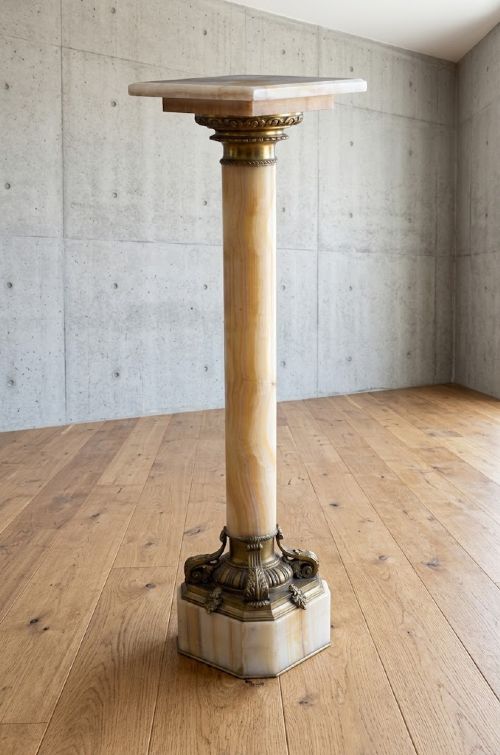
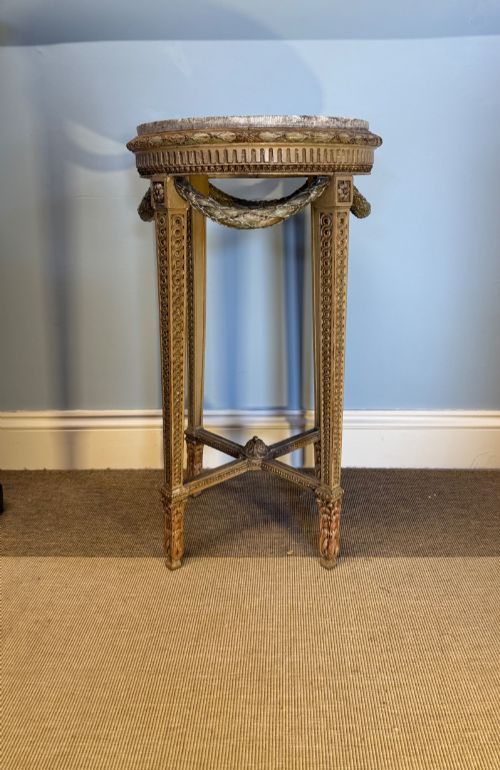
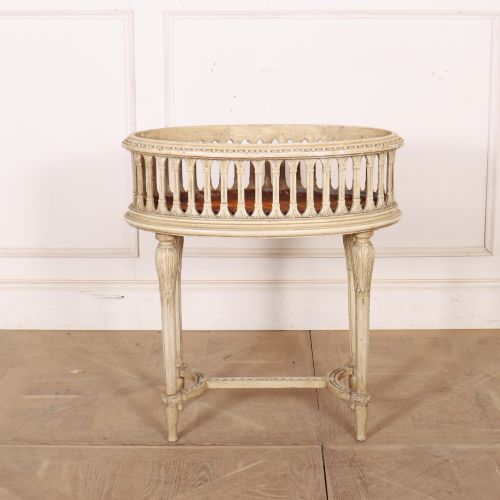
A cream plant stand serves to elevate jardiniere pots, figures, and lamps within domestic interiors, drawing the eye upward through structured display. When searching for a cream plant stand, buyers encounter tall columns, pedestals, and small tables finished in pale paint or formed from light-toned stone.
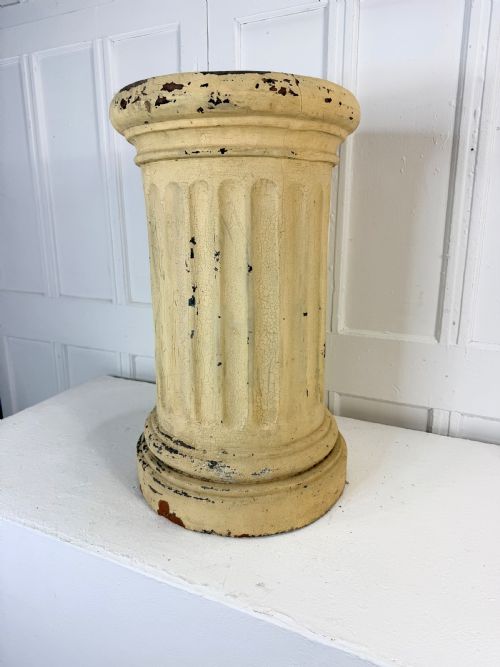
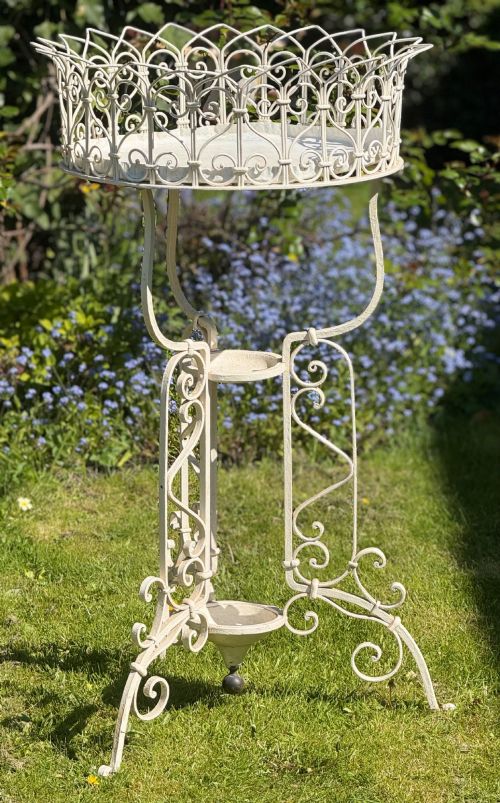
The pieces appearing on this page span the nineteenth century through the 1930s, embracing Victorian, Edwardian, and Neoclassical revival tastes. Forms range from cylindrical sculpture stands and turned wooden columns to tiered stands and garden planters.
Origins stretch across English, French, Italian, and Swedish traditions, often employing classical revival motifs such as fluting and moulded collars. These varied objects share a pale visual weight that suits both botanical displays and sculptural pieces.
Materials and construction
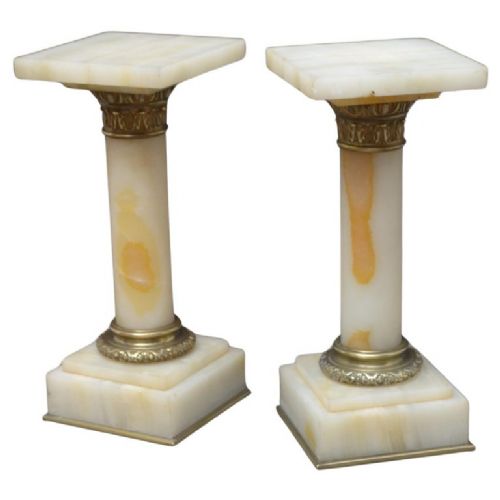
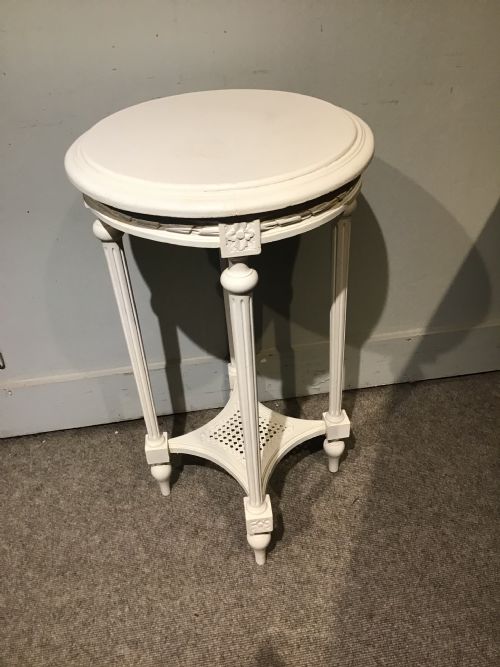
Makers utilised a combination of natural stone and painted timber, pairing marble, onyx, alabaster, and terracotta with wrought iron, brass, and gesso. Stone columns often feature contrasting metal mounts, such as ormolu collars, while wooden examples rely on turned construction and applied paint layers.
Surface treatments define the aesthetic of these stands, ranging from faux marble effects and original painted finishes to carved alabaster and polished stone. Structural support comes from heavy bases in wood, iron, or stone to ensure stability for elevated plants and sculpture.
Assessing quality and execution
Quality rests in the selection of materials, distinguishing solid marble, alabaster, and onyx shafts from painted wood or plaster constructions. The precision of turning, carving, and metal mounts dictates the refinement of each column.
Proportion and decorative detail separate standard utilitarian supports from architecturally ambitious revival pieces. Original painted surfaces and patinated brass or iron elements hold greater visual integrity than later repaintings.
The Cream Plant Stand Glossary
- Column
- A vertical architectural support of circular section, often utilised as a freestanding display pedestal for sculpture or plants. These pieces replicate classical orders scaled down for domestic interiors.
- Jardiniere
- An ornamental receptacle designed to hold plants or floral arrangements, frequently paired with stands or columns. They appear in ceramic, terracotta, and metal.
- Onyx
- A banded variety of chalcedony prized for its translucent layers, frequently employed for nineteenth-century decorative columns and table tops. Its natural figuring ensures pattern variation across every piece.
- Ormolu
- Gilded bronze mounts applied to furniture and decorative objects to accent collars, bases, and capitals. The technique involves mercury gilding on historical pieces.
- Pedestal
- A base or support for a column, statue, or urn, lifting the object above floor level. These forms derive from classical architecture.
- Neoclassical
- A revival style drawing inspiration from classical Greek and Roman architecture, prominent across nineteenth-century furnishings. It favours symmetry, columns, and restrained ornamentation.
Cream Plant Stand: Frequently Asked Questions
What is a cream plant stand?
A cream plant stand is an elevated support finished in pale paint, stone, or marble, designed to hold indoor greenery, urns, or sculptural objects.
These pieces lift plants into the light and create vertical interest within room schemes, functioning as both furniture and architectural accents.
How were antique pedestals used?
Historically, pedestals supported busts, bronzes, lamps, and large floral arrangements in reception rooms and hallways.
They allowed collectors to display cabinet pieces and natural specimens at eye level within domestic interiors.
How do I care for marble and onyx?
Marble and onyx require gentle cleaning with a soft, dry cloth and avoidance of acidic liquids that etch polished stone surfaces.
Using protective pads beneath heavy pots prevents scratching and moisture rings on vulnerable tabletops and column tops.
How do I identify a 19th-century column?
Nineteenth-century columns display hand-turned timber, heavy stone construction, or classical revival motifs such as Neoclassical or Venetian styling.
Examine the joins, material density, and surface wear to understand the age and manufacturing techniques employed by the maker.