




Louis XVI Style Plant Stand
A louis xvi style plant stand brings neoclassical symmetry and polished marble to a room, offering an elevated perch for greenery or sculpture.
Louis XVI Style Plant Stand
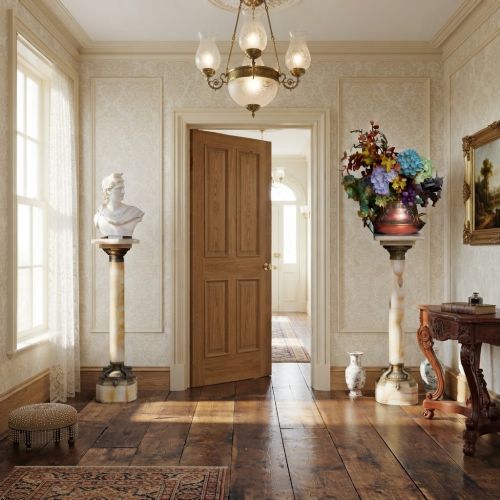
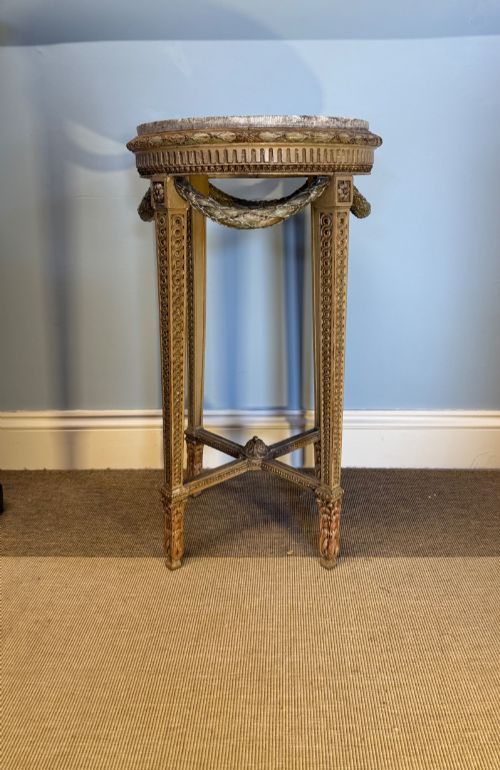
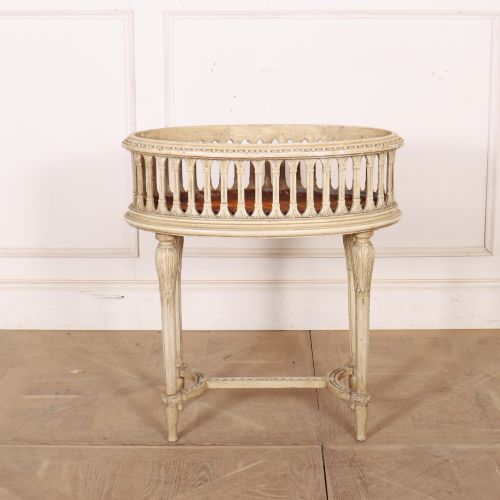
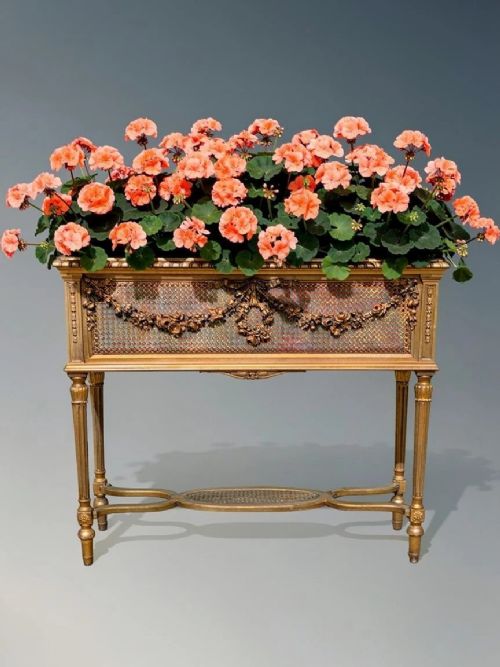
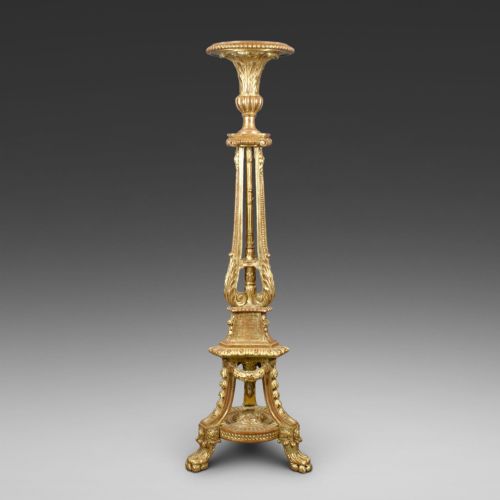
A louis xvi style plant stand takes several forms across this selection, including pedestals, jardinières, torcheres, and occasional tables designed for display. These pieces originate predominantly from the nineteenth century and the early decades of the twentieth century, reflecting enduring French revival tastes.
Buyers encounter surfaces topped with marble or onyx, supported by slender legs or columns that embody neoclassical proportion. Many items function equally well as side tables, wine coolers, or dedicated plant holders depending on their specific construction.
The aesthetic draws on eighteenth-century design principles, favouring straight lines, structural restraint, and classical ornamentation over the exuberant curves of earlier rococo models.
Materials and construction
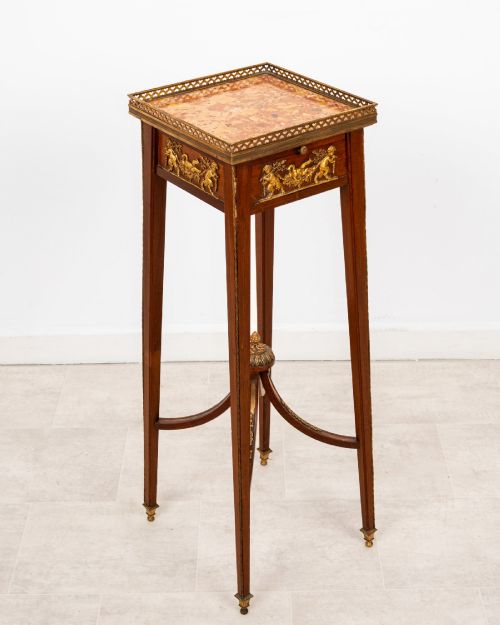
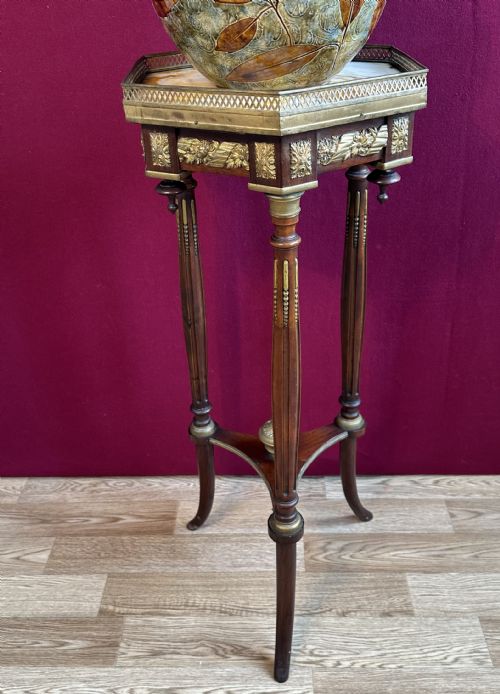
Cabinetmakers utilised hardwoods such as mahogany, walnut, kingwood, and satinwood, frequently employing parquetry to create geometric surface patterns. Ormolu mounts, brass, and gilt bronze provide structural enrichment along collars, feet, and friezes.
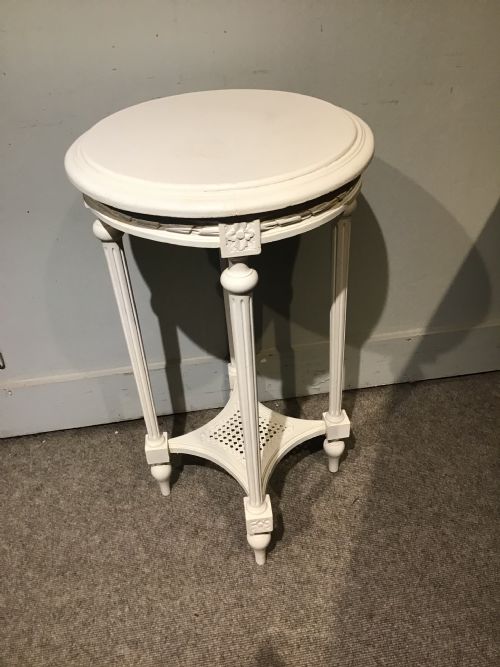
Stone tops cut from marble and onyx sit inset within wooden frames or metal galleries, offering durable surfaces resistant to moisture from potted plants. Painted finishes and giltwood carvings appear alongside natural timber grains across the documented items.
Several pieces double happily as wine coolers, proving that nineteenth-century plants and nineteenth-century champagne shared the exact same tastes.
Assessing the craftsmanship
Quality reveals itself in the crispness of the bronze or ormolu mounts and the precision of the parquetry work across the wooden carcase. Heavier, finely chased metalwork and thick, well-figured marble slabs distinguish superior examples from simpler production pieces.
The joinery of the frame and the retention of original surface finishes dictate the integrity of each piece. Finer items exhibit careful attention to proportion in the tapering of legs and the integration of decorative mouldings.
François Linke
The Louis XVI Style Plant Stand Glossary
- Ormolu
- Gilded bronze used for decorative mounts on furniture. It provides a bright metallic contrast to dark timbers and stone tops.
- Jardiniere
- A decorative receptacle or stand designed to hold plants or flowers. These vessels often feature waterproof liners or raised galleries.
- Parquetry
- Woodwork formed by geometric patterns of wood veneers laid down on a structural floor or carcase. It requires precise cutting to achieve alignment.
- Gueridon
- A small French table supported by one or more columns or figures. The form frequently serves as a plant stand or occasional table.
- Torchere
- A tall stand or candlestick designed to support a light source or decorative object. In these listings, the term describes vertical pedestals with small display surfaces.
Louis XVI Style Plant Stand: Frequently Asked Questions
What is a louis xvi style plant stand?
A louis xvi style plant stand is a decorative furniture piece designed to elevate plants, featuring neoclassical lines, straight tapered legs, and often a marble or onyx top.
These items draw on eighteenth-century French design principles, utilising materials like mahogany, gilt bronze, and ormolu mounts to create a formal display surface.
How were these stands used historically?
Historically, these stands served inside grand drawing rooms and salons to display prized potted plants, ferns, or decorative sculpture. Their raised platforms protected delicate flooring while bringing greenery to eye level.
Certain models doubled as wine coolers or side tables, adapting to the multifunctional requirements of period interiors.
How do I style a plant stand at home?
Place a plant stand in a corner or beside seating where its vertical proportions can balance room furniture. Pairing the stone or timber top with a trailing plant highlights the classical silhouette.
Ensure the weight of your chosen pot matches the scale of the stand to maintain stability on wooden or carpeted floors.
How can I tell the period of a stand?
Dating relies on examining timber ageing, construction techniques, and the quality of the metal mounts. Nineteenth-century revival pieces often display machine-tooled elements alongside hand-finished surface details.
Comparing the specific wood veneers and fastener types against known manufacturing periods helps narrow down the date of creation.