
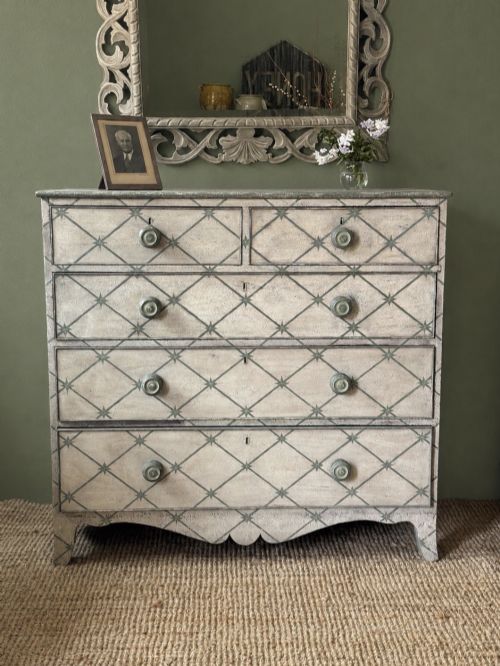
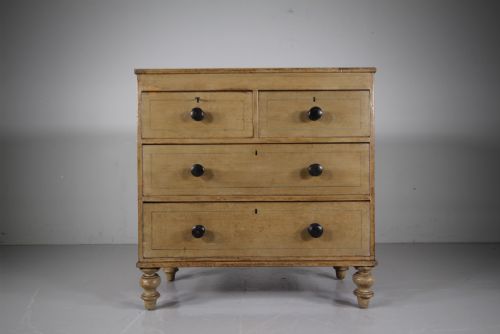
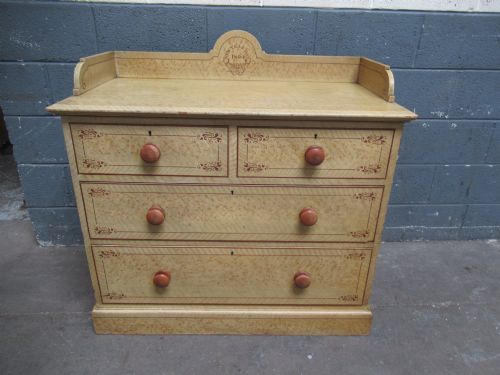
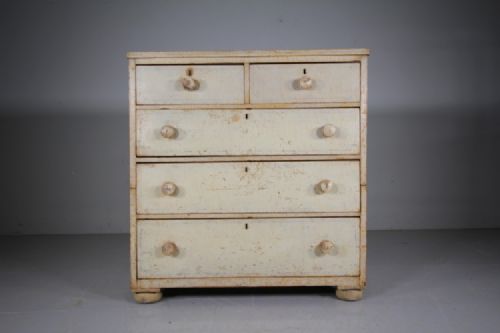
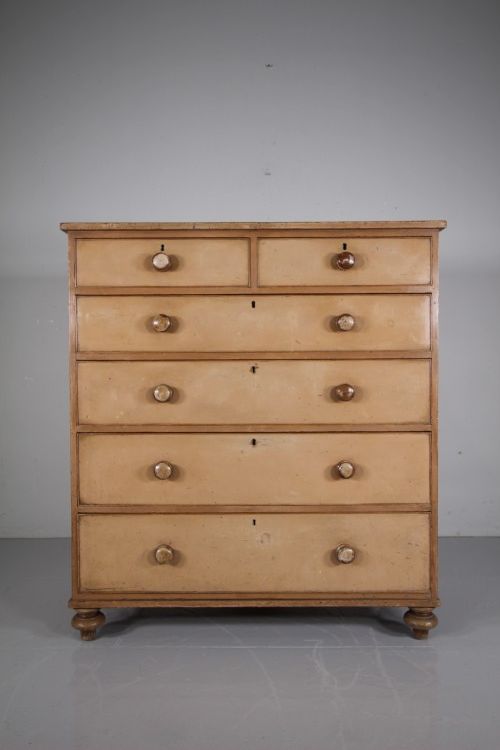
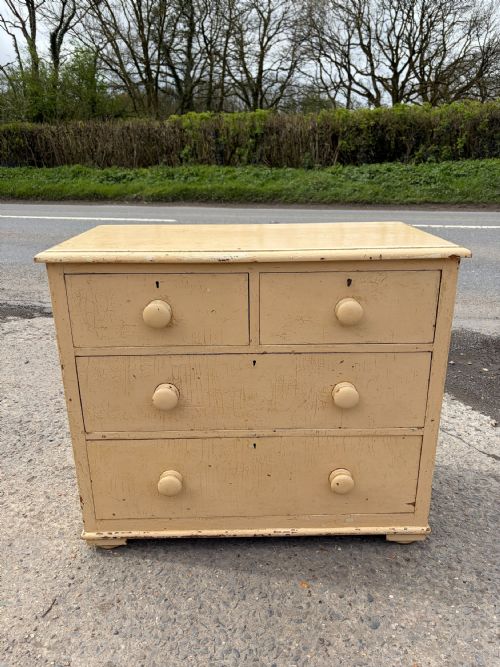


Cream Pine Chest Drawers
Cream pine chest drawers bring practical storage and painted warmth into a room.
Cream Pine Chest Drawers
A cream pine chest drawers is a storage unit built from wood and finished in paint, spanning periods from the nineteenth century to the Victorian era. These pieces appear in forms such as standard chests of drawers, two-part chests, banks of drawers, and shop fittings.
The most common version to meet on this page is the Victorian or nineteenth century painted pine chest, often featuring a two-over-two drawer arrangement or larger banks of drawers. Origins range from English and Welsh country workshops to Hungarian shop fittings, showing regional variations in height, width, and drawer configuration.
Buyers seek these items for their functional drawer space combined with aged painted surfaces that display cream tones. The selection includes standard domestic commode chests alongside larger multi-drawer units intended for commercial use.
How they were made
Makers constructed these items primarily using solid pine, shaping the timber into carcases and drawer boxes before applying coats of paint. Metal hardware such as handles and pulls complete the functional aspects of the furniture, while glass occasionally appears in associated elements.
Surface treatments rely on original paint finishes, often preserved from the nineteenth century to give the cream tone its aged appearance. Construction methods vary from standard single-carcase builds to pieces originally made in two parts for easier transport.
The archive includes pieces ranging from standard two-over-two drawer layouts to twenty-five drawer shop fittings.
What varies in quality
Quality in these painted pieces rests heavily on the integrity and survival of the original surface paint rather than subsequent repainting. Examples retaining untouched nineteenth-century cream paint carry greater character than those with modern refurbishment.
Structural complexity also separates standard domestic chests from larger multi-drawer shop fittings or pieces made in two distinct sections. Finer construction shows in well-fitted drawers and original hardware that remains intact across the whole piece.
The Cream Pine Chest Drawers Glossary
- Pine
- A softwood timber commonly used for vernacular furniture throughout the nineteenth century. It takes paint well, making it the primary material for these painted chests.
- Commode chest
- A traditional term used for a decorative chest of drawers, often applied to vernacular pieces from Welsh country workshops. It denotes a practical storage unit with domestic utility.
- Bank of drawers
- A multi-drawer storage unit, frequently seen in shop fittings or larger workshop configurations. This form provides numerous smaller compartments rather than standard deep drawers.
- Two-part chest
- A large chest of drawers constructed in two separate stacking sections for ease of movement. This method allowed heavy nineteenth-century furniture to be transported between rooms more easily.
- Original paint
- A surface finish applied when the piece was first made and left unaltered by later decoration. Surviving original cream paint determines the historical integrity of the furniture.
Cream Pine Chest Drawers: Frequently Asked Questions
What periods do cream pine chests come from?
The listings span the nineteenth century, including specific Victorian examples and Regency pieces. Dates stretch from the early nineteenth century through to eighteen ninety.
Makers built these items in regional styles such as English country, Welsh country, and Victorian country workshops.
How were multi-drawer shop fittings used?
Banks of numerous drawers served commercial purposes in shops and businesses to organise small goods. Hungarian shop fittings provide an example of this large-scale storage function.
Domestic versions typically served bedrooms or living spaces as standard chests of drawers for clothing and household items.
Are these chests made in sections?
Certain larger examples were originally made in two parts to facilitate movement and placement within a home. This construction method divides the carcase horizontally into upper and lower halves.
Standard smaller chests remain as single unified units built from solid pine.
How do I identify original paint?
Original paint shows age-appropriate wear and patination consistent with nineteenth-century use. It sits directly on the pine timber without modern overpainting.
Descriptions specify when a piece retains its original cream painted surface from the period of manufacture.