





Cream Painted Wall Table
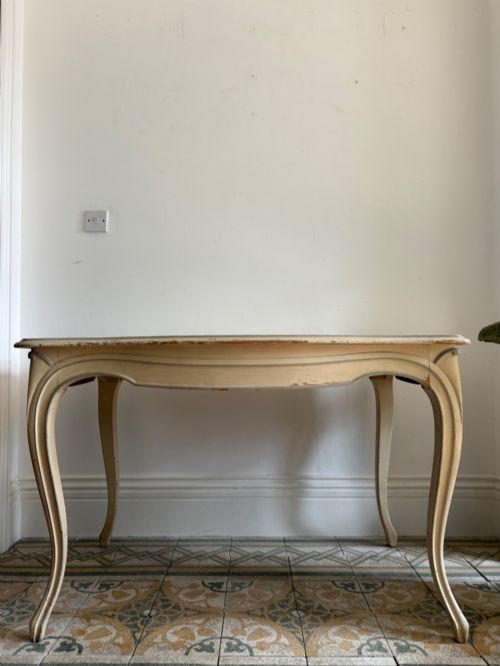
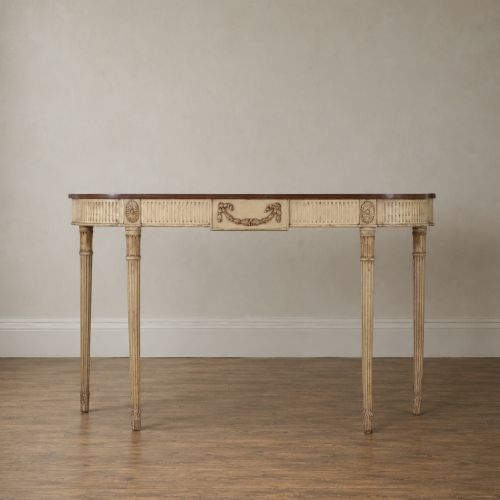
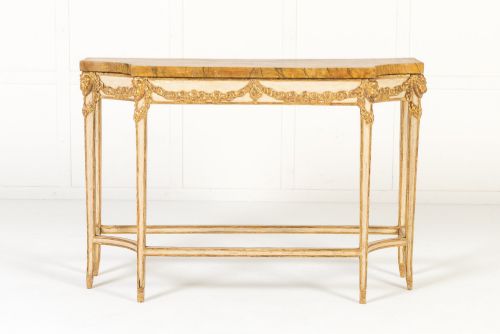
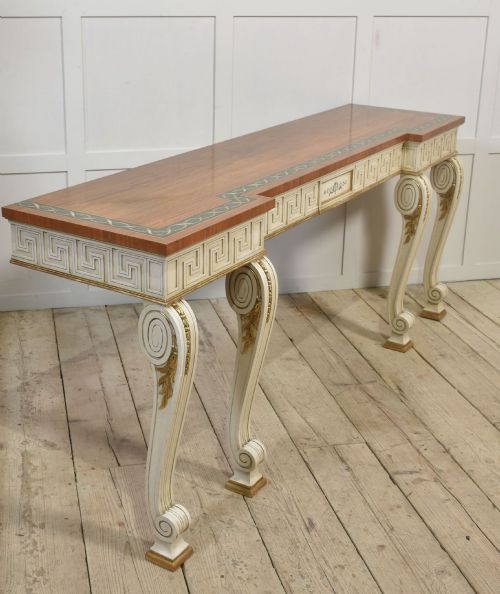
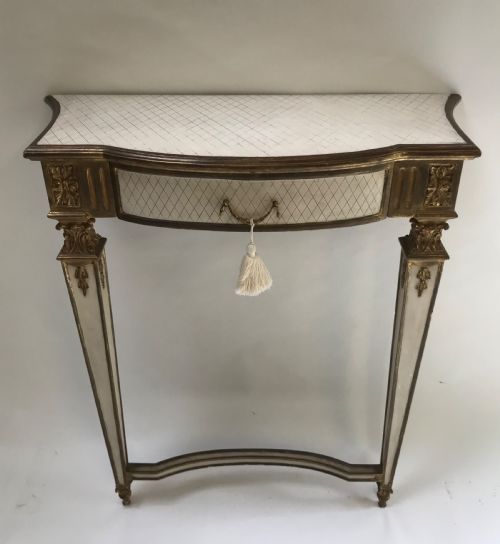
A cream painted wall table brings sculptural grace and practical surface space to a hallway, drawing upon Italian Neoclassical and French styles.
Cream Painted Wall Table
A cream painted wall table, often configured as a console table or pier console, provides a narrow profile designed to sit flat against a vertical surface. These console tables appear across a broad chronological span, reaching from the eighteenth century through the Victorian era and into the 1920s and 1930s.
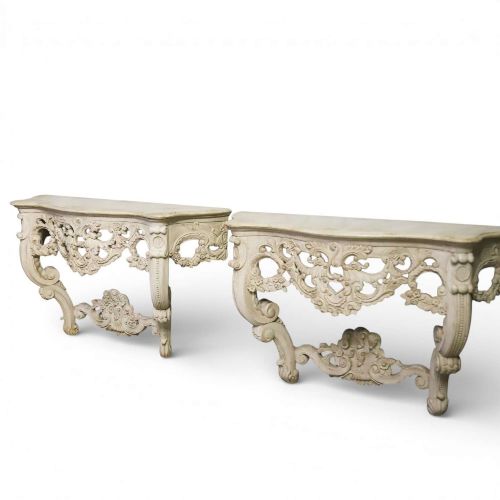
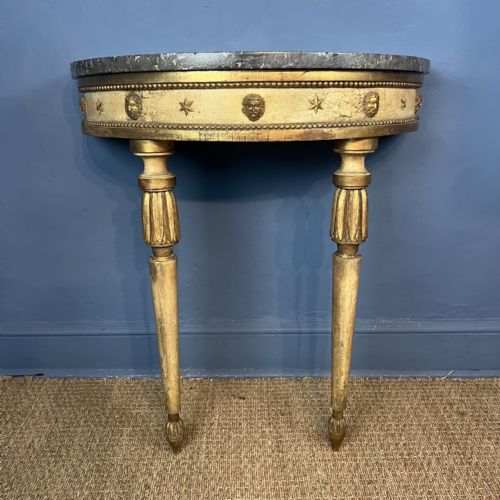
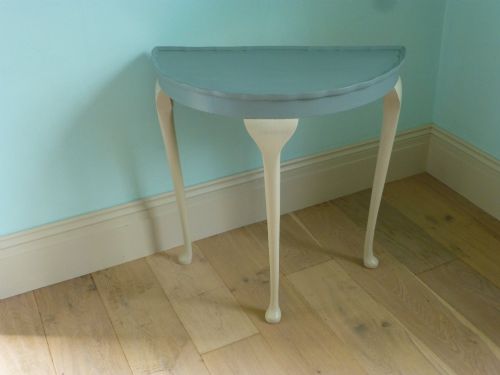
The dominant aesthetic draws heavily from continental European design vocabulary, notably French Provincial, French Rococo, and Italian Neoclassical traditions. Pieces range from simple demi-lune hall tables to elaborate pairings featuring matching wall mirrors.
Makers and workshops throughout the nineteenth and early twentieth centuries favoured forms that combined structural timber with decorative paintwork. Buyers encountering these pieces on this page will frequently see console tables featuring cabriole legs or rectilinear neoclassical framing.
Materials and construction methods
The foundational structure relies upon timber, frequently described simply as wood or more specifically through hand-carved elements. Artisans applied surface finishes including paint, gesso, and gold leaf to create the characteristic antique white or cream painted exterior.
Many examples incorporate stone elements into their design, utilising heavy marble or sienna marble inset tops to contrast with the painted wooden bases. Gilding and parcel gilt highlights were routinely applied to carved details such as scrolling foliage and moulded edges.
Cream Painted Wall Table Retail Price Guide 2026
Typical asking prices for cream painted wall table among the pieces listed under this phrase on Sellingantiques today, from the lower quarter to the upper quarter. They describe what is for sale here now, not the wider market.
Several tables come with matching mirrors, proving that even centuries ago, furniture makers knew nobody leaves the house without one last check.
Distinguishing quality across the range
Quality rests significantly upon the depth and dexterity of the surface decoration, distinguishing factory-like output from skilled artisan work. The handling of the paint finish, the crispness of the carved wood elements, and the presence of genuine gold leaf rather than metallic substitute create distinct tiers.
The choice of upper surface also dictates distinction, moving from plain wooden boards to inset suede panels or substantial, veined marble slabs. Proportion and the integration of decorative carving, such as Rococo asymmetry or Neoclassical symmetry, define the architectural success of each console.
The Cream Painted Wall Table Glossary
- Console table
- A table designed to be fixed against a wall, frequently supported by two front legs while relying on the wall for rear support. These pieces are intended for entryways and reception rooms.
- Demi-lune
- A half-moon shape used for the footprint and top of tables designed to sit flush against a wall. This curved profile softens the transition in narrow hallways.
- Gesso
- A plaster-like mixture applied to wood surfaces to prepare them for painting or gilding. It provides a smooth ground that can be heavily carved or moulded.
- Parcel gilt
- A decorative technique where specific portions of an object are highlighted with gold leaf while the primary surface remains painted or exposed. This accentuates carved details.
- Pier console
- A console table specifically proportioned to sit against the wall space between two windows, often paired with a matching wall mirror above.
Cream Painted Wall Table: Frequently Asked Questions
Where should I place a wall console?
A cream painted wall table suits narrow spaces like entrance halls, corridors, and reception rooms where floor depth is restricted. Because these tables are designed to anchor against a vertical surface, they provide a display area without obstructing thoroughfares.
They also function effectively beneath large wall mirrors or paintings, creating a balanced focal point in a living area or dining room.
How do I identify the period?
Dating relies on stylistic markers and construction evidence rather than a single definitive feature. Eighteenth-century examples often display deep hand-carving and restrained neoclassical lines, while nineteenth-century pieces may draw upon earlier Georgian or Rococo revivals.
Twentieth-century iterations from the 1920s and 1930s frequently adopt simplified French provincial styling or antique white finishes while maintaining traditional proportions.
Are marble tops original?
Many console tables incorporate heavy marble or sienna marble tops designed to contrast with painted wooden bases. Examining the fit between the stone slab and the wooden frame helps determine if the top belongs to the original construction.
Stone tops provide a durable, cool-to-the-touch surface that was particularly favoured on grander continental console tables throughout the nineteenth century.