

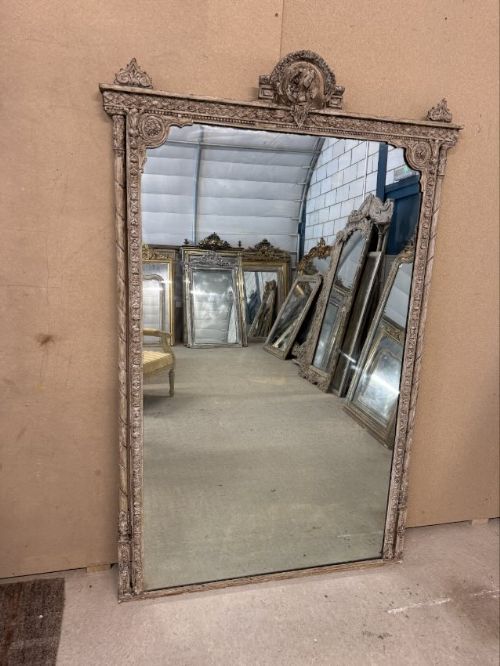
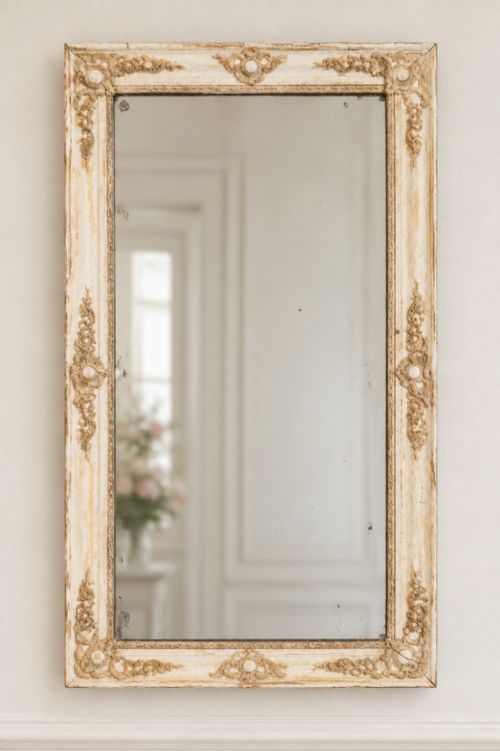
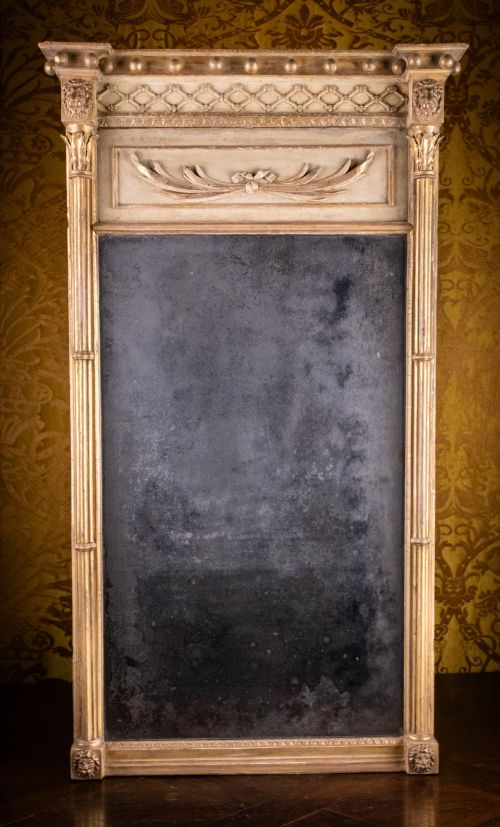
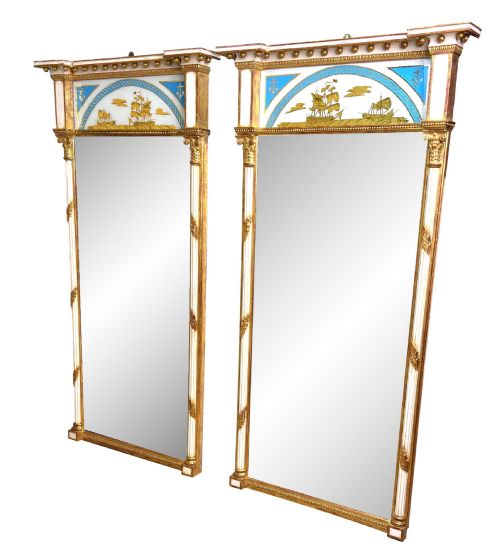
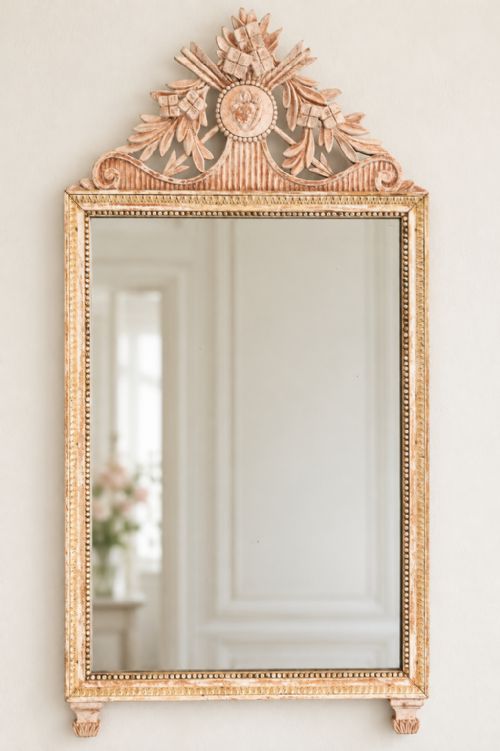
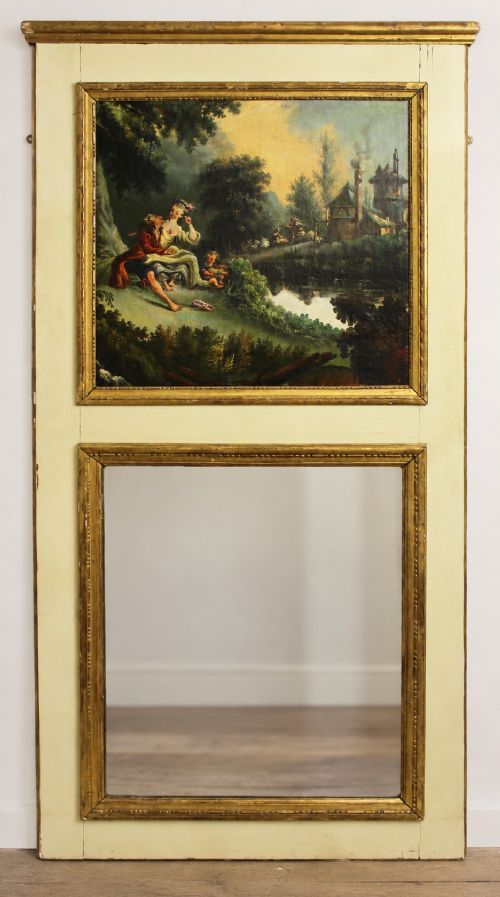
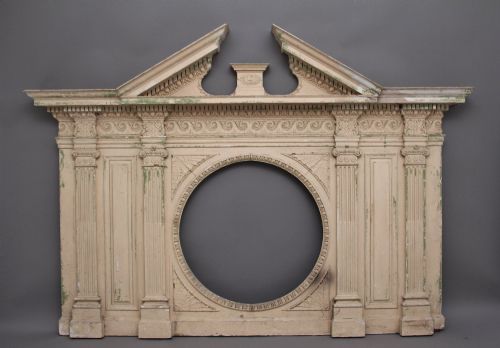
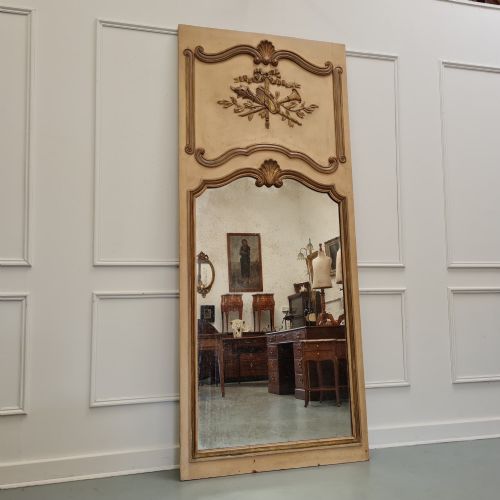


Cream Painted Trumeau Mirror
These cream painted trumeau mirror pieces combine carved woodwork and upper art panels to bring architectural proportion and light into a room.
Cream Painted Trumeau Mirror
A cream painted trumeau mirror is a tall wall-hanging pier mirror or overmantel that incorporates a decorative oil painting or carved panel above the glass plate. You will most frequently meet 19th Century French provincial examples alongside Georgian and Regency variants.
The form spans centuries of interior decoration, taking inspiration from French Louis XVI revival and Chinoiserie aesthetics. These items function primarily as architectural wall mirrors designed to anchor reception rooms and salons.
How they were made
Wood construction forms the base, typically utilising pine or other timber shaped into frames and applied gesso ornamentation. Artisans then applied layers of paint and giltwood detailing to highlight the carved motifs.
Mirrors incorporated antique glass plates beneath pastoral oil paintings or decorative panels. Gilding and painted finishes were layered to achieve the aged cream surfaces seen today.
Cream Painted Trumeau Mirror Retail Price Guide 2026
Typical asking prices for cream painted trumeau mirror among the pieces listed under this phrase on Sellingantiques today, from the lower quarter to the upper quarter. They describe what is for sale here now, not the wider market.
What varies in quality
The fineness of the carved gesso decoration and the execution of any integrated oil painting determine the standing of an individual piece. Superior examples display crisp architectural moulding and harmonious proportions between the art panel and the glass.
The depth and texture of the original painted surface further distinguish finer items from simpler decorative wall mirrors. Age-related patination on the mirror glass and paint layers adds character without obscuring the underlying craftsmanship.
The Cream Painted Trumeau Mirror Glossary
- Trumeau
- An architectural mirror featuring an upper panel containing a painting or carved relief above the glass. This traditional French wall decoration was designed to fill the space between windows.
- Pier Mirror
- A tall mirror specifically proportioned to hang on the wall space between two windows. These pieces often feature detailed frames to reflect light back into the room.
- Gesso
- A plaster-like mixture applied to wooden frames as a base for paint or gilding. Skilled artisans carved intricate relief patterns directly into this hardened material.
- Giltwood
- Timber decorated with gold leaf or gold paint applied over a prepared surface. This technique adds bright metallic highlights to the painted wooden frames.
- Overmantel
- A large mirror or painting designed specifically to hang above a fireplace mantelpiece. These horizontal or vertical formats dominate the chimney breast.
Cream Painted Trumeau Mirror: Frequently Asked Questions
Where should I hang a trumeau mirror?
These mirrors suit prominent locations such as above a fireplace mantelpiece or on a large expanse of wall between windows. Their vertical proportions help draw the eye upward and brighten the room by reflecting natural light.
Ensure the wall construction can support the weight of the timber frame and glass plate. Positioning them opposite a window maximises the distribution of light across the interior space.
How do I identify a 19th century trumeau?
Examine the construction methods visible on the reverse of the wooden frame and the characteristics of the paint layers. Nineteenth century pieces often display period-specific joinery and hand-applied gesso over pine.
The inclusion of a pastoral oil painting or Chinoiserie details provides stylistic context. Compare the hardware and glass characteristics with known period examples to confirm the date.
What is the difference between a pier mirror and an overmantel?
Pier mirrors are traditionally narrow and tall to fit wall spaces between architectural openings like windows. Overmantels are broader formats built to occupy the space directly above a fireplace.
Both forms utilise painted wood and glass but serve distinct functional positions within traditional room layouts. Understanding the original placement helps explain the proportions of the frame.
How do I care for painted wooden frames?
Dust the carved wood and painted surfaces gently with a dry, soft cloth to prevent buildup. Avoid using harsh chemical cleaners or excess moisture that could damage the aged paint and gesso layers.
Keep the mirrors away from direct sources of extreme heat and humidity to protect the timber and silvered glass. Regular gentle maintenance preserves the original patination of the painted finish.