



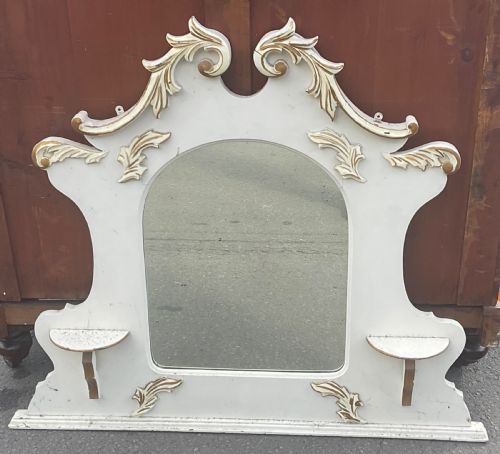


Painted Wooden Mantel Mirror
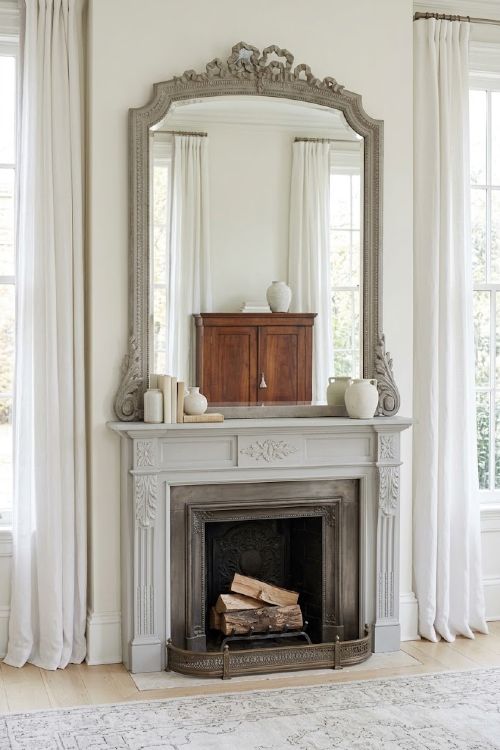
A painted wooden mantel mirror anchors a room with historic French and English character, bringing reflective light and layered colour to a chimney breast.
Painted Wooden Mantel Mirror
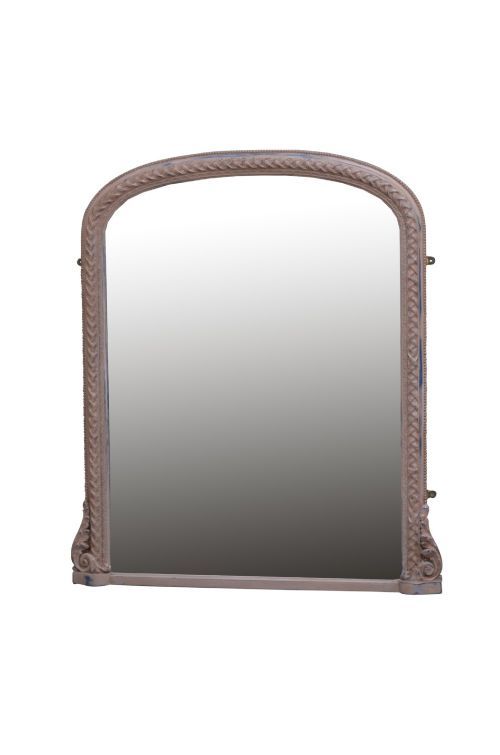
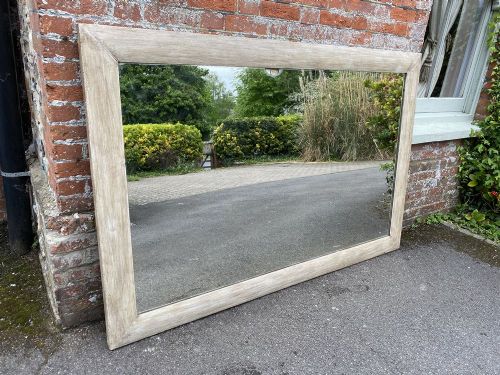
A painted wooden mantel mirror sits on or hangs above a fireplace, bringing depth and scale to a room. When searching for a painted wooden mantel mirror, you encounter substantial overmantel and wall mirror formats designed for nineteenth century and Edwardian interiors.
The selections span nineteenth century French and English workshops, encompassing Victorian and Edwardian periods. Pieces frequently display carved wood, gesso, and painted finishes ranging from layered lilac and ink blue to original gilt and monochrome tones.
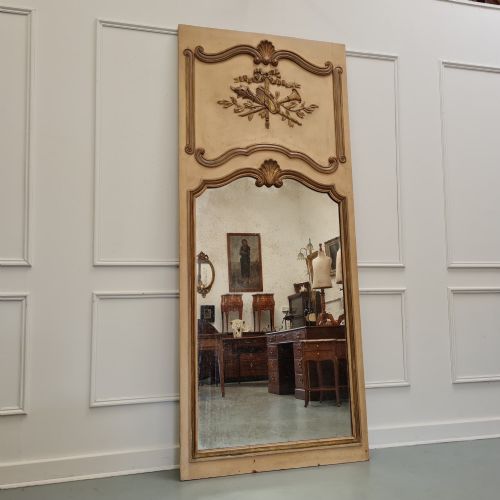
Many examples adhere to French Provincial, French Louis XVI Revival, and French Rococo styles, featuring shaped tops, arched profiles, and trumeau formats. These mirrors function equally well as statement wall pieces or standing decorative elements.
How they were made
Carved wood provides the structural foundation for these frames, often shaped with complex curves, architectural mouldings, and arched tops. Artisans applied layers of gesso over the timber base to create smooth surfaces and crisp relief details for subsequent decoration.
Makers applied paint and gold leaf by hand, building up polychrome palettes such as layered lilac and ink blue alongside traditional gilt highlights. This combination of carved wood, gesso, paint, and gold leaf gives each frame its distinct tactile quality.
Painted Wooden Mantel Mirror Retail Price Guide 2026
Typical asking prices for painted wooden mantel mirror among the pieces listed under this phrase on Sellingantiques today, from the lower quarter to the upper quarter. They describe what is for sale here now, not the wider market.
Some frames wear layered lilac and ink blue paint, proving that nineteenth century decorators loved a bold colour choice just as much as we do.
What varies in quality
The depth and intricacy of the wooden carving dictate the character of the frame, distinguishing simple mouldings from elaborately shaped Louis Philippe and Rococo designs. Crisp relief work in the gesso layer shows the maker's control over ornament and proportion.
The application of paint and gold leaf determines the visual weight of the piece, with layered palettes and original gilt surfaces retaining greater historical nuance. Scale also plays a role, as larger overmantel formats require robust internal construction to support heavy glass plates.
The Painted Wooden Mantel Mirror Glossary
- Overmantel mirror
- A large mirror specifically proportioned to hang on the wall above a mantelpiece. These pieces often feature wide horizontal or vertical formats to suit the width of a fireplace.
- Trumeau
- A decorative wall mirror or panel, frequently incorporating a painted scene or carved detail within the upper section of the frame. Originating in neoclassical French interiors, these pieces combine architectural presence with refined ornamentation.
- Gesso
- A plaster-like mixture applied to carved wood frames to provide a smooth base for gilding and paint. Artisans built up gesso layers before carving fine details directly into the compound.
- Louis Philippe
- A mid nineteenth century French design style characterised by understated curves, rounded upper corners, and restrained classical proportions. This aesthetic balances simplicity with decorative warmth.
- Giltwood
- Timber that has been coated with a thin layer of gold leaf or gold powder. Over time, giltwood develops a soft patina where the underlying gesso and wood show through.
Painted Wooden Mantel Mirror: Frequently Asked Questions
How do I hang a heavy overmantel mirror?
These large nineteenth century frames require secure fixing directly into wall studs or masonry using heavy-duty brackets suited to the weight of wood and glass. Professional installation ensures the mantel mirror remains stable and safe.
Position the frame at a height that reflects light upwards and interacts harmoniously with the proportions of the fireplace below.
What is a trumeau painted mirror?
A trumeau mirror incorporates decorative woodwork or painted panels within the frame structure, often designed to sit above a mantel or between windows. These pieces emerged from French architectural traditions.
They bring distinct vertical emphasis and sophisticated character to a room through their combination of mirror glass and decorative panels.
How do I date a painted wooden mirror?
Dating relies on examining the construction methods of the carved wood frame, the composition of the gesso, and the style of the paint finish. Nineteenth century pieces often show hand-carved details and layered polychrome palettes.
Edwardian examples tend to feature lighter proportions and distinct decorative conventions compared to earlier Victorian or French provincial iterations.
Can these mirrors stand on a mantelpiece?
Certain designs function as freestanding decorative elements or rest directly upon the mantel shelf while anchored securely to the wall for safety. Their substantial weight helps them stay balanced when placed on deep fireplace ledges.
Check the base construction and weight distribution before resting any large frame directly on wood or stone surfaces.