


Cream Painted Open Armchairs
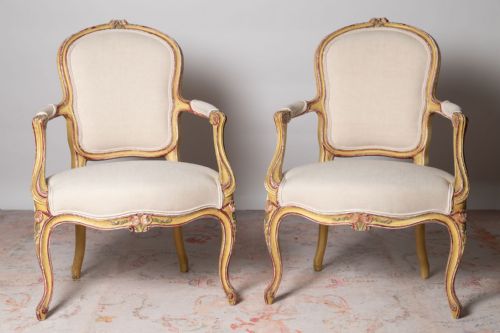
Cream painted open armchairs bring classic seating to a room, offering exposed wooden arms and painted finishes from the eighteenth century to the twentieth.
Cream Painted Open Armchairs
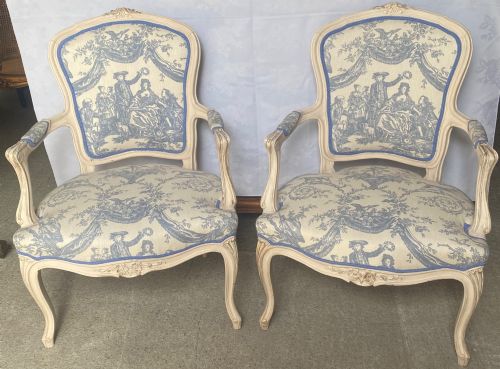
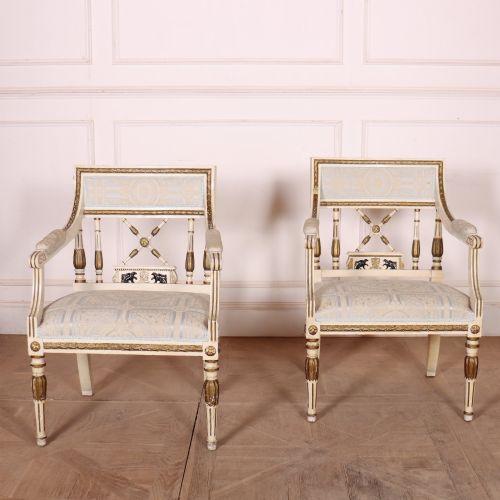
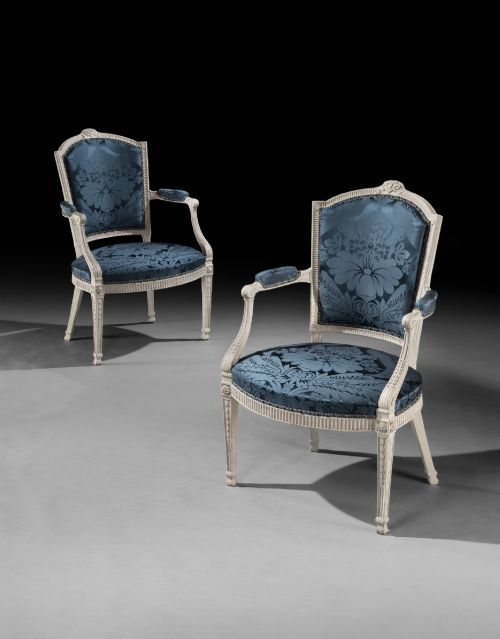
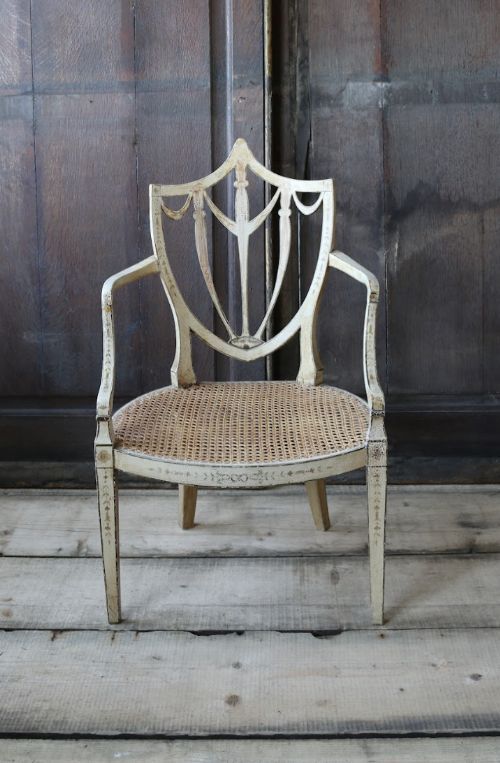
Cream painted open armchairs encompass a range of seating styles from French Provincial and Louis XV to George III Neoclassical, predominantly featuring painted wood frames and open wooden arms. The pieces available span several eras, with eighteenth-century examples appearing alongside nineteenth-century works and twentieth-century revivals.
Buyers frequently encounter French fauteuils and salon chairs alongside English elbow chairs and shield-back forms. These chairs serve as decorative seating in drawing rooms, bedrooms, and studies, often upholstered in fabric or fitted with cane seats.
Materials and Construction
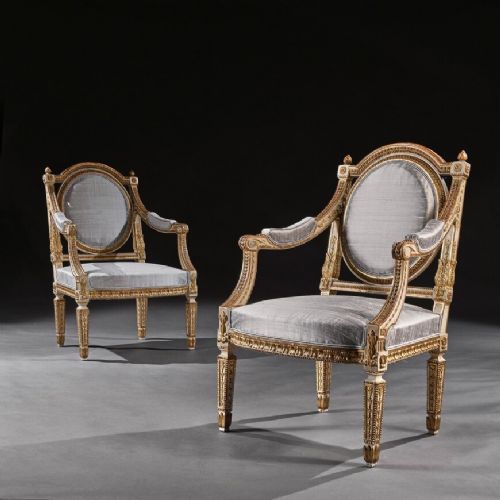
Construction relies primarily on painted wood, beech, and walnut frames, sometimes enhanced with parcel gilt details or lacquered finishes. Upholstery consists of various textiles including linen and other woven fabrics, while specific traditional models incorporate cane seating.
The surface finish relies on layers of paint applied over wood, occasionally showing polychrome decoration or Chinoiserie motifs. Carved wooden elements define the neoclassical and revival styles recorded in the inventory.
The inventory records French Provincial, George III, and Louis XV revival styles alongside Italian and Swedish interpretations.
Judging Quality
Quality rests upon the crispness of the wood carving and the integrity of the original frame construction. Pieces displaying refined neoclassical proportions or detailed parcel gilding stand apart from simpler decorative iterations.
The handling of the painted finish and the preservation of early decorative surfaces contribute significantly to the character of each piece. Superior examples maintain harmonious lines across the arms, legs, and backrests.
Gillows
The Cream Painted Open Armchairs Glossary
- Fauteuil
- An open-armed upholstered armchair originating in France, typically featuring an exposed wooden frame. These chairs became central to French interior design during the eighteenth century.
- Caning
- A seating material woven from peeled rattan or cane strips. It provides a lightweight, flexible surface used on eighteenth and nineteenth-century elbow chairs.
- Parcel gilt
- A decorative technique where specific carved details or mouldings are highlighted with gold leaf over a painted or polished ground. This finish adds visual depth to neoclassical frames.
- Japanned
- European lacquerwork executed in imitation of East Asian designs. It appears on select English seating from the turn of the twentieth century.
- Neoclassical
- A style drawing inspiration from classical antiquity, characterised by straight lines, symmetry, and restrained ornamentation. It dominates many of the eighteenth and nineteenth-century listings here.
Cream Painted Open Armchairs: Frequently Asked Questions
How do I spot a reproduction?
Examine the timber beneath the paint layers and look for hand-cut joinery typical of older periods. Tool marks and the natural ageing of the wood provide clues to true age.
Twentieth-century revivals often utilise machine-made components or modern fixings that differ from eighteenth-century construction methods.
Can I use these daily?
Most antique open armchairs function well for everyday seating if the frame remains stable and structurally sound. Regular checks on the joints ensure the piece withstands normal use.
For fragile cane seats or antique textiles, gentle use helps preserve the original materials over time.
What is a salon chair?
A salon chair is a light, decorative seat designed for entertaining guests in formal reception rooms. These pieces often feature painted finishes and upholstered backs tailored to public spaces.
Their proportions tend to be slightly smaller than heavy library or writing armchairs.
How do French and English styles differ?
French designs like Louis XV and Louis XVI emphasise flowing curves, carved floral motifs, and exposed polished or painted frames. English equivalents such as George III adopt more restrained neoclassical geometries and shield-back forms.
Both traditions utilise painted surfaces, but the underlying silhouette reflects regional cabinet-making practices.