





Cream Painted Bench
A cream painted bench brings lightness and seating to a room, offering painted wood and upholstered forms from Swedish, French and Victorian origins.

Cream Painted Bench
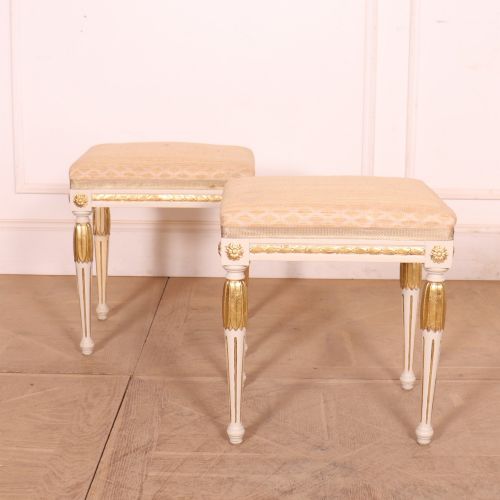
When you search for a cream painted bench, you encounter seating forms that span the eighteenth, nineteenth and early twentieth centuries. These pieces appear as settle benches, window seats and long stools, originating from workshops in Sweden, France, Italy and England.
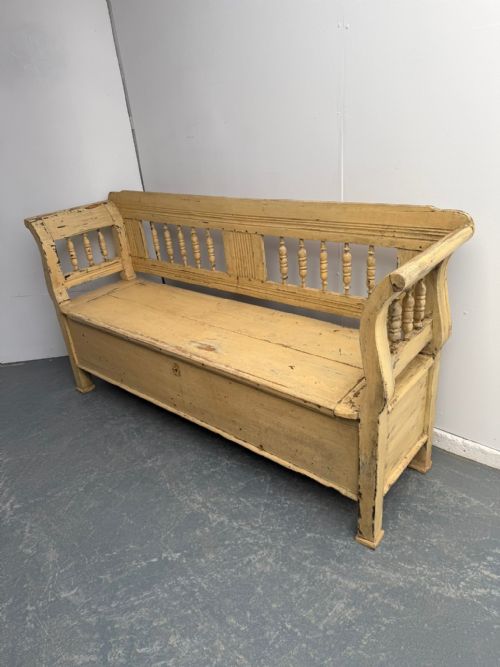
The version you are most likely to meet on this page is a wooden frame finished with a painted surface, sometimes paired with fabric or linen upholstery. These seats range from simple Victorian pine box settles to ornate French styles including Louis XV, Louis XVI and Gustavian designs.
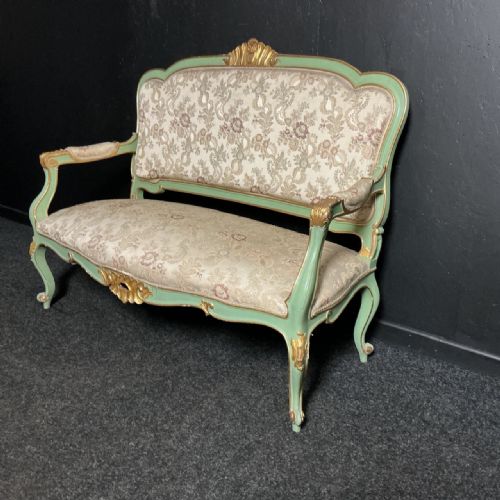
Makers such as Miles & Edwards appear alongside continental pieces, demonstrating how cabinetmakers applied paint and gilding to wood. The forms vary from two-seat settees and corner sofas to simple footstools and triple-back settees.
How they were made
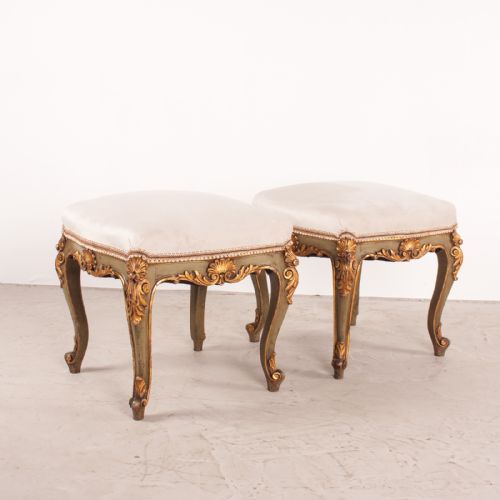
Makers constructed these frames from pine, satinwood and carved wood, applying layers of paint to create a finished surface. Workshops frequently added gold leaf accents to highlight carved details on neoclassical and revival frames.
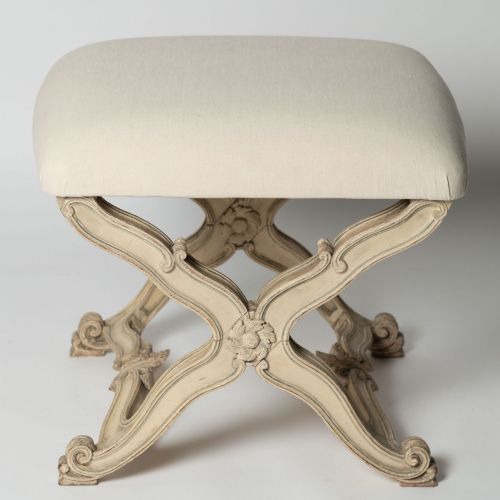
Upholstered versions incorporate traditional stuffing covered in fabric, linen or needlework. Woodwork ranges from simple joined pine boards in box settles to intricate carved window seats and curved X-frame structures.
Listings feature painted wood, pine, satinwood, fabric, linen and gold leaf across eighteenth and nineteenth-century forms.
What varies in quality
The standard of a cream painted bench rests on the crispness of the carved wood and the integrity of the original paint surface. Finer examples display refined proportions and deliberate detailing such as gilding or subtle decoration.
Simpler vernacular pieces, such as pine box settles, rely on sturdy construction and honest surface wear rather than elaborate carving. The harmony between the painted finish and the underlying woodwork defines the visual success of each piece.
Miles & Edwards
The Cream Painted Bench Glossary
- Settle
- A wooden bench with a high back, solid arms, and often a box seat for storage. These utilitarian pieces frequently date to the Victorian period or earlier.
- Canapé
- An upholstered French sofa featuring an exposed wooden frame, often carved in Louis XV or Louis XVI styles. These seats typically showcase painted finishes and decorative woodwork.
- Gustavian
- A Swedish neoclassical style characterised by restrained symmetry, pale painted finishes, and lighter proportions. This aesthetic draws inspiration from French royal design adapted for Scandinavian interiors.
- Bergère settee
- An enclosed upholstered seat with padded armrests and a wooden frame. These French forms combine comfort with decorative painted or gilded woodwork.
- Curule footstool
- A traditional X-frame stool design originating from classical antiquity. Makers like Miles & Edwards produced these architectural forms in the nineteenth century.
Cream Painted Bench: Frequently Asked Questions
What is a box settle?
A box settle is a wooden bench featuring a high back and a hinged seat that lifts to reveal storage space underneath. These functional pieces were common in Victorian farmhouses and domestic interiors.
Makers built them primarily from pine, often finishing the exterior with a painted surface. They provide both seating and enclosed storage within a single heavy item.
How do I identify a Gustavian bench?
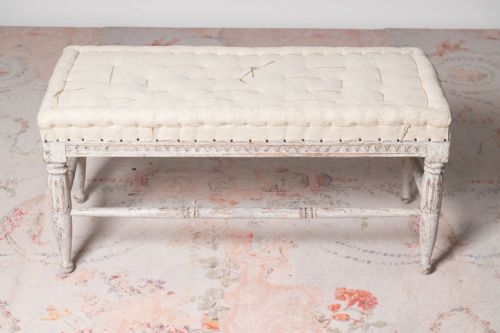
Gustavian benches and stools display Swedish neoclassical characteristics, including pale painted surfaces and restrained carving. They emerged from an Scandinavian interpretation of French eighteenth-century royal design.
These pieces typically present lighter proportions and simple geometric lines compared to their more ornate continental counterparts.
Where were window seats used?
Window seats were designed to fit into deep window recesses in period homes, offering a place to sit and read near natural light. They appear as long stools or low benches without high backs.
French and Italian examples from the nineteenth century often feature carved wooden frames and upholstered tops covered in fabric or needlework.
Are these benches painted originally?
The listings include pieces with original painted surfaces as well as later decorative finishes. Swedish and French workshops applied paint to wood to brighten interiors and complement upholstery.
Examining the wear patterns helps distinguish period surfaces from later decorative interventions on nineteenth-century and earlier frames.