


Cream French Dining Chairs
Cream french dining chairs bring a painted, classical European elegance to the table, combining soft neutral tones with period woodwork.
Cream French Dining Chairs
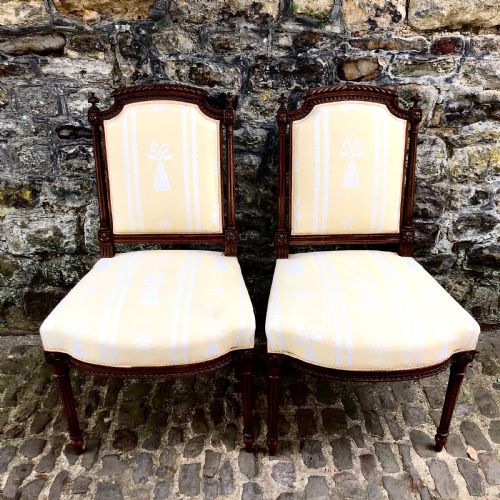
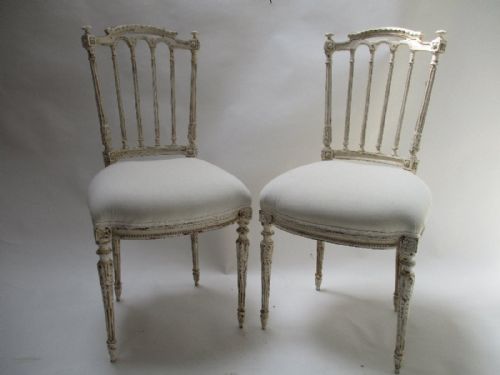
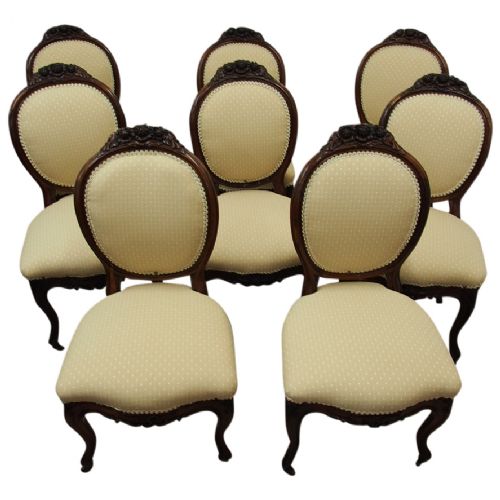
Cream french dining chairs span revival styles from the nineteenth century, including Louis XVI Neoclassical and Victorian Rococo influences. Buyers searching for cream french dining chairs encounter painted wood frames, often finished in pale or neutral tones.
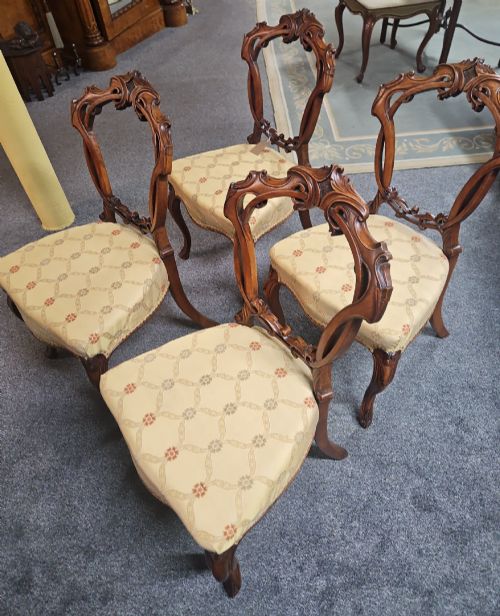
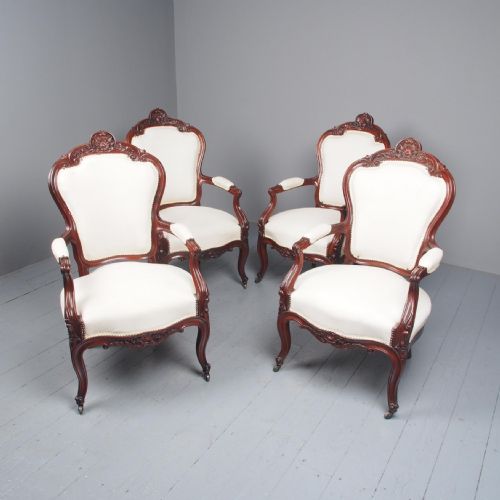
The selections available here range from pairs of side chairs to sets of six or eight dining chairs and armchairs. Forms include carved mahogany, walnut, and painted timber structures dating across the nineteenth and early twentieth centuries.
How they were made
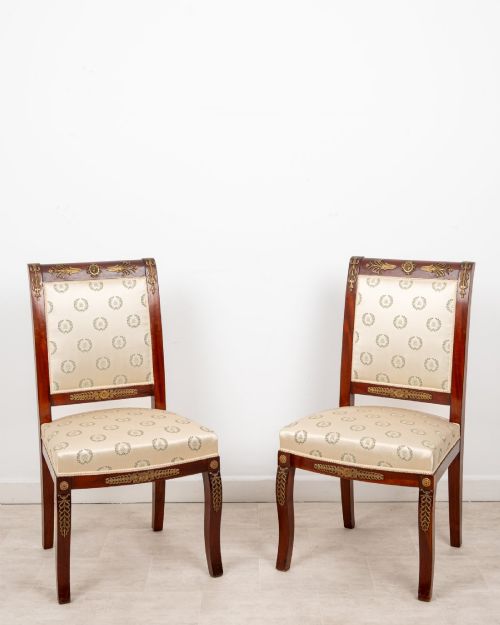
Timbers such as mahogany and walnut form the structural carcasses, shaped through traditional joinery and detailed hand carving. Giltwood accents and brass or ormolu mounts appear on select revival pieces.
Painted finishes create the characteristic pale surfaces, complemented by contemporary or period upholstery fabric covering the seats.
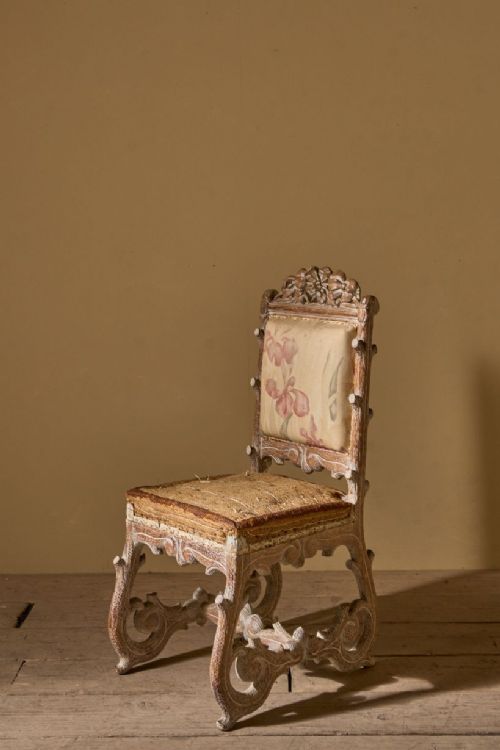
One listed nineteenth-century side chair wears a convincing faux bois coat, proving that even timber can adopt a disguise.
What varies in quality
The distinction between standard examples and finer pieces lies in the crispness of the carved wood detail and the execution of the painted or gilded surfaces. Chairs with substantial mahogany or walnut frames demonstrate superior structural integrity.
Matching sets of four, six, or eight command greater interest than assembled pairs or single chairs, particularly when the original proportions and upholstery webbing remain intact.
The Cream French Dining Chairs Glossary
- Louis XVI Revival
- A nineteenth-century style reviving the neoclassical symmetry, straight fluted legs, and oval backs of the French eighteenth century. It defines many painted salon and dining seats.
- Ormolu
- Gilded bronze mounts applied to furniture woodwork, common on Empire revival pieces. It adds decorative metallic contrast to timber frames.
- Faux bois
- An artistic imitation of wood grain applied to painted surfaces. This finish mimics natural timber on items constructed from alternative materials.
- Side chair
- An upright chair without arms designed for dining tables or occasional use. These form the majority of seated sets.
Cream French Dining Chairs: Frequently Asked Questions
How do I date these chairs?
Dating relies on timber choice, construction methods, and stylistic revival markers corresponding to nineteenth and early twentieth-century periods. Victorian and Edwardian manufacturing traits often align with specific revival fashions.
Examining the underside and joinery reveals tool marks and wood ageing that clarify the manufacturing era.
Are painted finishes original?
Many nineteenth-century revival pieces received paint or gilt finishes during their initial manufacture to emulate earlier French courts. Over time, surfaces may show later decorative layers applied during subsequent upkeep.
Close inspection under natural light helps determine whether the cream paint finish corresponds to the period of the wood frame.
Can I mix sets at the table?
Combining armchairs at the heads of the table with side chairs along the sides is a traditional arrangement. Matching wood tones and revival styles ensures visual cohesion across mixed groupings.
Height and proportions require careful comparison when pairing chairs from different nineteenth-century workshops.
How do I care for antique upholstery?
Fabric seats benefit from gentle vacuuming with a soft brush attachment to remove dust without damaging textile fibres. Professional textile cleaning preserves delicate vintage upholstery.
Avoiding direct sunlight prevents the cream painted frames and fabric colours from fading over time.