


French Painted Side Chairs
French painted side chairs bring lightness and provincial elegance to a room, offering versatile seating with classical proportion and decorative surface charm.
French Painted Side Chairs
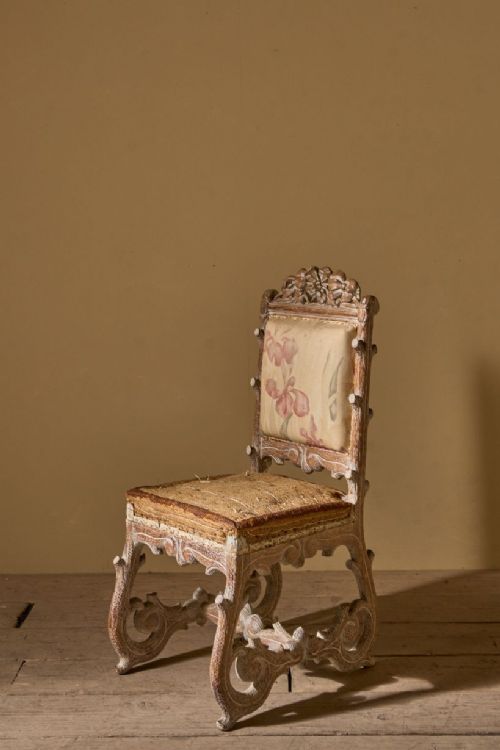
When you search for french painted side chairs, you encounter seating designed for salons, boudoirs, and dining rooms across various periods. The pieces on this page span from the eighteenth century through to the early twentieth century, reflecting enduring classical tastes.
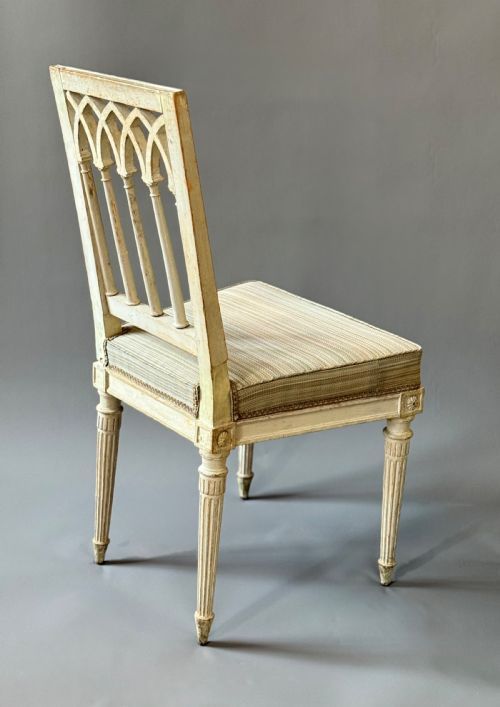
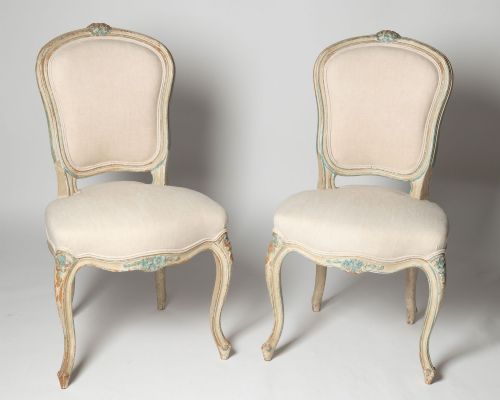
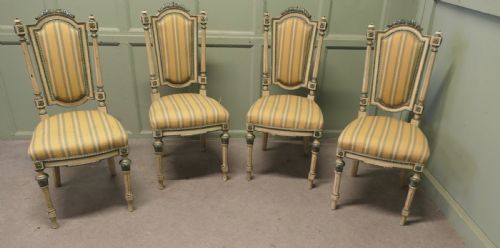
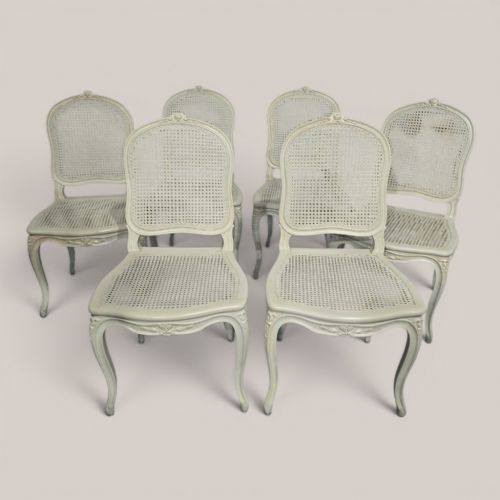
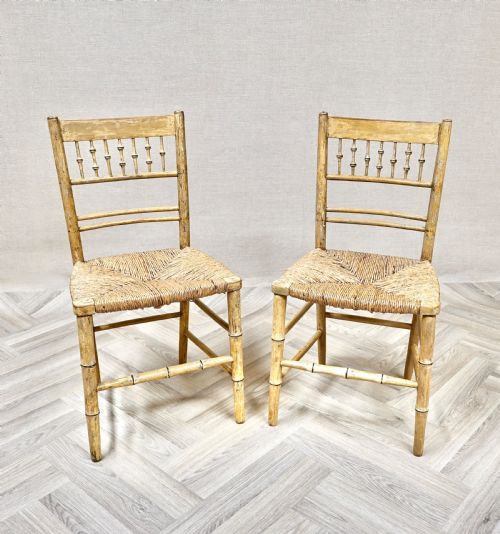
You are most likely to meet pairs and larger sets, often carrying grey, gold, or later applied paint finishes over carved wooden frames. Forms range from Louis XVI revival models with straight tapered legs to rustic and faux bamboo interpretations.
Alongside dedicated side chairs, the selection incorporates dining chairs, salon chairs, and occasional seating sharing similar painted decorative schemes. These items bridge formal neoclassical design and relaxed country house aesthetics.
Materials and construction methods
Makers utilised native timbers such as beech, alongside carved wood and bamboo, shaping frames through traditional joinery before applying decorative paint layers. Caning and fabric upholstery, including velvet, complete the seats and backs of many examples.
Surface treatments vary from original grey and gold paint finishes to later decorative overpainting and faux bamboo effects. Carved details like fluting, ribbons, and floral motifs demonstrate the hand of the artisan across different nineteenth and twentieth-century workshops.
Listings feature periods spanning the eighteenth, nineteenth, and early twentieth centuries, constructed in beech, carved wood, and painted finishes.
Evaluating quality and execution
The distinction between standard and superior pieces rests on the crispness of the hand carving and the integrity of the painted surface. Frames exhibiting deep, precise relief work and layered, harmonious paint retain greater aesthetic presence than simpler forms.
Originality of the painted finish and the survival of integrated caning or period upholstery elevate the standing of a set. Structural stability in the beech framing and balanced proportions aligned with Louis XV or Louis XVI styles dictate overall execution.
The French Painted Side Chairs Glossary
- Side chair
- A chair without arms, designed for dining or occasional use around a room. These form the core of the selection.
- Louis XVI style
- A neoclassical style characterised by straight tapered legs, geometric symmetry, and classical restraint. It appears frequently in nineteenth-century interpretations.
- Bergere
- An enclosed upholstered armchair with wooden framing, often featuring caned sides and a loose seat cushion. Several examples appear alongside standard side chairs.
- Faux bamboo
- Wood carved and painted to imitate natural bamboo stalks, popular during the nineteenth century for decorative seating. This technique yields a lighter, exotic appearance.
- Caning
- Woven rattan material used for chair seats and backs, offering flexibility and texture. It appears on numerous eighteenth and nineteenth-century pieces.
French Painted Side Chairs: Frequently Asked Questions
Are these chairs suitable for daily dining use?
Many of these pieces function well around a dining table, provided the wooden frames and joinery remain stable.
Larger sets allow for a unified seating arrangement in a dining room.
How do I identify a Louis XVI style chair?
Louis XVI pieces typically display straight, fluted legs and rectilinear frames, contrasting with the curved lines of earlier rococo designs.
Carved motifs often include ribbons, acanthus leaves, and classical urns.
What is the difference between side chairs and salon chairs?
Side chairs are generally lightweight and built for general placement or dining, whereas salon chairs often feature slightly more decorative carving and lower profiles for entertaining.
Both types serve as versatile occasional seating.
How should I care for painted wooden surfaces?
Dust regularly with a soft, dry cloth and avoid harsh chemical cleaners that might lift or soften historic paint layers.
Keep pieces away from direct heat sources and strong sunlight to preserve the finish.