
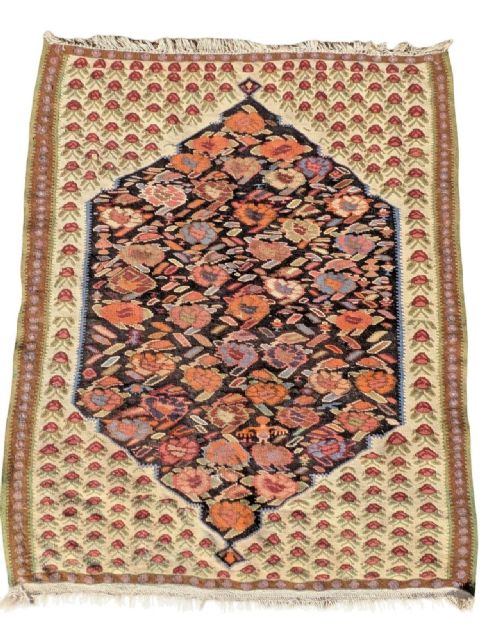
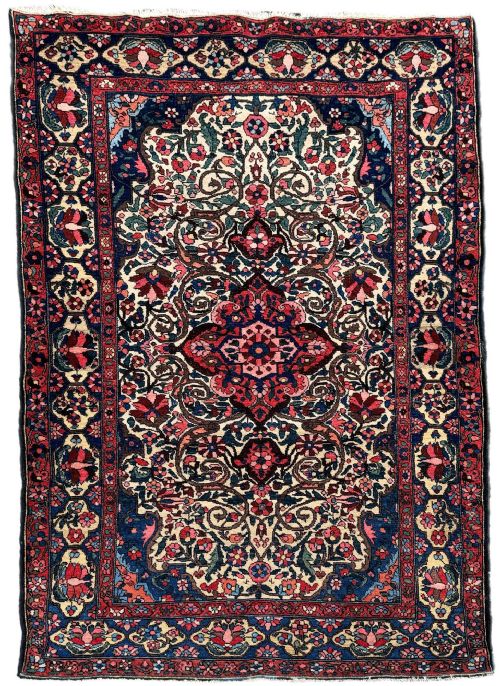
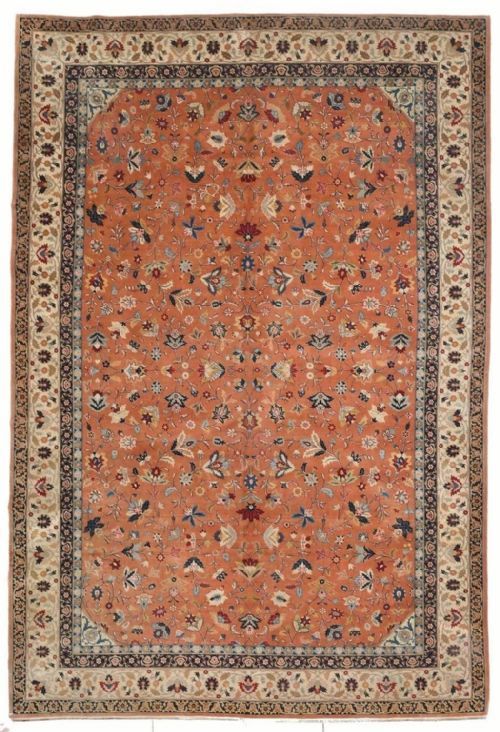
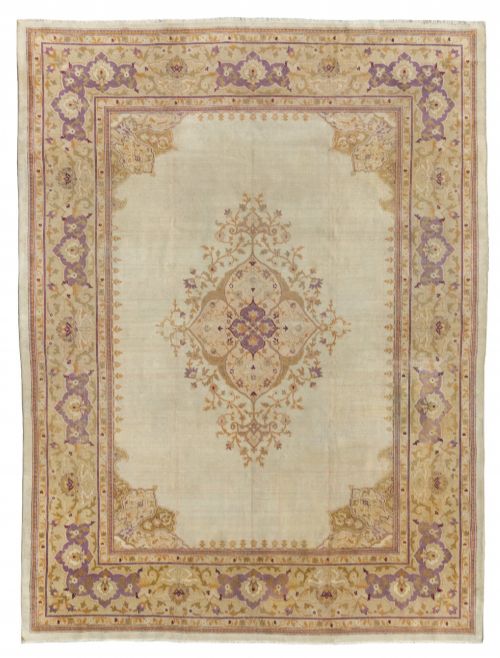
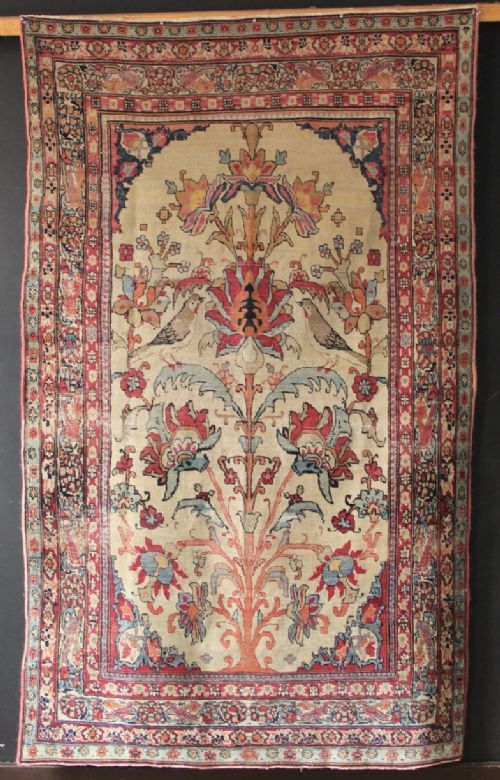
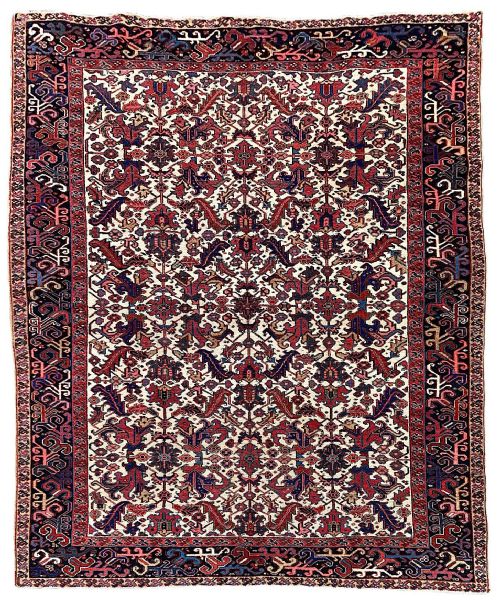
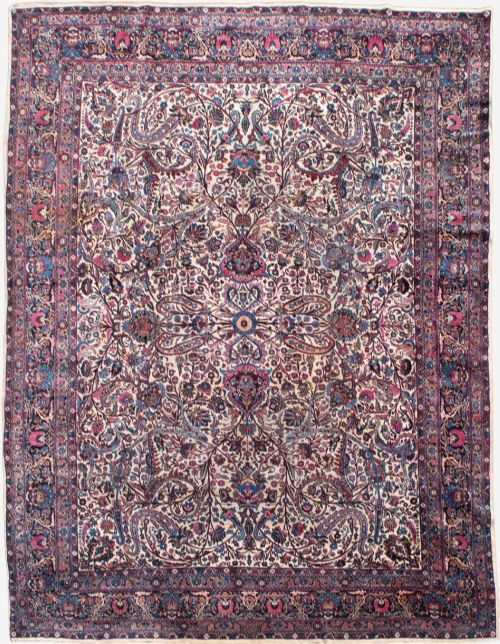
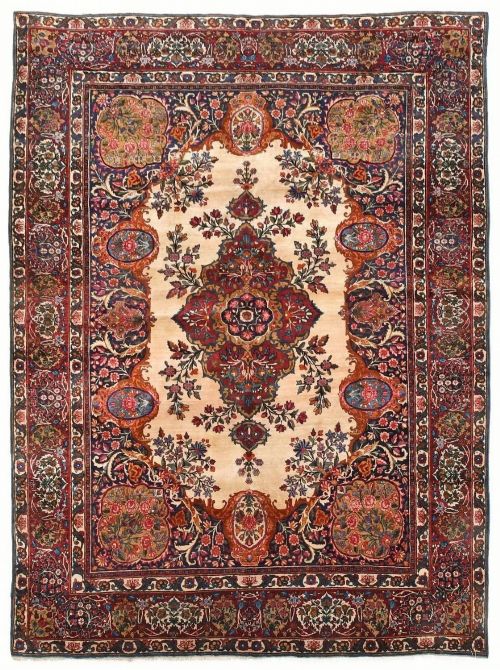
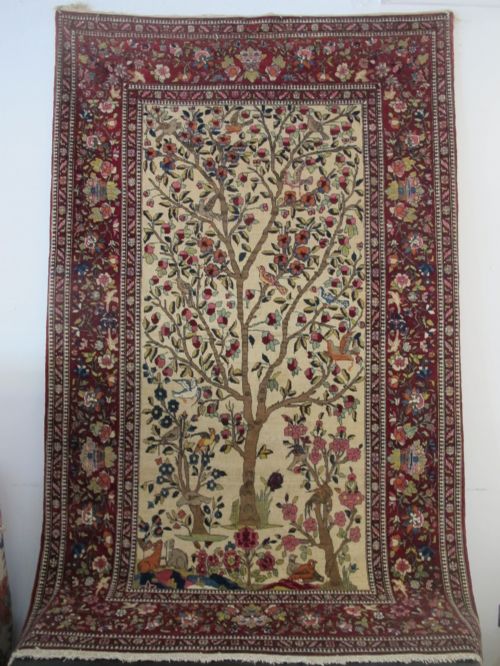


Cream Floral Wool Rug
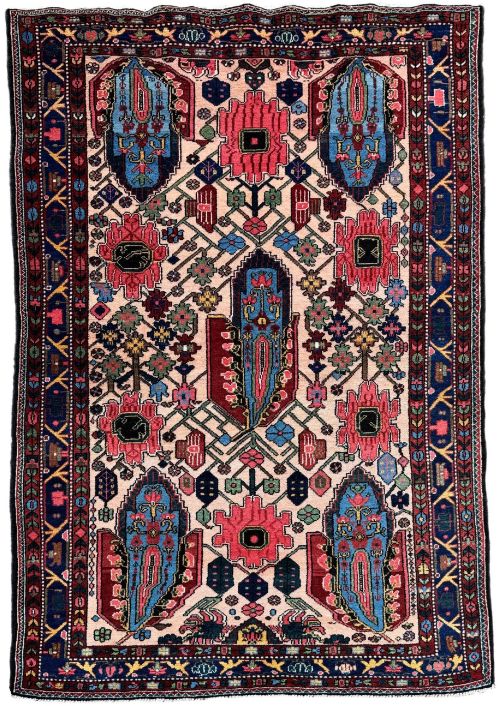
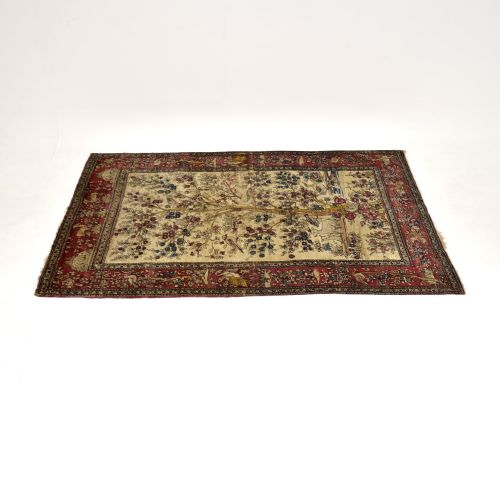
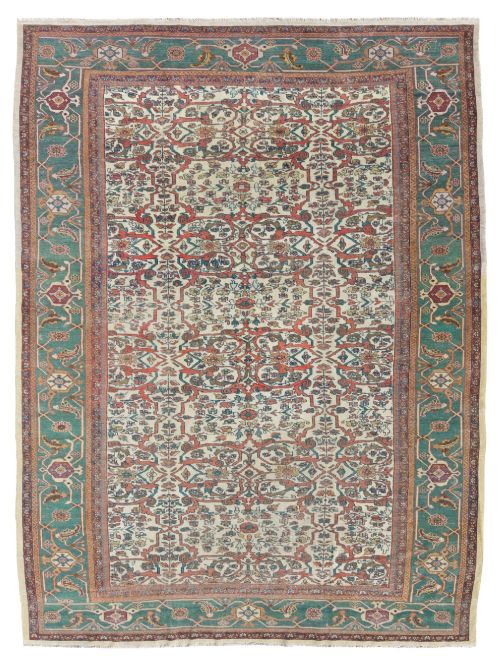
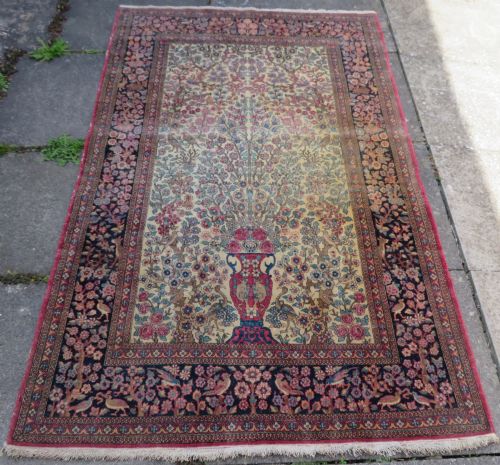
A cream floral wool rug brings gentle colour and intricate botanical design into a room, spanning styles from Persian traditional to Bessarabian.
Cream Floral Wool Rug
A cream floral wool rug comprises woven floor coverings featuring botanical motifs upon light or ivory grounds. These pieces originate predominantly from Persian weaving centres alongside European workshops from the late nineteenth century through to the mid-twentieth century.
Buyers encounter room-size carpets, smaller area pieces, and flatweave kilims. The selection spans traditional village and city workshops, utilising wool alongside occasional silk, cotton, and canvas foundations.
How they were made
These floor coverings are constructed primarily from wool pile knotted or stitched onto cotton, wool, or canvas foundations. Certain examples incorporate silk elements or employ flatweave techniques to create kilims and needlepoint textiles.
Weavers utilised natural and early synthetic dyes to build traditional palettes upon ivory and cream grounds, employing regional knotting structures specific to origins such as Tabriz, Kirman, and Bessarabia.
The listings span eight distinct decades from eighteen-seventy to nineteen-forty, featuring wool, cotton, silk, and canvas materials.
What varies in quality
Quality rests in the density of the knotting or stitching and the fineness of the botanical drawing. Pieces possessing greater structural tightness and precise floral detailing distinguish themselves from coarser village variations.
The sophistication of the palette and the integrity of the foundation materials dictate the tier of the piece. Master workshops achieve greater harmony in soft pastel tones and durable pile retention.
Ahmadi·Ziegler·Benlian·Mohtasham Kashan
The Cream Floral Wool Rug Glossary
- Pile
- The upright yarn forming the surface texture of a rug. It is knotted onto the foundation warps andwefts during construction.
- Kilim
- A flatweave carpet or rug made without a pile. These pieces rely on interlocking weft threads to form geometric and floral patterns.
- Foundation
- The underlying structural grid of warps and wefts that supports the pile or needlepoint stitches. It typically consists of cotton or wool.
- Warp
- The stationary vertical threads stretched across a loom before weaving begins. Weft threads are passed alternately over and under these lines.
- Prayer rug
- A small format rug featuring a mihrab or arch design indicating the direction of prayer. These pieces often display central floral vases.
Cream Floral Wool Rug: Frequently Asked Questions
What periods do these rugs cover?
The available selection spans from the late nineteenth century through the early twentieth century, with examples dating from the eighteen-eighties to nineteen-forty.
Most pieces originate from the decades around nineteen-hundred and nineteen-twenty, representing traditional Persian and European weaving periods.
How do I identify a Ziegler carpet?
Ziegler carpets typically feature softer, muted palettes and expansive floral designs tailored for Western interiors during the late nineteenth century.
They originated in the Sultanabad region of Persia to satisfy European aesthetic demands for lighter ivory and cream grounds.
Are these rugs made from pure wool?
Wool serves as the primary material for the pile across the vast majority of these listings, often combined with cotton foundations.
Certain specialised pieces incorporate silk highlights or canvas elements, particularly within specific regional traditions like Kashan or needlepoint works.
How should I live with a wool rug?
Wool rugs require regular gentle vacuuming without a beater bar to protect the pile and foundation structure from undue wear.
Positioning the rug away from direct continuous sunlight preserves the natural dyes and soft cream tones of the floral field.