






Cream Floral Tapestry Rug
These cream floral tapestry rug pieces bring warmth to a floor through traditional wool, cotton, and silk work.
Cream Floral Tapestry Rug
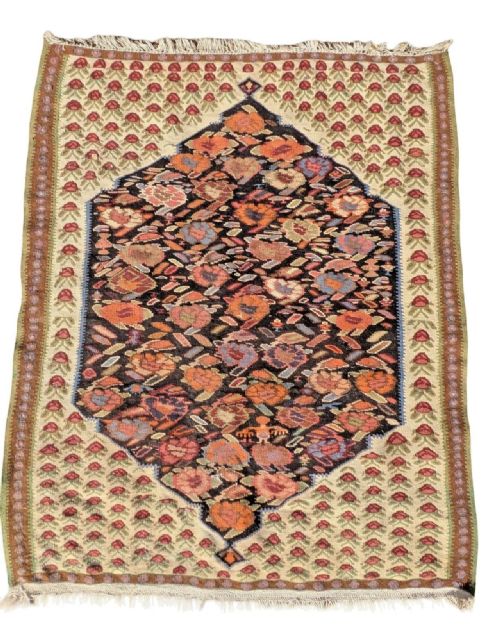
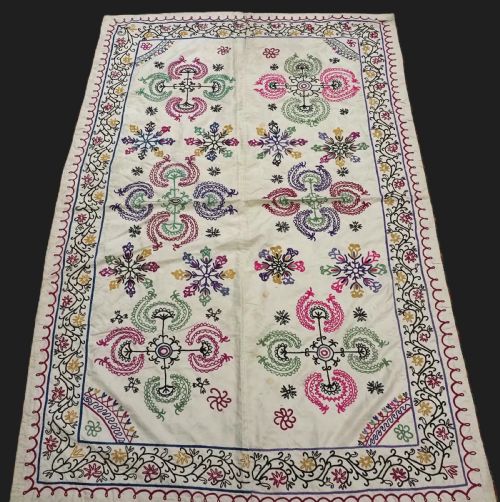
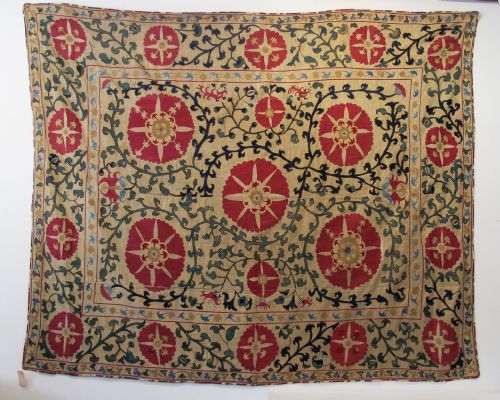
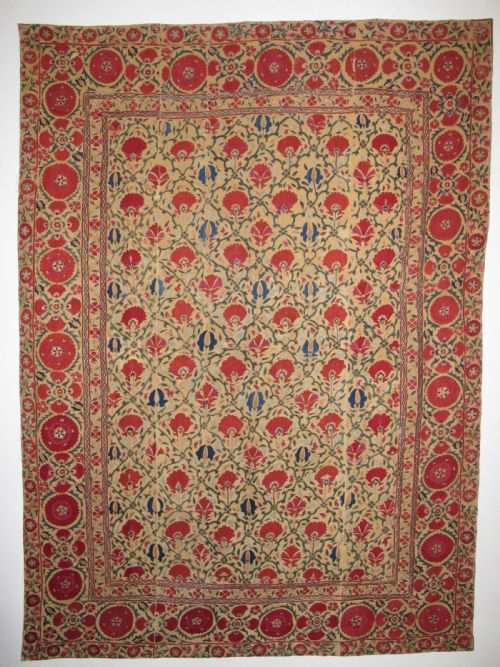
When you search for a cream floral tapestry rug, you uncover a distinct group of textiles ranging from the nineteenth century through to the mid twentieth century. These items include flatweave rugs, needlepoint pieces, and embroidered wall hangings originating from regions such as Central Asia, Portugal, and Bessarabia.
The most common examples you will meet on this page are vintage and antique Suzanis alongside European needlepoint carpets. They span various traditional styles including Persian, Iberian, and Central Asian folk art, offering versatile floor coverings and decorative wall hangings.
How they were made
The creation of these textiles relies primarily on natural fibres like wool, cotton, and silk, worked onto sturdy canvas grounds. Artisans employed detailed silk thread embroidery and needlepoint techniques to build up intricate floral patterns.
Makers utilised flatweaving methods for kilims and heavier embroidery for Suzani panels, often combining wool yarns with fine silk work. This variety in textile construction yields both durable floor carpets and delicate wall textiles.
Cream Floral Tapestry Rug Retail Price Guide 2026
Typical asking prices for cream floral tapestry rug among the pieces listed under this phrase on Sellingantiques today, from the lower quarter to the upper quarter. They describe what is for sale here now, not the wider market.
Listings span from the mid nineteenth century to the mid twentieth century, featuring wool, cotton, silk, and canvas.
What varies in quality
The distinction between ordinary and superior pieces rests on the fineness of the needlework and the clarity of the botanical design. Dense silk thread embroidery on a sound cotton or canvas ground shows greater execution skill.
Preservation of the original materials and the crispness of the woven or embroidered motifs determine the overall standard. Pieces with intact edges and well-maintained natural fibres display the maker's original intent more clearly.
The Cream Floral Tapestry Rug Glossary
- Suzani
- An embroidered tribal textile originating from Central Asia, typically featuring bold floral motifs on a light ground. These pieces were traditionally worked by brides as part of their dowry.
- Kilim
- A flatwoven carpet or rug produced without a pile, common in Bessarabian and Near Eastern traditions. This technique creates a lightweight textile suitable for both floors and walls.
- Needlepoint
- A type of canvas work embroidery stitched by hand using wool or silk threads. It creates a dense, durable surface often seen in Portuguese carpets.
- Crewelwork
- A traditional form of embroidery utilising wool yarn to create flowing floral and vine patterns. It appears on historic wall hangings and decorative floor coverings.
- Aubusson
- A style of French tapestry-woven carpet known for classical floral designs. These pieces bring a structured, architectural element to interior spaces.
Cream Floral Tapestry Rug: Frequently Asked Questions
Where should I place a textile rug?
These pieces suit low-traffic areas of the home where delicate silk and wool threads are protected from heavy wear. Bedrooms and studies benefit particularly from the warmth and texture they add.
Alternatively, many examples function effectively as wall hangings to protect the fabric from foot traffic while displaying the intricate embroidery fully.
How do I clean an antique rug?
Gentle surface cleaning and professional textile conservation methods are essential for maintaining older wool and silk pieces. Avoid aggressive washing or scrubbing which can damage the delicate foundation.
Consult a specialist in historic textiles for advice tailored to embroidered Suzanis or fragile needlepoint carpets.
What is the difference between a kilim and a Suzani?
A kilim is a flatwoven rug constructed on a loom without any raised pile. They rely on interlacing warp and weft threads to form geometric and floral patterns.
A Suzani is an embroidered textile where designs are stitched onto an already woven foundation fabric, typically using fine silk threads.
How can I tell the age of a textile?
Dating relies on examining the natural dyes, fibre types, and regional stitching characteristics visible in the piece. Nineteenth-century examples often display specific hand-spun wool qualities and traditional regional palettes.
Comparing the botanical motifs to documented examples from Central Asia or Europe helps narrow down the period of production.