

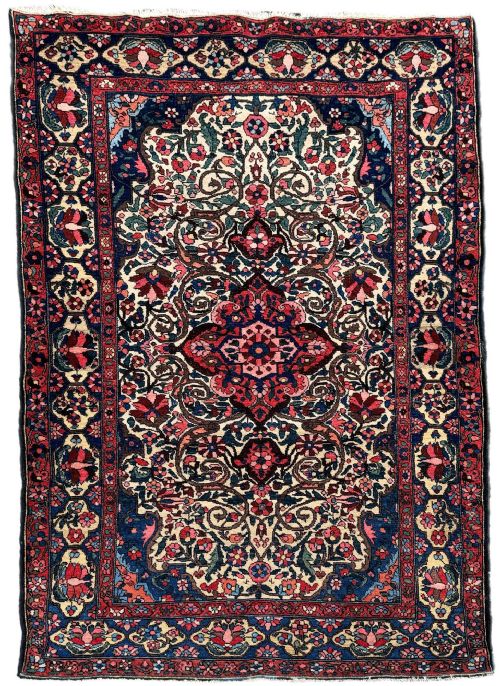
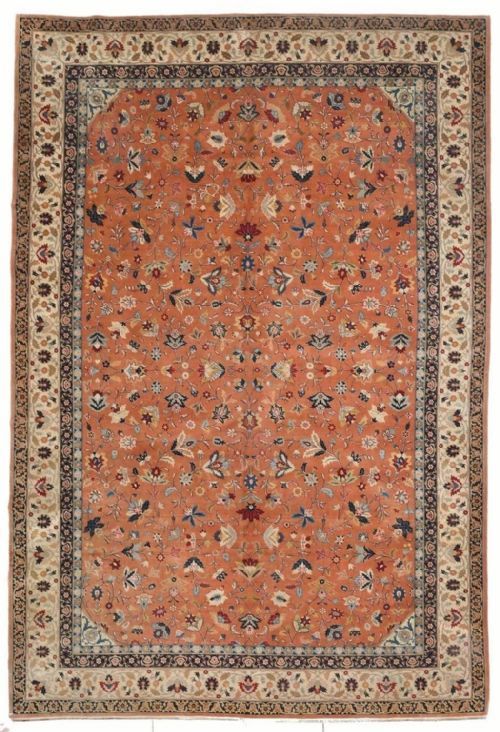
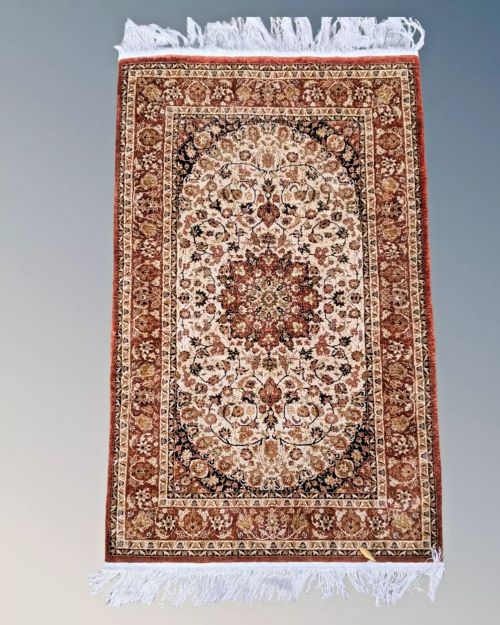
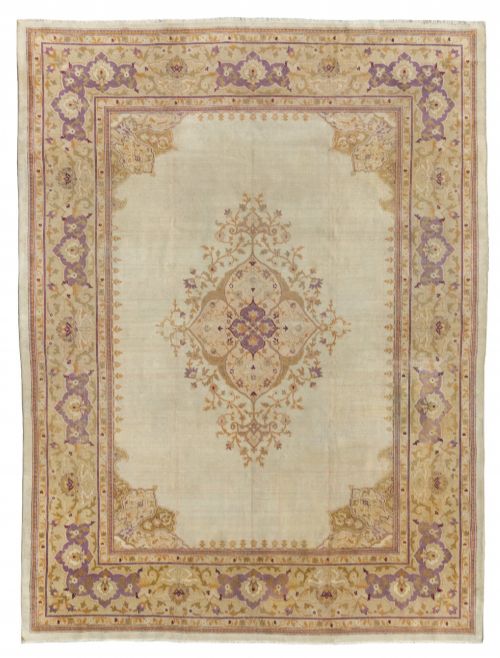
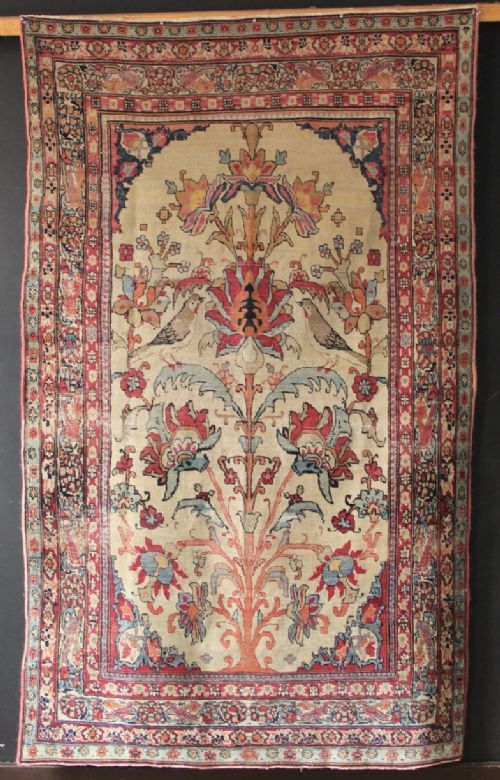
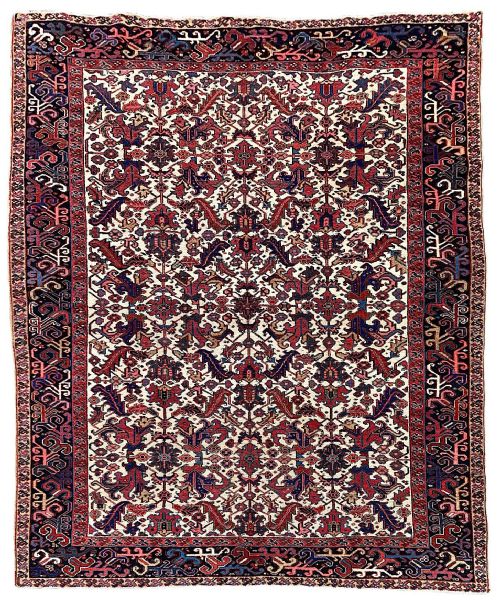
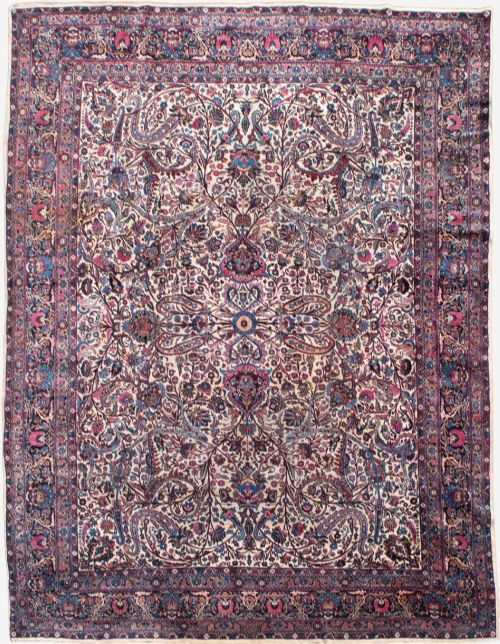
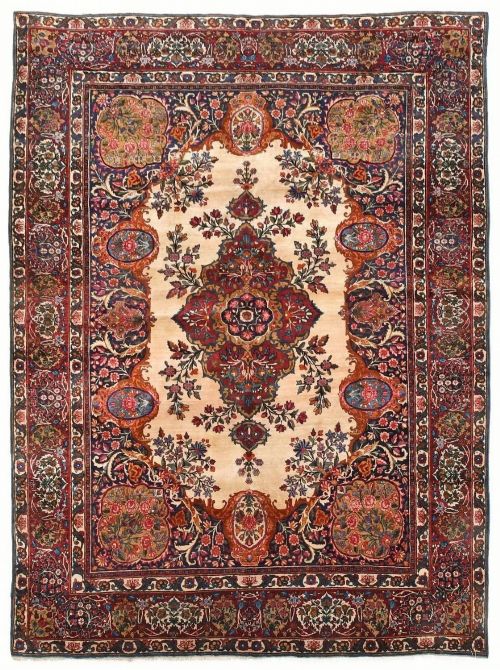
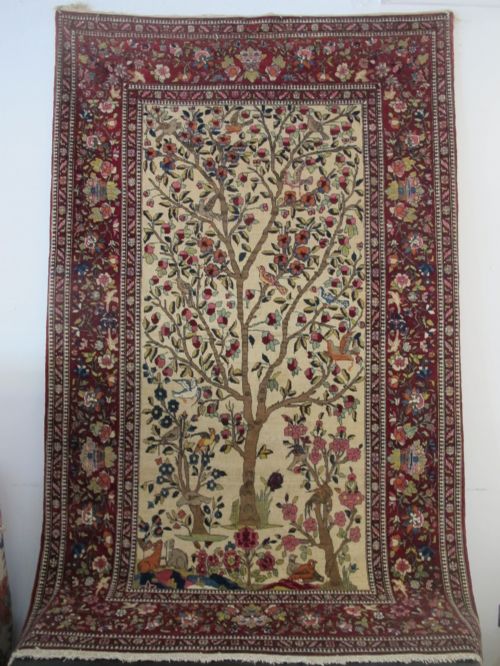


Cream Floral Carpet
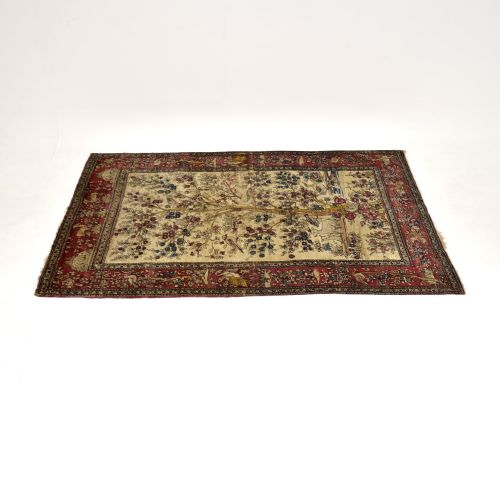
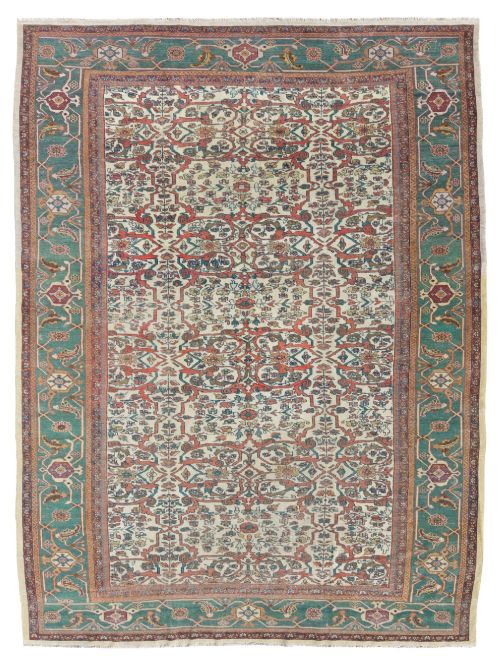
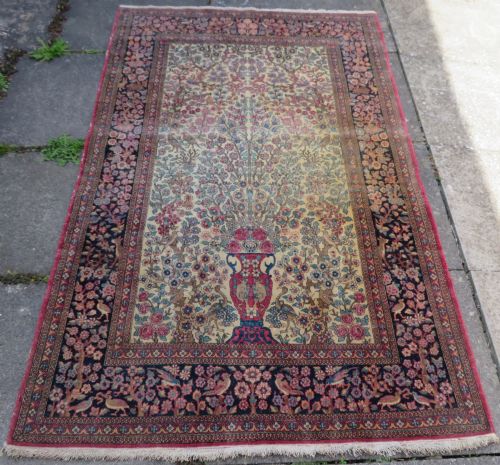
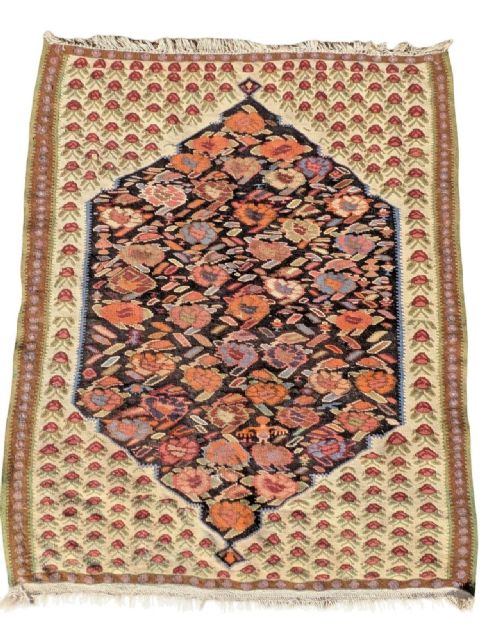
A cream floral carpet brings a soft, botanical ground and enduring Persian or European hand-knotting into a room.
Cream Floral Carpet
A cream floral carpet serves as a substantial floor covering defined by light neutral grounds and botanical motifs. When browsing for a cream floral carpet, collectors encounter room-size weaves alongside smaller scatter formats originating from diverse regional traditions.
The selections span production dates from the late nineteenth century through to the mid-twentieth century. Persian workshops predominate, complemented by European needlepoint and kilim traditions appearing across various dimensions.
How they were made
Weavers utilised natural wool, cotton, and occasionally silk or canvas foundations to construct these floor coverings. Pile rugs typically employ hand-knotting techniques upon sturdy cotton or wool warps, securing dense botanical patterns.
Needlepoint and chain stitch examples employ stitched wool threads over canvas structures. These varied textile methods allow both crisp medallion layouts and flowing floral vine arrangements.
Several carpets manage to combine austere Persian garden geometry with remarkably soft pastel tones.
What varies in quality
Knot density and material selection dictate the definition within the floral details and the overall resilience of the pile. Finer wool yields a softer handle and sharper botanical outlines.
The complexity of the regional design, such as intricate tree of life or vase compositions, separates standard production from exceptional examples. Uniformity in dyeing and foundational balance further distinguish superior pieces.
Benlian Tabriz·Mohtasham Kashan·Ahmadi Isfahan
The Cream Floral Carpet Glossary
- Pile
- The upright yarn loops or cut ends that form the usable surface of a carpet. This layer displays the woven design and absorbs foot traffic.
- Warp
- The vertical foundation threads stretched tightly on the loom before knotting begins. These parallel strings support the structural integrity of the entire textile.
- Weft
- The horizontal threads passed across the warp strands between rows of knots to bind the structure firmly. Proper tension ensures the rug maintains its rectangular form.
- Medallion
- A symmetrical central ornament placed in the field of a carpet. It often serves as the focal point for surrounding floral motifs.
- Kilim
- A flat-woven textile produced without a raised pile. These pieces rely on interlocking weft threads to create geometric or floral patterns.
Cream Floral Carpet: Frequently Asked Questions
How do I place a cream floral carpet?
Position the piece in low-traffic seating areas to preserve the light woolen pile.
Keep the rug away from direct sunlight to maintain the integrity of the pastel and ivory dyes.
What materials make up these carpets?
Most examples utilise wool pile set upon cotton foundations, with occasional silk or canvas variations.
Finer pieces incorporate silk highlights to accentuate specific botanical details within the floral field.
How do I distinguish regional styles?
Examine the specific floral vocabulary and border structures to identify Persian origins like Kirman, Tabriz, or Kashan.
European pieces typically present as needlepoint or chain stitch needlework rather than traditional hand-knotted pile.
What periods do these carpets span?
The available selection primarily encompasses late nineteenth-century weaves up through the 1940s.
Earlier nineteenth-century examples often display denser vegetal dyes and distinct tribal or workshop attributions.