
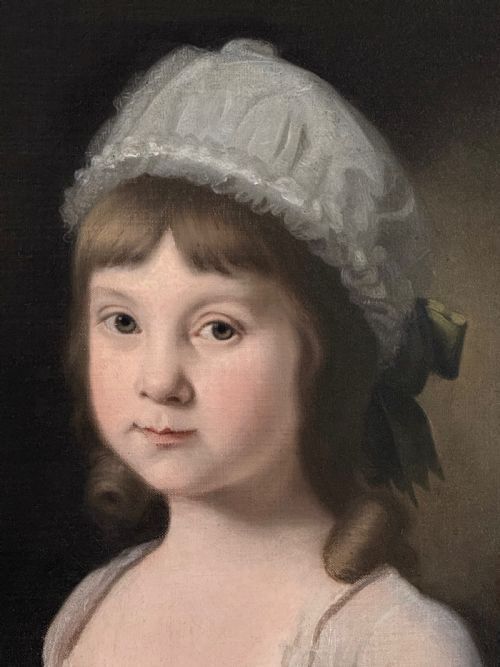


Cream Dress Portrait
A cream dress portrait captures a subject in pale attire, offering a glimpse into past fashion and portraiture traditions.
Cream Dress Portrait
A cream dress portrait brings together historic subjects rendered in pale garments across various centuries. These works span the eighteenth century, the Regency era, and nineteenth-century academic realism.
The selections on this page include oil paintings on canvas, delicate watercolours, gouache, and portrait miniatures. Subjects range from aristocratic ladies to military figures and literary personalities.
Most pieces date from the Georgian and Regency periods, reflecting the prevailing portrait styles of those times. Collectors encounter both named artists and works attributed to specific English and continental schools.
Materials and Techniques
Artists employed oil paint on canvas to build rich layers and capture the sheen of fabrics. Watercolour and gouache on paper served for smaller, more intimate miniature formats.
Framing often involves giltwood, which complements the traditional palettes of the period. Pigments were hand-mixed by artists or their studios to achieve specific skin tones and textile hues.
Listings feature canvases, paper works, and giltwood frames spanning the eighteenth, nineteenth, and twentieth centuries.
Judging Quality
Provenance and attribution to documented artists elevate a piece significantly. The preservation of the original canvas, paper, and framing materials also influences the standing of the work.
Joshua Reynolds·Attilio Toro·Nicolas Freese·John Horsburgh·Theobald Chartran·Francis Alleyne·George Clint·Alexander Melville·John Raphael Smith
The Cream Dress Portrait Glossary
- Gouache
- An opaque water-based medium that produces flat, matte areas of colour with high pigment saturation. It is frequently found in portrait miniatures.
- Portrait Miniature
- A small, highly detailed painting, often executed on ivory, vellum, or paper. These works were designed to be held in the hand or worn as lockets.
- Giltwood
- Wood that has been coated with a thin layer of gold leaf or powder. It is common on frames housing Georgian and Regency art.
- English School
- A designation for works produced by artists trained or working in England whose individual identities remain unconfirmed. It groups stylistic similarities across decades.
Cream Dress Portrait: Frequently Asked Questions
What periods do these portraits cover?
The available selection spans the eighteenth century through to the twentieth century, with a strong concentration of pieces from the Georgian and Regency eras.
Buyers will also find examples from later periods, including Victorian works and mid-twentieth-century Italian paintings.
What materials were used?
Artists utilised oil paint on canvas for larger works, alongside watercolour and gouache on paper for miniatures and drawings.
Frames are frequently constructed from giltwood, adding traditional ornamentation to the paintings.
How do I identify a miniature?
Miniatures are characterised by their small scale, often painted on paper or vellum using gouache or watercolour.
They frequently depict individual sitters with fine detail intended for close viewing.
Are all the artists identified?
Several pieces are attributed to listed artists and named portraitists from British and European schools.
Others are catalogued under regional school designations where the specific painter remains unknown.