
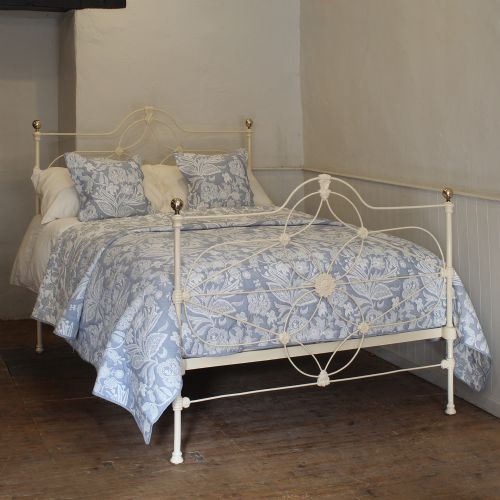
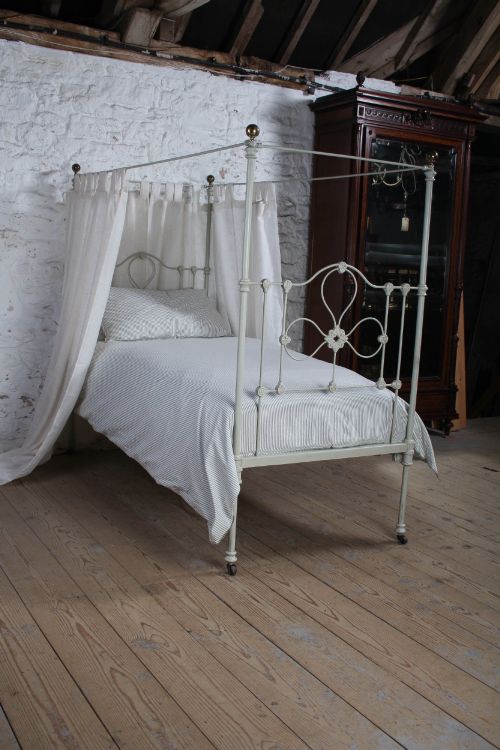
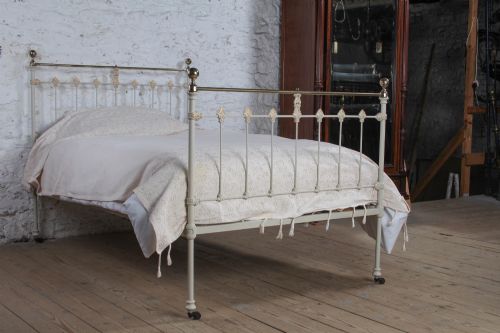
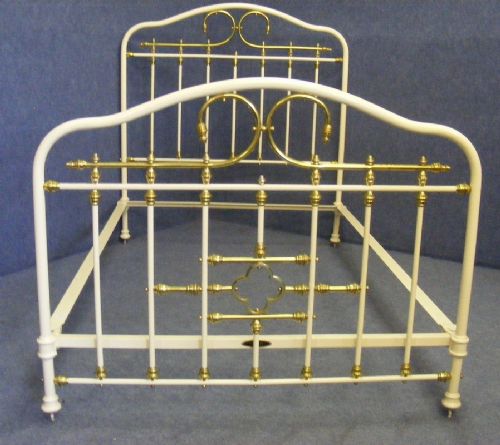


Cream Brass Bedstead
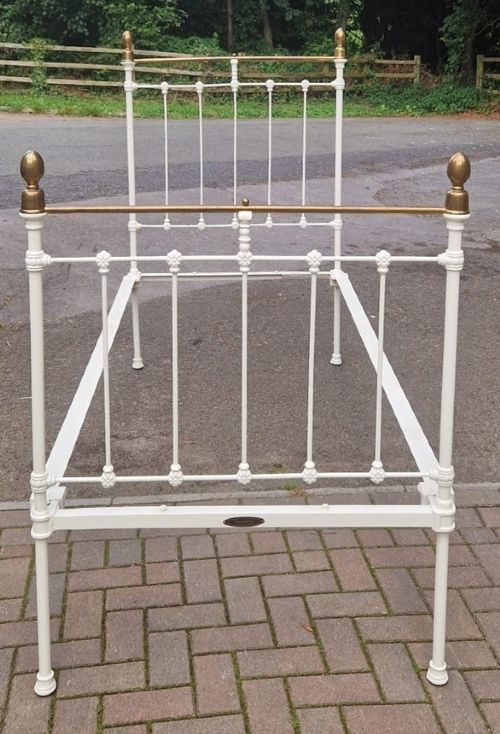
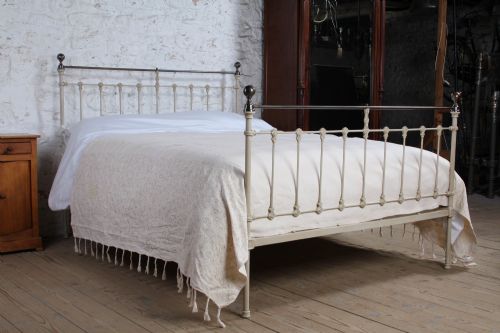
A cream brass bedstead brings together warm pale paint and polished metal for a substantial centrepiece in a bedroom.
Cream Brass Bedstead
When you search for a cream brass bedstead, you encounter nineteenth and early twentieth century sleeping furniture built primarily from iron, cast elements, and gleaming metal accents. These items span Victorian production through to later Edwardian and French examples, surfacing in forms that range from single sizes to super king widths.
The dominant style on this page is Victorian, alongside French Neoclassical and French Empire influences. You meet double, small double, and king sizes featuring pale painted finishes in cream and ivory paired with brass rails, mounts, and caps.
How they were made
Makers constructed these bedsteads using heavy cast iron and wrought iron frames combined with substantial brass components. Metal foundries cast structural ends and decorative details before finishing the iron surfaces with painted coats in cream, ivory, or similar pale tones.
Brass elements such as top rails, mounts, and caps were polished and fitted directly to the iron framework. Certain variations incorporate painted wooden elements or specific accents like dip rails and half testers to add architectural height.
Materials across these listings span iron, cast iron, wrought iron, brass, paint, and painted wood, dating from the Victorian era up to nineteen twenty.
What varies in quality
The distinction between ordinary and exceptional examples rests on the crispness of the iron casting and the heft of the brass components. Heavier gauge metalwork and more elaborate decorative detailing separate ambitious factory output from simpler utilitarian frames.
Surface finish longevity and the proportion of original brass fittings dictate overall desirability. Retaining original paint coats alongside substantial uncompromised brass tubing elevates the character of the piece.
R W Winfield
The Cream Brass Bedstead Glossary
- Bedstead
- The complete structural framework of a bed, excluding the mattress and base. It typically comprises a headboard, footboard, and connecting side rails.
- Cast Iron
- Molten iron poured into a mould to create rigid structural or decorative forms. It provides the heavy foundation for these nineteenth century frames.
- Half Tester
- A canopy projecting partway over the head of a bed from the wall or headboard. This configuration supports fabric drapery without enclosing the entire structure.
- Dip Rail
- A headboard or footboard rail that curves downwards in the centre. This profile lightens the visual weight of wide iron frames.
Cream Brass Bedstead: Frequently Asked Questions
What sizes are available?
These listings include single, small double, double, queen, king, and super king widths. You also find specific formats like three quarter and extra wide platform configurations.
Dimensions vary by period, so measuring your intended room space against the specific frame measurements remains essential before purchase.
How do I choose a mattress?
Older bedstead dimensions often differ slightly from modern standard mattress sizes. Checking the internal length and width of the iron frame ensures a proper fit.
Custom mattress makers can supply bespoke bases and mattresses that match historical proportions accurately.
Are these beds easy to assemble?
Most antique metal bedsteads utilise slot-in side rails that wedge securely into the headboard and footboard sockets without requiring complex tools.
Having two people manage the heavy cast iron components makes positioning and tightening the frame straightforward.
How do I care for the metal?
Dust brass components gently and use appropriate metal cleaners sparingly to preserve the polished finish without harming adjacent painted surfaces.
Keep painted iron surfaces clean with a dry or barely damp cloth to protect the historic cream finish.