
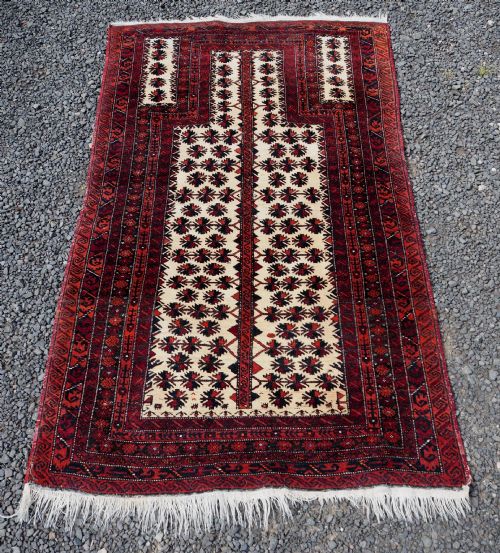


Cream Prayer Carpet
A cream antique prayer carpet brings centuries of textile tradition into a room, offering ivory or light ground floors defined by sacred architectural mihrab arches.
Cream Prayer Carpet
A cream antique prayer carpet is a portable textile designed for ritual devotion, characterised by a distinct niche or arch that points toward Mecca. When exploring this search phrase, buyers encounter woven works originating primarily from Anatolian, Persian, and Caucasian regions.
The pieces appearing on this page span from the early nineteenth century through the early twentieth century. Common regional types include Turkish villages such as Milas, Kirsehir, and Ghiordes, alongside Persian Baluchi and Caucasian Shirvan formats.
Most examples rely on a pale ivory or cream field to contrast with richly saturated borders and spandrels. These compositions serve both spiritual functions and decorative roles within domestic interiors.
Materials and construction methods
Weavers constructed these rugs using natural materials, predominantly wool, hand-spun wool, cotton, and occasionally silk. Foundations typically utilise sturdy cotton or wool warps and wefts to support dense pile knots.
Dyers employed natural colorants derived from local plants and minerals to achieve the soft tones seen across the surviving examples. Hand-knotting techniques varied by tribe and workshop, determining the fineness of the finished surface.
Village weavers occasionally inserted small comb motifs into the field, hoping to keep stray threads tidy and appease the loom spirits.
Distinctions in execution and design
Quality separates along the precision of the knotting and the complexity of the floral lattice or architectural mihrab details. Finer pieces demonstrate superior mastery of scale within the border systems and central field.
The integrity of the hand-spun materials and the subtlety of the natural dye palette also dictate the stature of a weave. Stronger structural survival through the nineteenth and early twentieth centuries elevates certain regional village rugs above others.
The Cream Prayer Carpet Glossary
- Mihrab
- The architectural arch or niche depicted on a prayer rug, designed to orient the worshipper. It forms the focal point of the carpet's upper field.
- Kashmir
- A region associated with intricate floral patterns, though in these rugs it often references specific Persian weaving styles. The term denotes detailed decorative intricacy.
- Warp
- The vertical threads stretched lengthwise on the loom that form the structural foundation of the rug. Wefts are then inserted across these threads.
- Spandrel
- The triangular spaces situated above the curved arch of the mihrab. These areas are frequently filled with floral motifs or geometric lattice work.
- Pile
- The dense surface of knotted yarn that stands upright from the foundation. Material choices like hand-spun wool or silk directly affect its texture.
Cream Prayer Carpet: Frequently Asked Questions
How do I identify a prayer rug?
A prayer rug is distinguished by its central mihrab arch, which indicates the direction of prayer. This architectural layout separates devotional textiles from standard floor coverings.
Makers often populated the field beneath the arch with floral vases or lamps to enhance the sacred symbolism of the composition.
Where were these carpets made?
These carpets originate from traditional weaving centres across Anatolia, Persia, and the Caucasus. Specific villages and tribes such as Ghiordes, Milas, and Baluch produced distinct regional variations.
Each area imparted local aesthetic traits through specific choices in palette and geometric or floral motifs.
What materials make up the pile?
The pile is constructed primarily from wool, hand-spun wool, or silk. Foundation elements typically consist of sturdy cotton or wool.
Natural fibres and hand-spun yarns contribute to the soft, light coloration seen across ivory ground examples.
How do I date an antique rug?
Dating relies on stylistic indicators, material analysis, and structural characteristics typical of nineteenth and early twentieth-century production. Natural dyes and hand-spun wools often point toward earlier periods.
Village attributions and specific workshop designs help narrow the era of manufacture.