


Craftsman Oak Bookshelf
A craftsman oak bookshelf brings honest construction and simple utility into a room, offering sturdy open shelving built to last.
Craftsman Oak Bookshelf
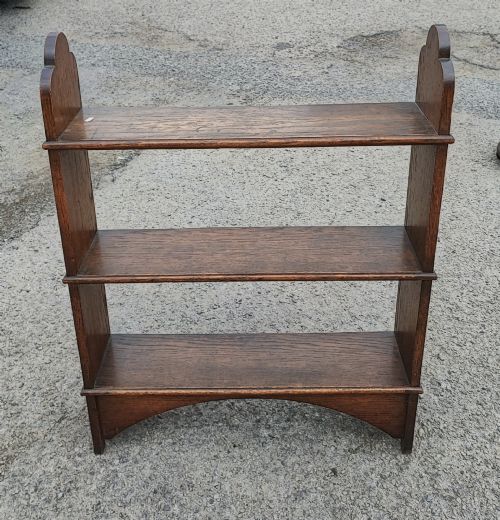
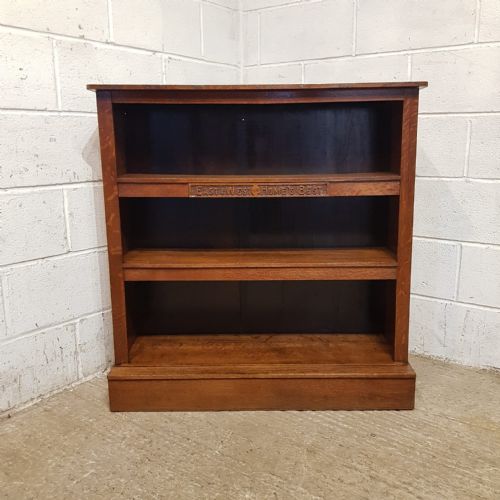
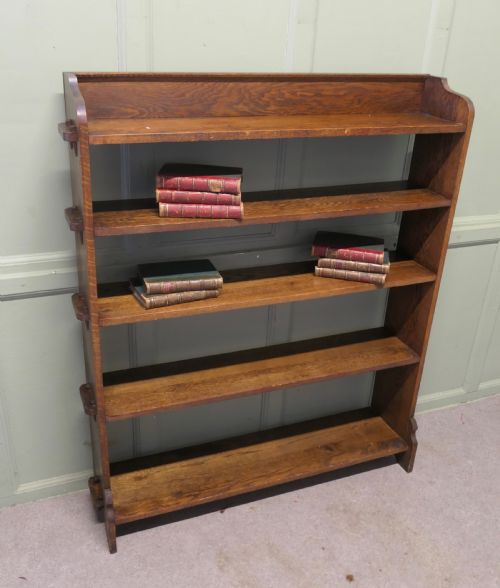
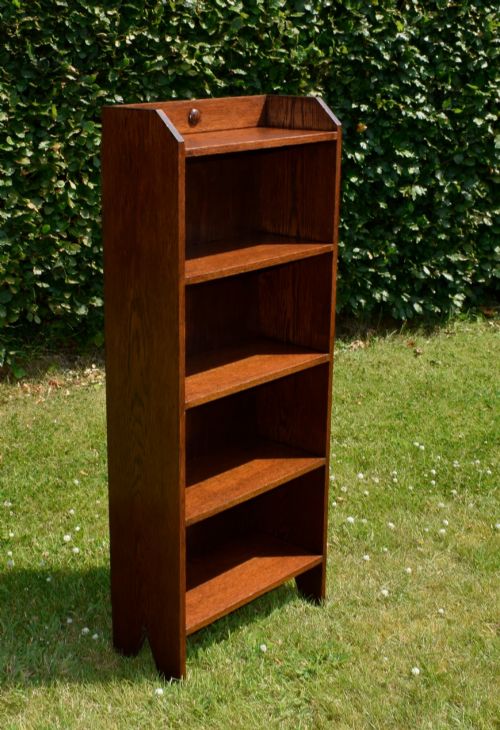
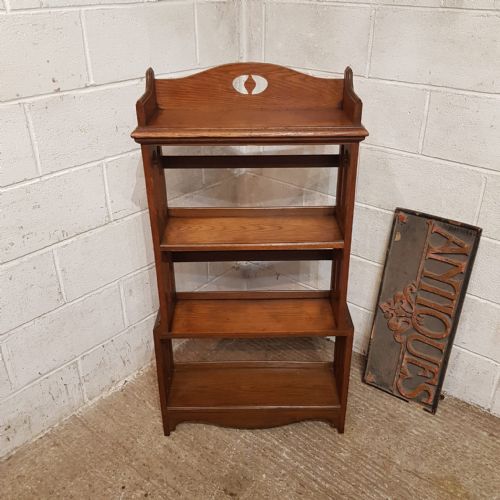
A craftsman oak bookshelf is a sturdy open bookcase designed for domestic utility, typically following the design tenets of the Arts and Crafts movement. These pieces provide open-front storage across several shelves, often with adjustable heights to accommodate varying volumes.
The versions most frequently met on this page date from the late nineteenth century into the early decades of the twentieth century, specifically spanning the periods around eighteen-eighty to nineteen-thirty. They appear predominantly in open configurations without doors, prioritising accessibility and straightforward function.
Makers working within this idiom focused on honesty of structure rather than concealed joinery, leaving timber grain and functional lines exposed. Such bookcases suit modern interiors just as well as period homes, anchoring a study or living space with reliable utility.
How these bookcases were made
Makers constructed these pieces using solid oak, selecting timber for its strength and visible grain pattern. The primary technique relies on straightforward joinery that supports open front designs with multiple fixed or adjustable shelves.
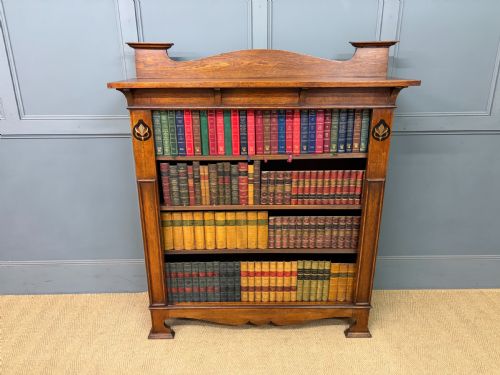
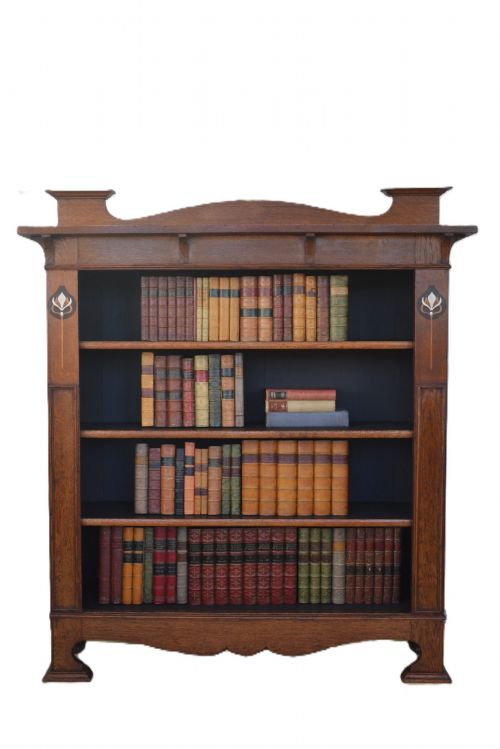
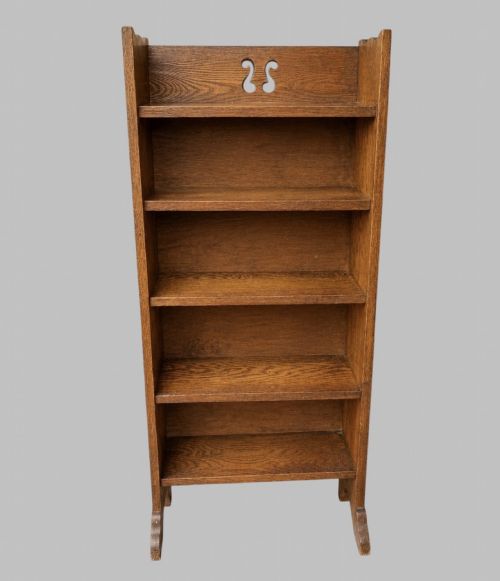
Selected examples incorporate decorative elements such as marquetry or inlay work to enhance the surface appearance of the oak. Cut-out details occasionally appear on the panels or sides, adding subtle visual interest to the otherwise utilitarian framework.
Listings span four distinct decades from eighteen-eighty to nineteen-thirty, showcasing the evolution of Arts and Crafts oak furniture.
What varies in quality
The standard of a craftsman oak bookshelf rests largely upon the selection of timber and the execution of its open shelves. Heavier gauge solid oak and well-integrated adjustable shelf mechanisms demonstrate a higher grade of workshop production.
Subtleties in surface detail, such as careful inlay work or clean decorative cut-outs, separate standard utilitarian pieces from those bearing attribution to notable workshops like Heal's. The crispness of the edges and the stability of the uprights define the overall integrity of the build.
Heals
The Craftsman Oak Bookshelf Glossary
- Arts and Crafts
- A design movement spanning the late nineteenth and early twentieth centuries that emphasised handcraft, plain materials, and simple utility. It rejected heavy Victorian ornamentation in favour of honest construction.
- Open bookcase
- A piece of furniture consisting of horizontal shelves supported by vertical sides, lacking doors or enclosed cupboards. This form allows immediate access to books and objects.
- Solid oak
- Timber derived entirely from the oak tree, used without veneers or composite boards. It provides exceptional weight and durability.
- Inlay
- A decorative technique where contrasting materials are inserted into depressions in the wood surface. It adds pattern and colour without altering the structural profile.
Craftsman Oak Bookshelf: Frequently Asked Questions
What defines a craftsman oak bookshelf?
A craftsman oak bookshelf is characterised by its open front, solid oak construction, and roots in the Arts and Crafts movement. These pieces prioritise functional utility and visible timber grain over ornate decoration.
They emerged during the late nineteenth and early twentieth centuries, offering sturdy storage solutions that remain practical for modern use.
How do I date these bookcases?
Dating relies on stylistic clues and construction methods associated with the periods from eighteen-eighty to nineteen-thirty. Pieces from this era often display the characteristic plain lines and joinery of the Arts and Crafts style.
Changes in hardware, shelf adjustment mechanisms, and subtle decorative cut-outs also help narrow down the decade of production.
Are the shelves adjustable?
Certain examples feature height-adjustable shelves to accommodate books of various sizes, while others maintain fixed tiers. This functionality was incorporated into specific workshop designs to increase everyday utility.
Examining the interior uprights reveals the slots or brackets used to alter shelf placement.
How should I care for solid oak?
Solid oak requires minimal maintenance beyond dusting with a dry or slightly damp cloth to protect the timber surface. Avoiding direct sunlight and extreme temperature fluctuations prevents the wood from drying out or splitting.
Applying occasional natural wax helps nourish the grain and maintain the natural finish of the period.