
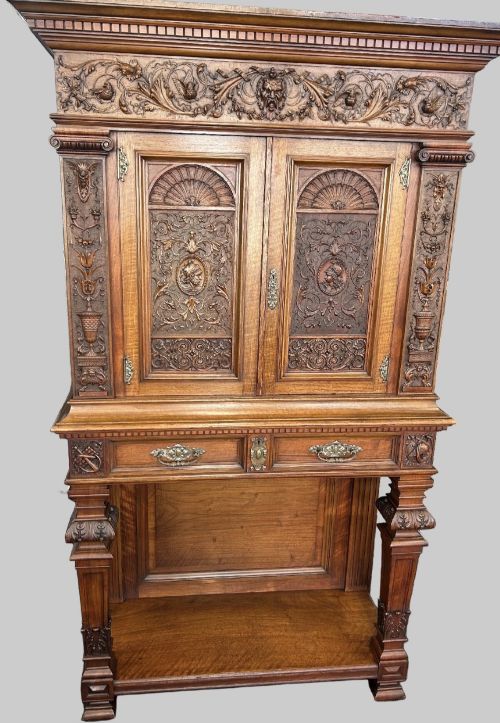
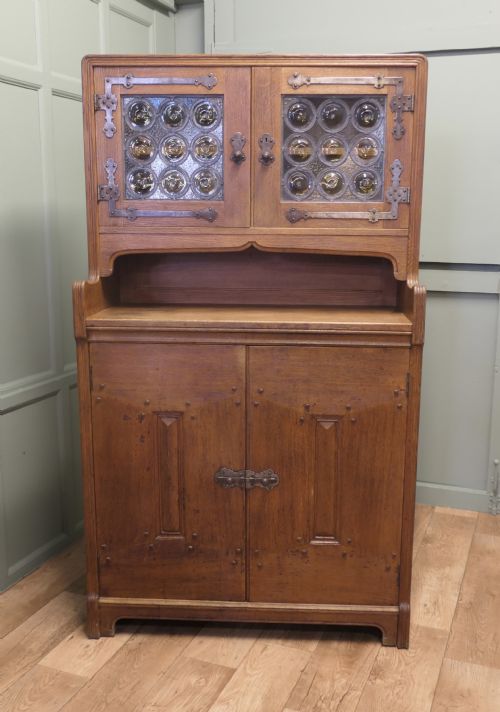
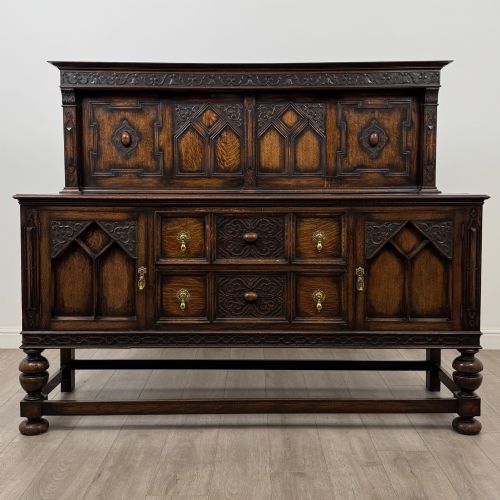
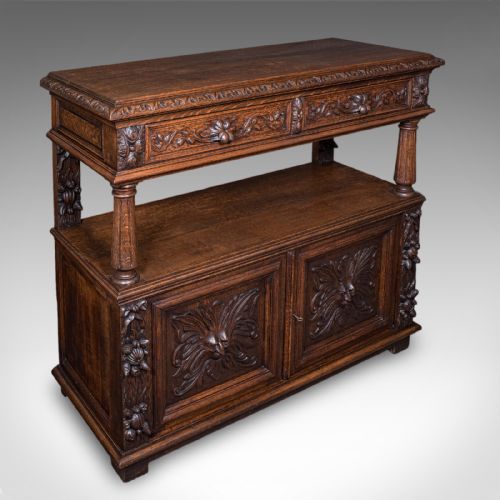
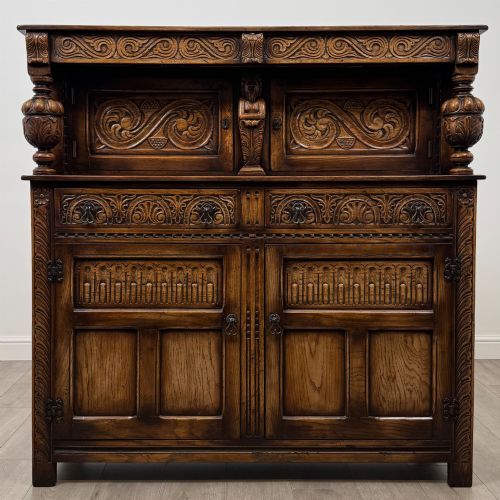
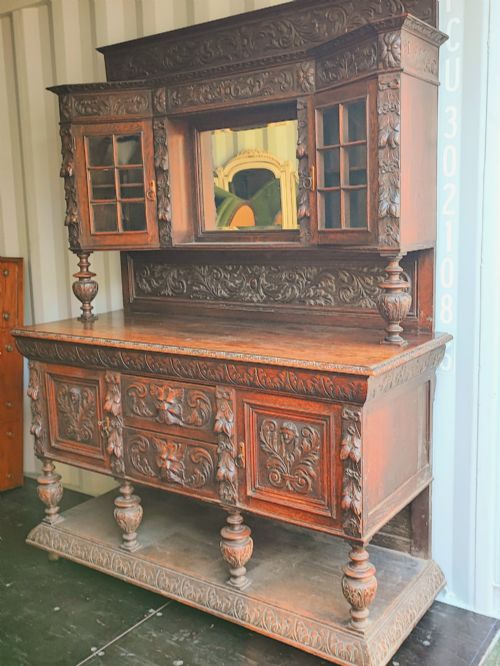
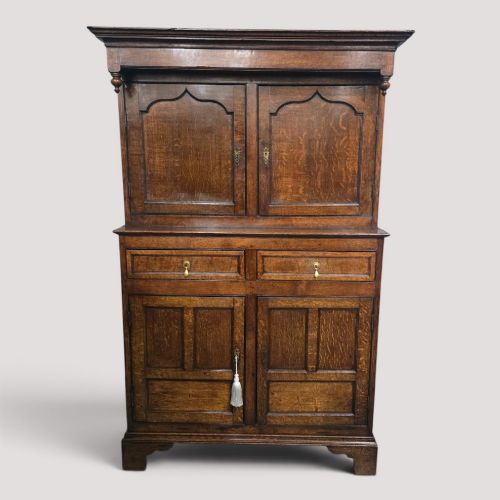
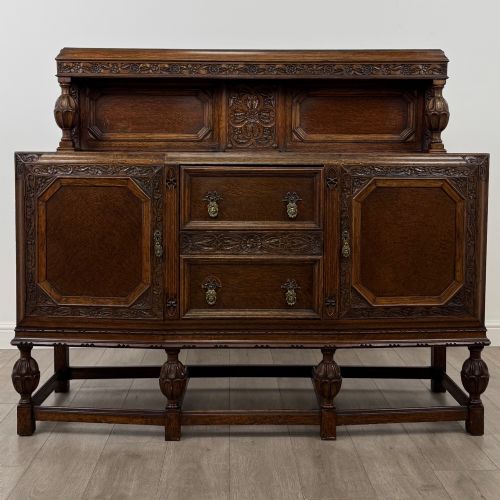


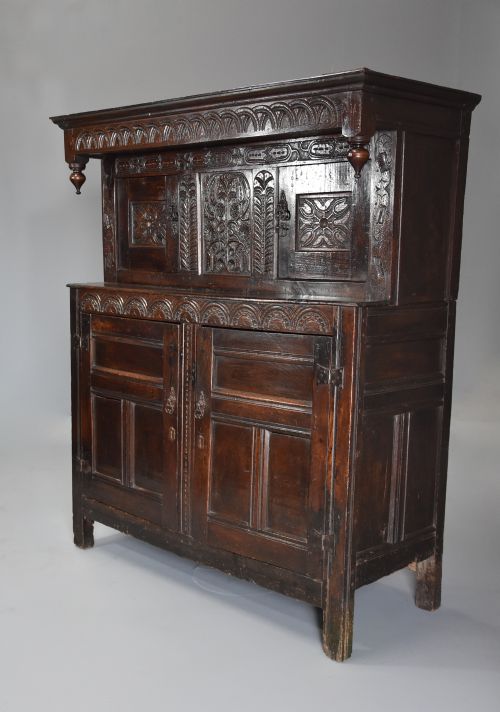

Court Cupboard Sideboard
A court cupboard sideboard combines deep historical storage with sturdy proportions, making it a commanding focal point for dining rooms and large halls.
Court Cupboard Sideboard
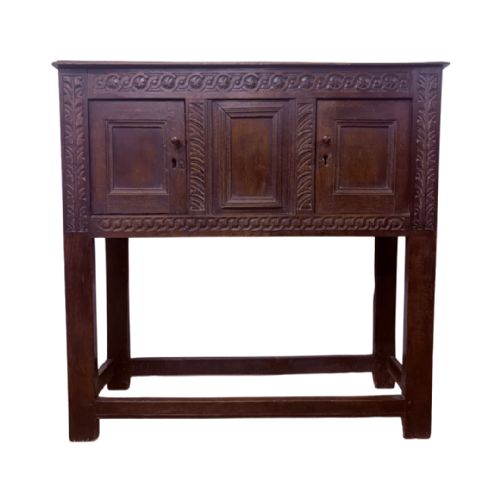
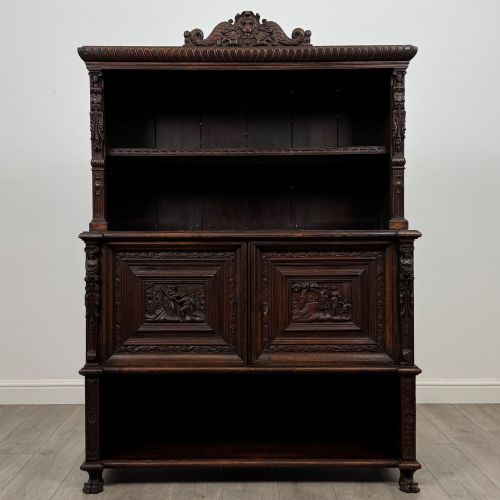
A court cupboard sideboard represents a sturdy lineage of heavy storage furniture designed for displaying plate and concealing household stores. When you search for court cupboard sideboard, you encounter substantial forms rooted in early domestic architecture.
The versions most common on this page span the seventeenth century up through the Edwardian and Victorian revivals. They blend enclosed lower cupboards with recessed upper tiers or extended serving surfaces.
Makers drew on Jacobean, Gothic, and Renaissance revival styles to create these imposing hybrid forms. They function today as practical servers and dramatic display pieces in period or contemporary interiors.
How they were made
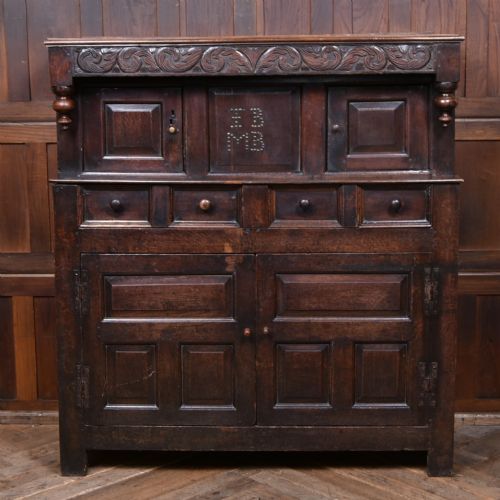
Joinery traditions dictate the construction of these pieces, relying heavily on pegged mortise and tenon frames built from English oak. Workshops utilised walnut, fruitwood, and iron hardware alongside this primary timber to add structural contrast and functional strength.
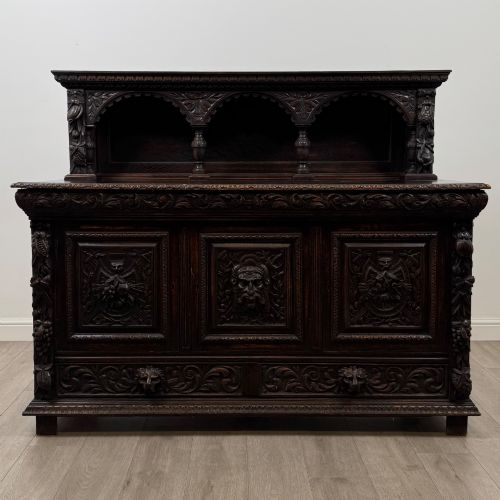
Surface decoration involved deep hand-carving, panel moulding, and linenfold detailing applied directly to the timber framework. Finished pieces often gained their character from centuries of polishing that enhanced the natural grain of the wood.
Some nineteenth-century revival pieces feature watchful carved wooden Green Man faces peering out from the foliage to guard your dining room.
What varies in quality
Quality rests upon the integrity of the original construction and the depth of the timber carving. Pieces featuring untouched patination and period-correct joinery stand apart from later revival adaptations.
Proportion and scale also dictate distinction, as smaller miniature or country workshop examples show individual regional characteristics that differ from standard output. The crispness of the relief carving and the survival of original brass or iron hardware determine the standing of each individual specimen.
The Court Cupboard Sideboard Glossary
- Court cupboard
- A traditional English dual-stage storage piece featuring a recessed upper section supported by pillars, used historically for displaying plate and storing food.
- Joined oak
- Furniture constructed using interlocking mortise and tenon joints secured with wooden pegs rather than metal nails, typical of seventeenth-century carpentry.
- Linenfold
- A style of relief carving applied to wooden panels that mimics the appearance of folded fabric or linen.
- Renaissance Revival
- A nineteenth-century design movement borrowing classical architectural motifs, heavy ornamentation, and figural carvings from the sixteenth century.
- Patina
- The deep surface gloss and mellow colour developed by timber over long periods of handling, polishing, and exposure to light.
Court Cupboard Sideboard: Frequently Asked Questions
What is a court cupboard sideboard?
A court cupboard sideboard is a heavy storage and display unit that merges the recessed upper tiers of early dining furniture with the broad serving surface of a traditional sideboard. These hybrid forms evolved to accommodate changing dining customs and storage needs across centuries.
Today, they serve as substantial sideboards in dining rooms and hallways, offering deep enclosed cupboards alongside display surfaces for ceramics and silver.
How do I live with one?
Living with these substantial pieces requires acknowledging their heavy proportions and deep footprints, which suit larger rooms and high ceilings. They anchor a dining space effectively while providing robust storage for heavy tableware and linens.
Keep them away from direct heat sources to protect the historic timber, and maintain the wood with appropriate waxes to preserve the natural surface finish.
How do I date a court cupboard?
Dating relies on observing construction methods, timber species, and decorative carving styles relative to known historical periods. Seventeenth-century examples typically display hand-pegged joined oak frames and understated geometric mouldings, whereas Victorian and Edwardian pieces often feature heavier, machine-assisted relief carving and applied revival motifs.
Examining the backboards, interior hinges, and wear patterns helps distinguish genuine early period examples from later nineteenth-century revival interpretations.
Where were they used?
Historically, these items stood in the great halls and dining parlours of substantial houses to store food, display precious plate, and serve meals. Wealthy households utilised the upper tiers to show off status through silver and pewter display.
In modern domestic settings, they transition easily into dining rooms, kitchens, and large entrance halls as functional statement furniture.