
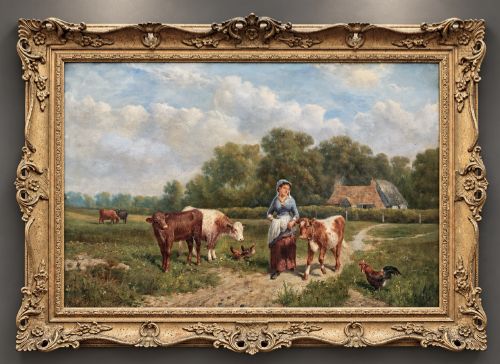
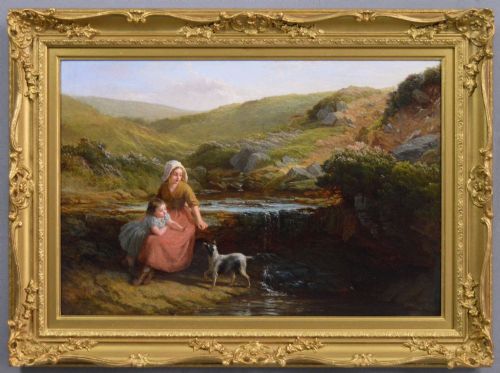
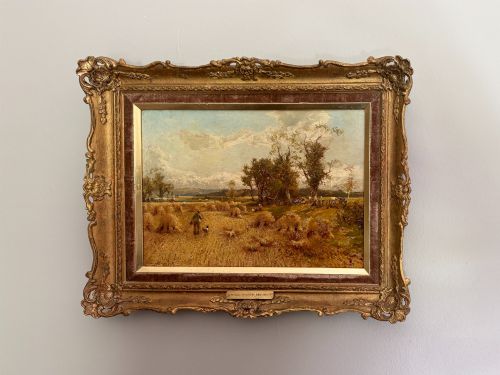
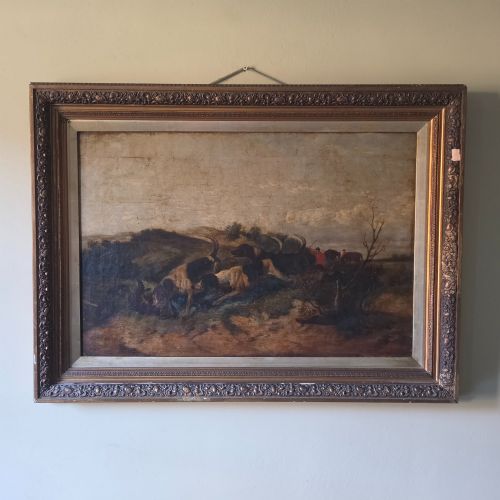
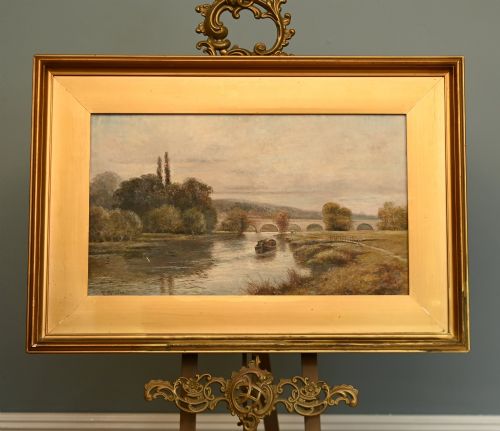
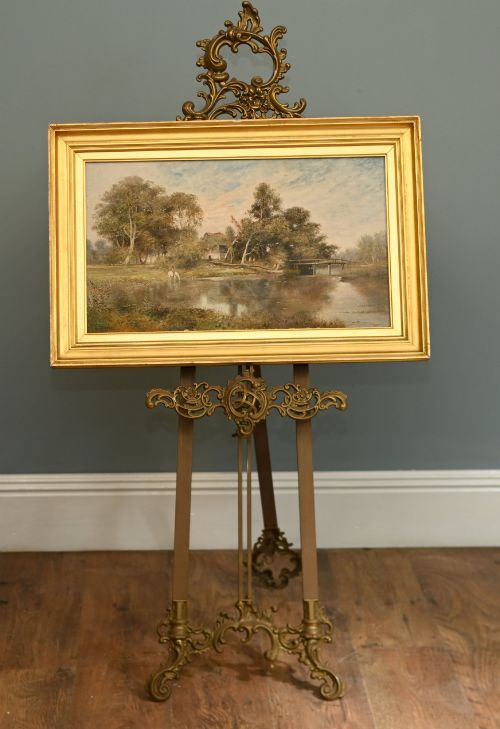
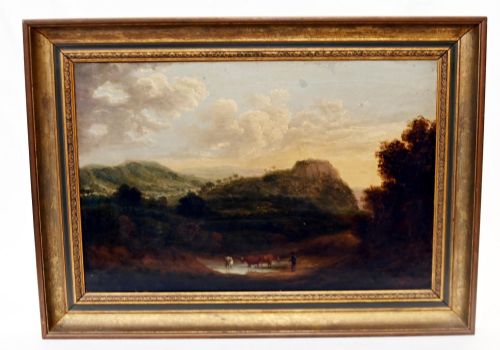
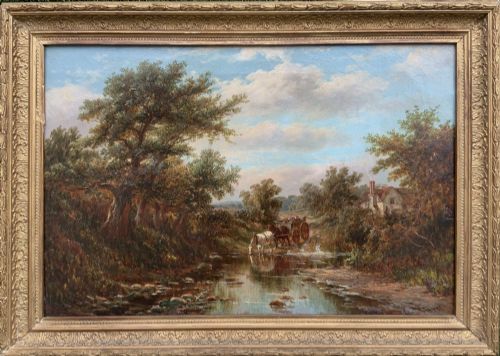



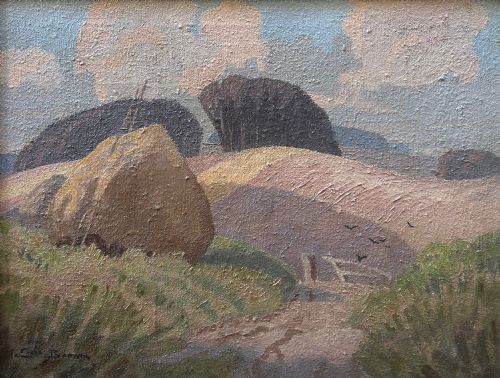
Countryside Scene Canvas Art
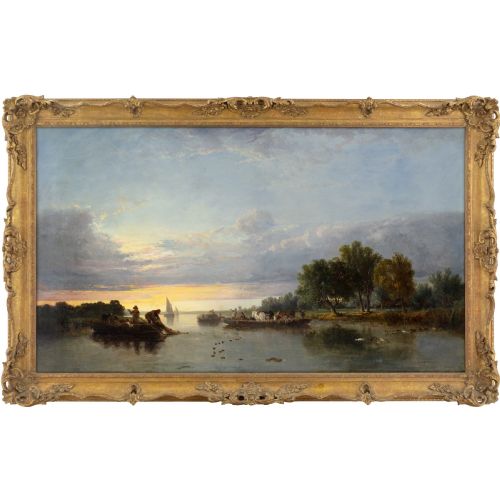
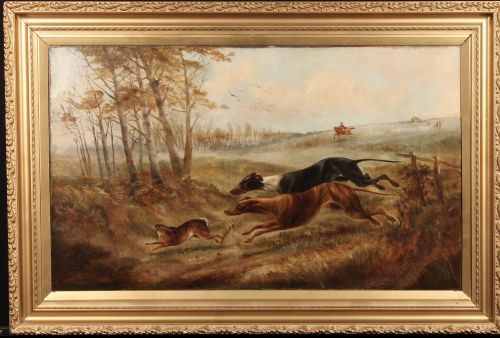
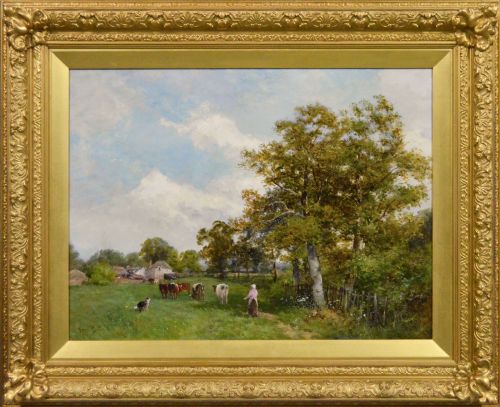
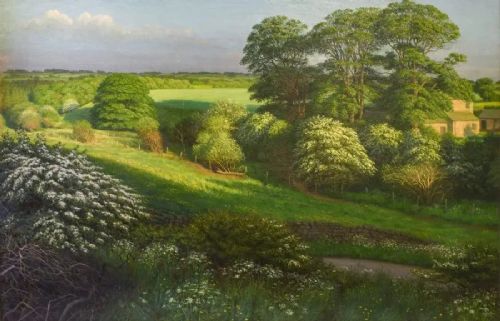
These countryside scene canvas art works capture pastoral life on canvas, bringing rustic charm and historical landscapes directly into your home.
Countryside Scene Canvas Art
Countryside scene canvas art encompasses oil paintings and fine art depicting rural vistas, agricultural labour, and pastoral river landscapes. Buyers searching for this phrase encounter works originating from the nineteenth century through to the mid-twentieth century.
How they were made
The physical works rely principally on oil paint applied to woven canvas supports, sometimes framed in wood or giltwood. Artists utilised brushwork typical of Impressionism and Victorian pastoral traditions to render natural light and rural textures.
Support materials include stretched canvas secured to wooden frames, occasionally housed within period ebonised or gilded mouldings. The combination of oil pigments and fabric creates durable surfaces that retain their pigment depth over decades.
Several canvases quietly record horses pausing mid-plough, reminding viewers that hard-working farm animals deserved a tea break too.
What varies in quality
Quality rests upon the artist's ability to handle perspective, light, and natural detail within the rural setting. Stronger compositions demonstrate confident brushwork and balanced tonal control, whereas simpler works rely on formulaic layouts.
The depth of the canvas preparation and the preservation of the pigment layer differentiate standard decorative paintings from accomplished fine art examples. Original framing in period wood or giltwood further influences the overall integrity of the piece.
George Armfield·Richard Sebastian Bond·William H Myers·George Graham·Frederick Marriott·David Bates·Eric Brown·Henri Ottmann·Richard Redgrave·André Prévot-Valéri·Herbert Royle·John Sanderson Wells·J Phipps·M C Hider·Thomas Spinks·Robert John Hammond·Giulio Cecchini·William Greaves·Charles Vickers·Walter J Watson·John Linnell·Robert Finley McIntyre·James Gunson Atkinson·Charles Faulkner·James William Booth
The Countryside Scene Canvas Art Glossary
- Oil on Canvas
- Pigment mixed with drying oil applied to a woven fabric support stretched over a wooden frame. This medium allowed artists to build rich textures and blend colours smoothly.
- Giltwood
- Wood carved and covered with a thin layer of gold leaf or gilt finish. It frequently surrounds nineteenth-century pastoral paintings to enhance their visual weight.
- Victorian Pastoral
- An artistic style celebrating rural life, farming, and idyllic countryside settings during the reign of Queen Victoria. These scenes typically romanticise agricultural labour and village communities.
- British Impressionism
- A painting approach focused on capturing light and spontaneous brushstrokes, adopted by British artists depicting outdoor scenes and landscapes.
- Post-Impressionist
- A style following impressionism that explored structural form and expressive colour in landscape painting. Works of this type move beyond purely optical recording.
Countryside Scene Canvas Art: Frequently Asked Questions
What periods do these paintings come from?
The available works span from the early nineteenth century through the Victorian era and into the mid-twentieth century. Many pieces reflect specific decades such as the Edwardian period and the 1920s.
Artistic styles shift across this timeline, moving from traditional pastoral compositions towards early twentieth-century impressionistic treatments of light and rural environments.
How should I hang canvas art at home?
Canvas paintings require stable wall spaces away from direct heat sources and excessive moisture to protect the oil paint and fabric support. Secure fixings suited to the weight of the wooden frame ensure the piece hangs safely.
Consider eye-level placement in rooms with balanced ambient light to properly appreciate the brushwork and detail within the pastoral scene.
How do I identify a Victorian pastoral painting?
Victorian pastoral works typically feature naturalistic depictions of agricultural life, such as hayfields, farm labourers, or rivers with cottages. The colour palette often relies on earthy tones and natural light.
Signatures, artist plaques on frames, and historical exhibition labels on the reverse frequently provide clues to the exact origin and date of the canvas.
What subjects are common in countryside scenes?
Frequent subjects include river landscapes, farming activities like ploughing with shire horses, and thatched cottages nestled in woodland or valleys. Animals such as cattle, sheep, and dogs often appear alongside human figures.
These motifs reflect a nineteenth- and twentieth-century artistic interest in documenting rural trades and traditional village life before urban expansion.