





Brown Tree Landscape Artwork
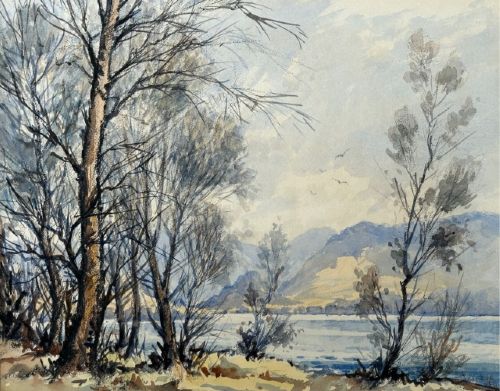
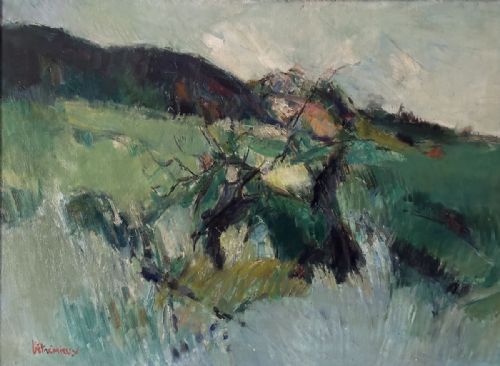
These brown tree landscape artwork pieces capture quiet woodlands and rural river scenes in oil and watercolour.
Brown Tree Landscape Artwork
When you search for brown tree landscape artwork, you encounter pastoral oils, watercolours and works on paper depicting rural scenes, woodland paths and riverbanks. These pieces span from the nineteenth century through the Edwardian era into mid-century British Impressionism and expressionism.
The version you are most likely to meet on this page is an oil painting or watercolour on canvas, board or paper, typically rendered by British and continental artists working in impressionist or pastoral styles. They portray trees, farmyards, lakes and country lanes with varied brushwork and pigment.
How they were made
Artists utilise oil paint and watercolour pigment applied to canvas, paper, board or card. Oils provide depth and texture through layered brushwork, whilst watercolours rely on fluid washes on paper to capture light.
Support materials range from stretched canvas and heavy art board to delicate paper sheets and two-coloured ink line drawings. Pigments are handled with varying density, from thick impasto to thin translucent glazes.
Listings feature canvases, boards, and papers using oil paint, watercolour pigment, and ink across Victorian, Edwardian, and mid-century periods.
What varies in quality
Quality rests in the handling of light and pigment, where confident brushwork separates accomplished compositions from more formulaic pastoral scenes. The ability of an artist to render atmosphere in a woodland or beside a river dictates the visual weight of the piece.
The preservation of the canvas, board or paper surface and the integrity of the original medium influence the lasting character of the artwork. Subtle tonal shifts and secure pigment adhesion distinguish superior examples.
William H Myers·Robert Leslie Howey·Owen Bowen·John Linnell·Herbert Royle·Edmund George Warren·Abraham Hulk Jnr·Charles James Adams·Ernest Higgins Rigg·Frederick W Jackson·J McIntyre·Tom Dudley·Everett W Mellor
The Brown Tree Landscape Artwork Glossary
- Oil painting
- A work created using pigments bound in a drying oil, commonly applied to canvas or board. This medium allows for rich texture and deep colour layering.
- Watercolour
- A painting method where fine pigment is suspended in a water-based solution, typically applied to paper. It creates translucent washes and delicate luminous effects.
- Impressionism
- An art style focused on accurate depiction of light and its shifting qualities, often featuring visible brushstrokes. It emerged strongly in British and French painting during the nineteenth and twentieth centuries.
- Pastoral
- A genre of art depicting rural life, shepherds, farmyards and idealized country landscapes. These scenes emphasise peaceful natural settings and rustic tranquility.
- Works on paper
- A collective term for drawings, watercolours and ink sketches executed on paper supports. They offer intimate insight into an artist's preliminary or direct observational technique.
Brown Tree Landscape Artwork: Frequently Asked Questions
What subjects appear in these landscapes?
These artworks predominantly feature woodland paths, riversides, farmyards, and rural trees under various seasonal conditions.
Scenes range from British pastoral views and Cumbrian lakes to French provincial farmhouses and olive groves.
How should I hang an oil painting?
Hang oil paintings away from direct sunlight and excessive humidity to protect the canvas and pigment layers.
Ensure the wall fixings securely support the weight of the frame and stretcher bars.
Are watercolours sensitive to light?
Watercolours on paper require careful placement away from direct sunlight to prevent the fading of delicate pigments.
Glazing with UV-filtering glass provides additional protection for works on paper.
How do I identify the period of a piece?
Examine the materials, stretcher construction, paper type, and artist signatures alongside stylistic clues like impressionist or Victorian traits.
Framing styles and backboard inscriptions often offer further chronological context.