
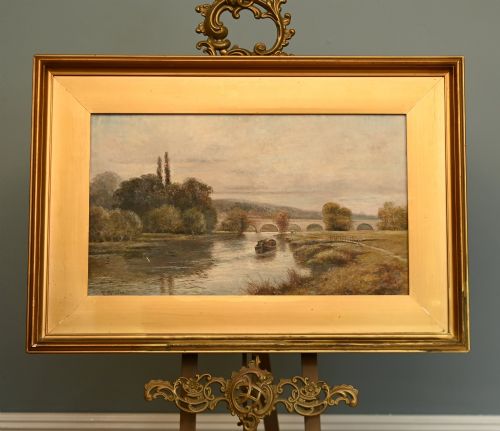
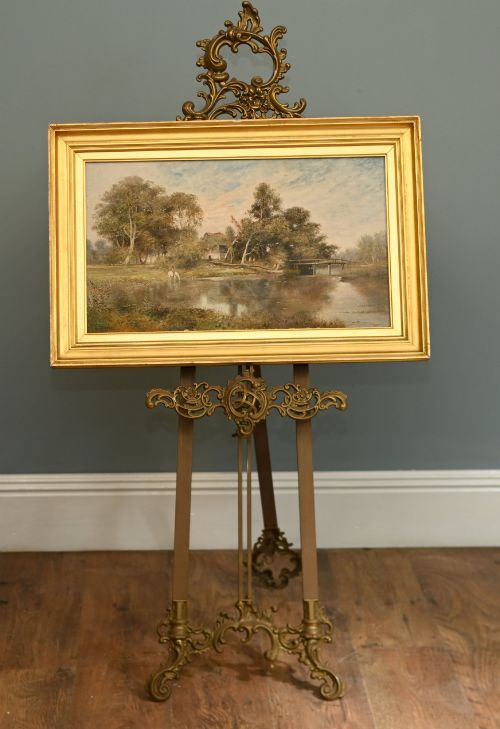
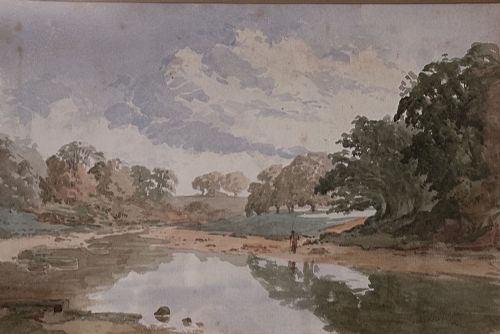
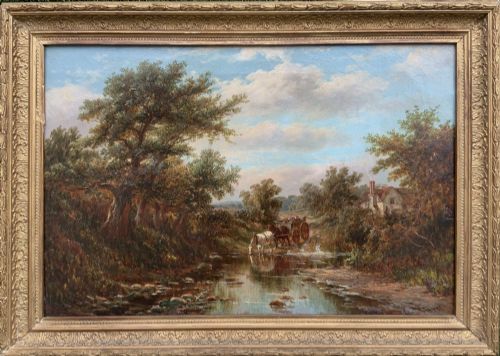
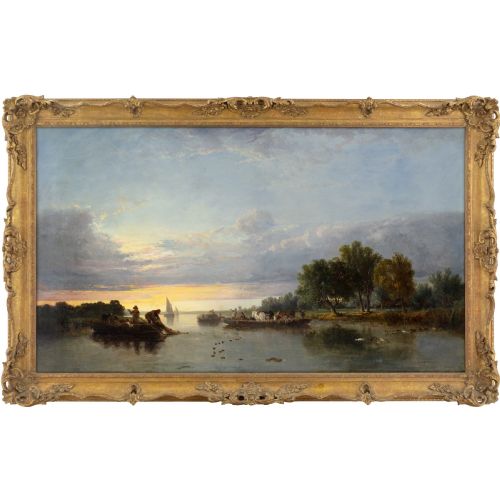

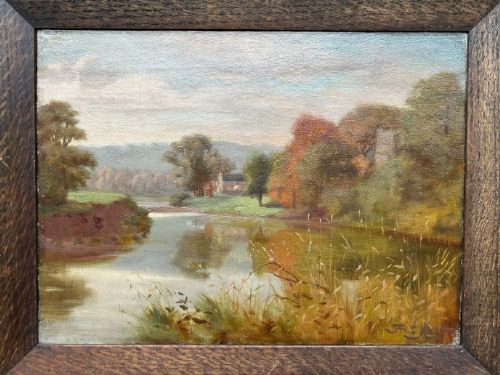
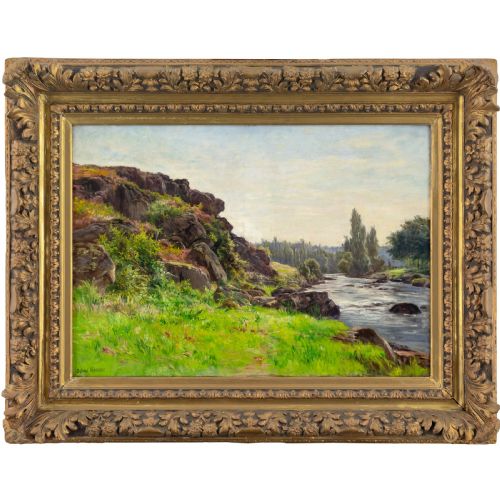
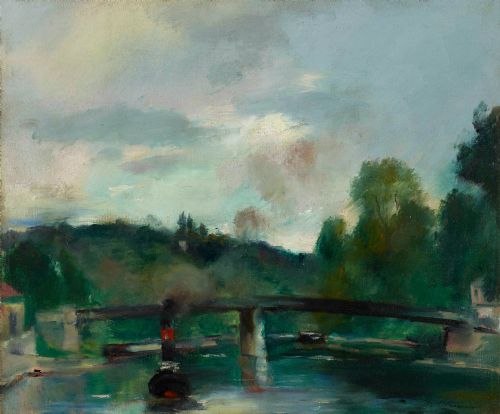
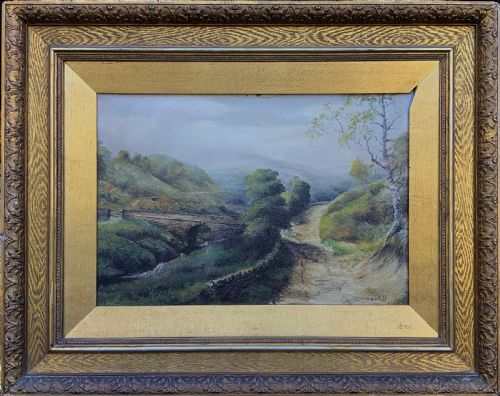

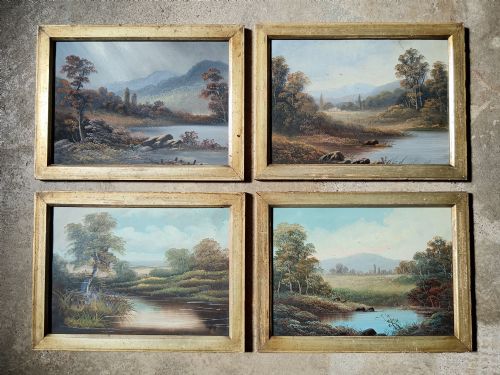


Countryside River Oil Painting
When you search for a countryside river oil painting, you find works capturing rural waterways across the nineteenth and early twentieth centuries.
Countryside River Oil Painting
A countryside river oil painting brings the atmosphere of nineteenth and early twentieth-century rural waterways directly into a room, depicting pastoral scenes, fishermen, and quiet riverbanks. These artworks frequently emerge from British and French artistic traditions, capturing specific locations from North Wales to the River Severn.
The selections available here range from Victorian pastoral compositions to early twentieth-century impressionist studies. Canvases and wood panels show cottages, bridges, and winding streams executed by named artists and regional schools alike.
Collectors seek these pieces for their historical record of rural topography and their atmospheric handling of light upon water. Each canvas records a specific nineteenth-century or Edwardian viewpoint along pastoral riverbanks.
Materials and Technique
Painters of these rural scenes worked primarily with oil paint on stretched canvas or prepared wood panels. Pigments were applied using bristle brushes and palette knives to build texture in foliage, water, and sky.
Many surviving works retain their original frames constructed from wood, gesso, and giltwood. These gilded mouldings complement the warm palette typically employed in nineteenth-century landscape compositions.
Listings feature works executed in oil on canvas and wood panel across Victorian and Edwardian periods.
Evaluating Quality
Quality in these rural landscapes rests upon the artist's command of light, atmosphere, and spatial depth. Superior compositions demonstrate confident brushwork in rendering moving water and changing seasonal foliage rather than rigid botanical illustration.
The distinction between standard regional works and finer pieces often lies in the subtlety of the colour palette and the harmonious integration of figures within the wider landscape.
George Graham·Frederick Marriott·Gabriel Mathieu·Henri Ottmann·Florence Adelina Hess·John Horace Hooper·Hubert Wellington·Charles Clair·André Prévot-Valéri·Mario Pinetti·Alfred Augustus Glendening Jnr·William Sydney Cooper·J. Phipps·Thomas Spinks·Robert John Hammond·Robert Thorne Waite·William Mellor·Walter J Watson·James Gunson Atkinson·Benjamin Williams Leader·Frederick Waters Watts·John Wright Oakes·Maud Raphael Jones·A.A. Finch·William Langley
The Countryside River Oil Painting Glossary
- Oil on Canvas
- Pigment bound in drying oil applied to a woven fabric support. This combination allowed artists to create rich textures and blend tones smoothly across large landscape compositions.
- Giltwood
- Wood carved and covered with a thin layer of gold leaf or metallic powder. This finish was standard for framing nineteenth-century oil paintings to enhance their visual warmth.
- Wood Panel
- A rigid wooden support used by painters instead of stretched canvas. Panels provided a stable, smooth surface favoured for detailed regional landscapes.
- Gesso
- A traditional paint mixture consisting of a binder mixed with chalk, gypsum, or pigment. It prepared wooden panels and frames before gilding or painting.
- British Impressionism
- A painting style characterised by visible brushstrokes and an emphasis on shifting light. Practitioners applied these techniques to domestic rivers and coastal scenes.
Countryside River Oil Painting: Frequently Asked Questions
How do I identify Victorian river paintings?
Victorian landscape paintings typically feature naturalistic pastoral settings with meticulous attention to detail, often depicting figures engaged in rural labour or leisure by waterways.
Signatures, framing styles, and stretcher construction on the reverse can also provide clues to the exact period of execution.
Where were these river scenes usually painted?
Artists during the nineteenth and early twentieth centuries frequently painted along notable British waterways such as the River Severn, the River Stour, and rivers in North Wales.
Many works document specific rural locations, bridges, and country estates identifiable through artist inscriptions or historical titles.
How should I clean an antique oil painting?
Surface dust should be gently removed with a soft, dry brush by someone experienced in handling delicate antique canvases.
Chemical cleaners and water must be avoided, and professional conservators should handle any deeper cleaning or varnish removal.
What framing is appropriate for these works?
Period oil paintings generally suit traditional wooden frames finished with gesso and gilt leaf that match the era of the canvas.
Original frames help preserve the historical integrity of the piece, though many nineteenth-century works have been reframed over time.