

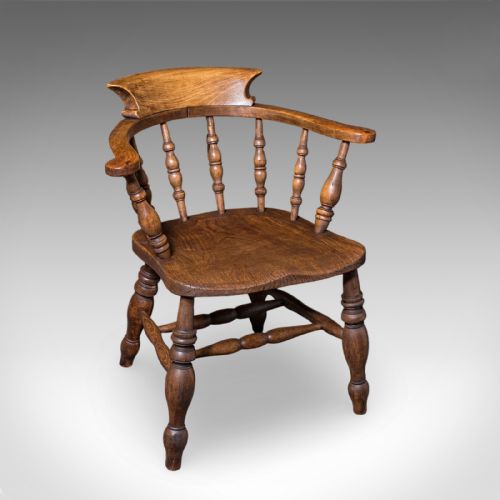
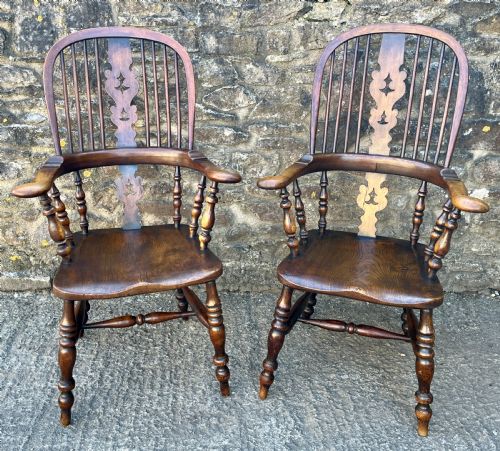


Country Windsor Arm Chair
A country windsor arm chair brings vernacular woodwork and sturdy domestic history straight into a modern interior.
Country Windsor Arm Chair
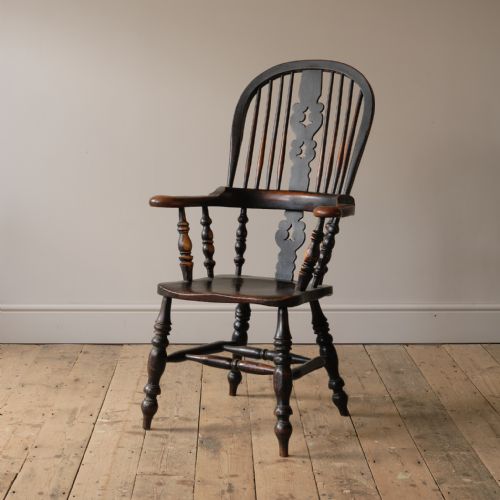
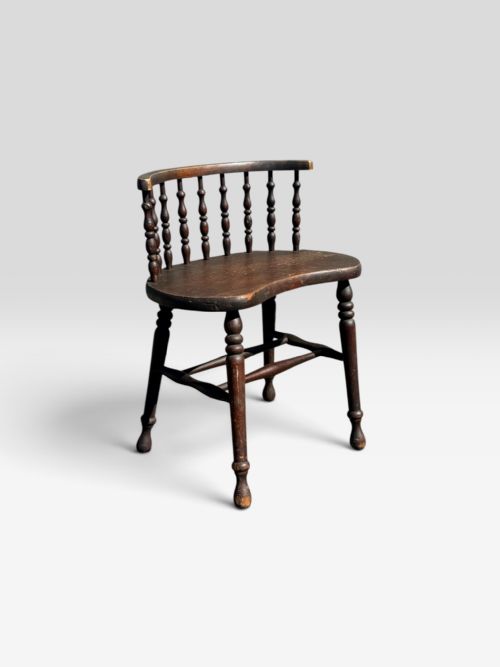
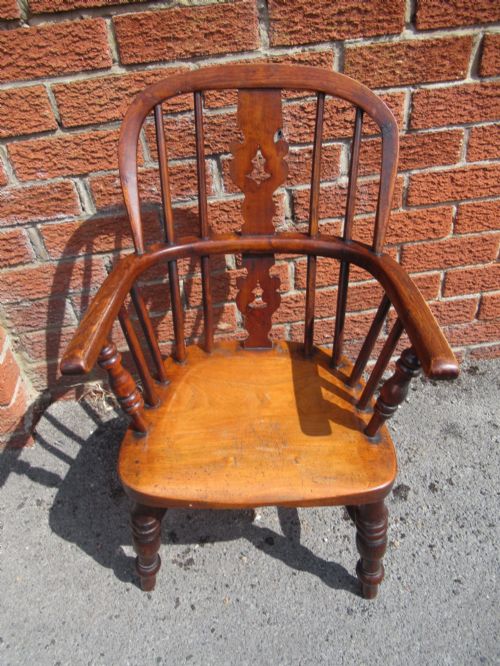
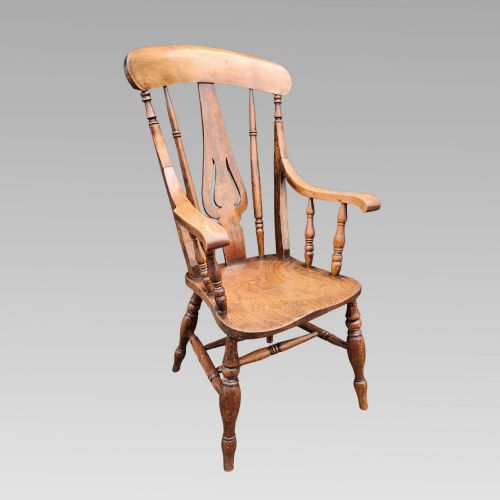
A country windsor arm chair represents a triumph of traditional English vernacular joinery, featuring a distinct saddle-shaped wooden seat into which the legs and back spindles are independently wedged. The examples you will most frequently encounter on this page date from the nineteenth century, though earlier Georgian and later Edwardian iterations appear with regularity.
Makers across different regions developed distinct regional idioms, from the high hoops of the Thames Valley to the broad arms of the West Country and the comb backs of Wales. These functional seats served as sturdy everyday furniture in farmhouses, cottages and kitchens before collectors sought them out for their sculptural qualities.
How they were made
Craftsmen built these chairs using a combination of timbers selected for specific physical properties, typically pairing a thick, resilient elm seat with ash for steam-bent bows and spindle work, and occasionally yew for rich grain. The legs and spindles were turned on a pole lathe and secured with wedges into bored holes through the solid wooden seat.
Regional workshops utilised local timber availability, meaning chairs from northern counties often display ash and oak construction, while Thames Valley pieces frequently incorporate yew wood. Surface finishes developed organically through decades of domestic use, leaving mellow patination on the timber.
Several miniature furniture examples prove that even historical cabinetmakers liked to play small.
What varies in quality
The sculptural grace of the bentwood bow and the generosity of the elm seat proportions define the upper tier of these chairs. Pieces featuring continuous arms or substantial carved knuckles show superior joinery compared to simpler domestic kitchen iterations.
The choice of timber heavily influences the desirability of a piece, with richly figured yew wood or burr elm commanding greater attention than standard beech and ash combinations. Original surface patination and minimal structural timber replacement separate museum-grade examples from heavily restored seating.
Allsop Worksop
The Country Windsor Arm Chair Glossary
- Broad arm
- A chair featuring wide, flat wooden armrests often integrated into the back bow for writing or resting.
- Comb back
- A Windsor chair style where the top of the stick back resembles the teeth of a comb, often topped with a headrest.
- Vernacular
- Objects designed by unselfconscious traditional craftsmen to serve local domestic and agricultural functions rather than following academic court styles.
- Saddle seat
- A thick plank of timber, usually elm, scooped and shaped into a deep depression for sitting comfort.
- Spindle
- A slender turned wooden upright used to form the structural filling of the chair back.
Country Windsor Arm Chair: Frequently Asked Questions
What is a country windsor arm chair?
A country windsor arm chair is a traditional wooden seat characterised by an independent saddle-shaped solid seat into which legs and back sticks are wedged.
These pieces emerged from regional British vernacular woodworking traditions, evolving into distinct local styles across the Thames Valley, West Country and Wales.
How do I date a windsor chair?
Dating relies on observing construction methods, timber choices and regional design evolution across the eighteenth, nineteenth and early twentieth centuries.
Early pieces often feature primitive comb backs and fruitwood or yew construction, while later Victorian examples frequently incorporate beech and standardised turned spindles.
Where were these chairs used?
These chairs served as functional everyday seating in farmhouse kitchens, country houses, cottages and local inns throughout Britain.
Their sturdy construction made them ideal for heavy daily use near firesides and at farmhouse dining tables.
How do I live with a windsor chair?
Live with these chairs by placing them in spaces where the sculptural wooden lines can be appreciated away from direct heat sources.
Regular polishing with appropriate wax maintains the historical patination of the elm, ash and yew timbers without masking their age.