



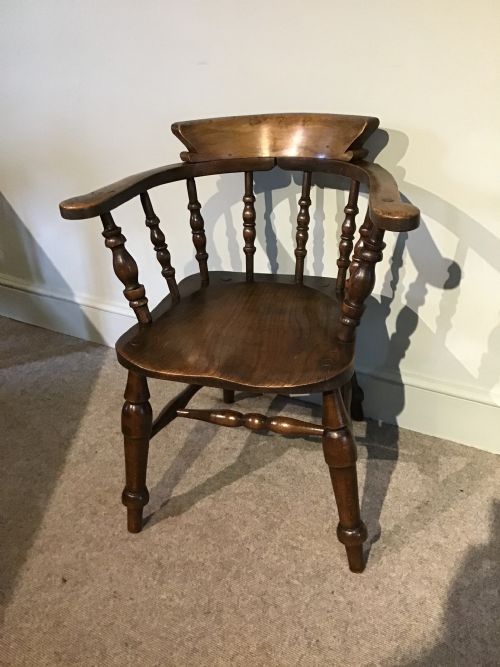

Turned Spindle Elbow Chairs
Turned spindle elbow chairs are sturdy seating forms shaped from native timbers, offering honest construction and tactile turned details for daily use.
Turned Spindle Elbow Chairs
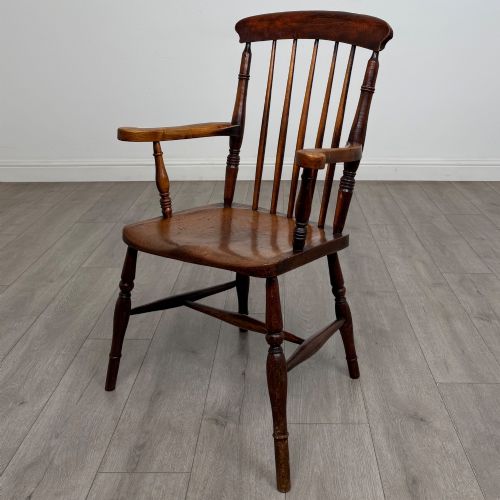
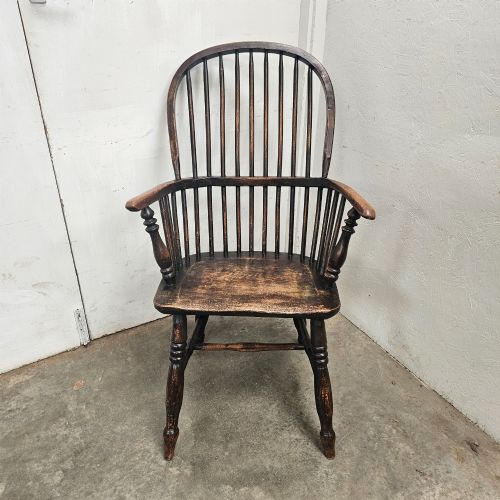
Turned spindle elbow chairs encompass a robust group of vernacular seating including Windsor chairs, smokers' bows, and stick-back armchairs. When searching for turned spindle elbow chairs, buyers encounter country carvers and low-back captain seats originating from Georgian, Regency, and Victorian periods.
These pieces primarily serve as functional seating with sturdy arm rests and spindle-turned components arranged along the back rail. The examples seen on this page span English country workshops as well as Swedish and American vernacular traditions.
Most pieces combine regional timber species with vernacular craftsmanship, yielding solid elbow chairs suited for traditional and eclectic interiors alike.
Materials and Construction
Maker's workshops relied on native hardwoods such as elm, ash, oak, and beech, often combining multiple timbers within a single chair to utilise the specific properties of each wood. Elm frequently provided a durable, split-resistant seat board, while ash and beech formed flexible spindles and sturdy legs.
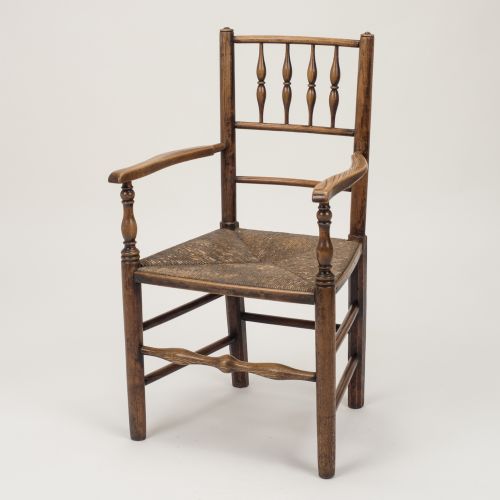
Turned components were shaped on a lathe before being pegged, wedged, or fitted into bored sockets within the seat. Certain variants incorporate woven rush seating or simple fabric pads to complete the construction.
Several chairs proudly display the identical turned bobbin details found on centuries-old spinning tools.
Quality and Proportion
Quality rests in the crispness of the spindle turnings, the selection of timber grain on the seat, and the integrity of the joints. Chairs retaining their original surface finish and uncompromised structural alignment command greater appreciation.
Balance of proportion between the arched elbow supports and the vertical spindles distinguishes standard utility seating from finer vernacular examples.
E W Godwin
The Turned Spindle Elbow Chairs Glossary
- Smoker's Bow
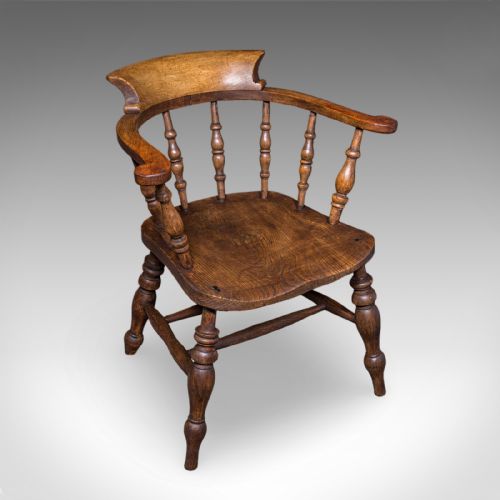
- A low-backed Windsor elbow chair featuring a continuous curved armrail supported by turned spindles. These comfortable seats became common in domestic and commercial interiors during the nineteenth century.
- Windsor Chair
- A chair built with a solid wooden seat into which the legs and back spindles are directly joined. This construction method provides exceptional stability without requiring a heavy frame.
- Rush Seat
- A seating surface woven from dried marsh rushes twisted into cords. It offers a resilient, textured platform for vernacular chairs.
- Carver Chair
- A traditional term for an armchair, often matching a set of smaller dining chairs. They provide elbow rests for the head of the table.
- Bobbin
- A cylindrical turned wood ornament resembling a spool of thread. It appears frequently on the structural members of nineteenth-century chairs.
Turned Spindle Elbow Chairs: Frequently Asked Questions
What is a smoker's bow chair?
A smoker's bow is a low-backed Windsor armchair featuring a rolled wooden armrail and spindle supports. They were built for comfort in parlours and public houses.
These chairs combine an elm seat with turned ash or beech spindles for everyday durability.
How do I date a Windsor chair?
Dating relies on timber choices, tool marks, and the thickness of the seat board. Earlier examples often feature shaped saddles and distinct wood combinations.
Examining the construction methods underneath the seat reveals the age of the joinery.
Are rush seats durable?
Rush seats withstand normal daily use when kept dry and away from direct moisture. They offer a flexible and supportive surface.
Traditional rush work can last for decades before requiring professional re-weaving.
Where were these chairs made?
Most pieces originate from regional English country workshops, with occasional examples from Swedish or American makers. Local timber availability dictated the choice of wood.
Country joiners produced these utilitarian forms for domestic and commercial settings.