

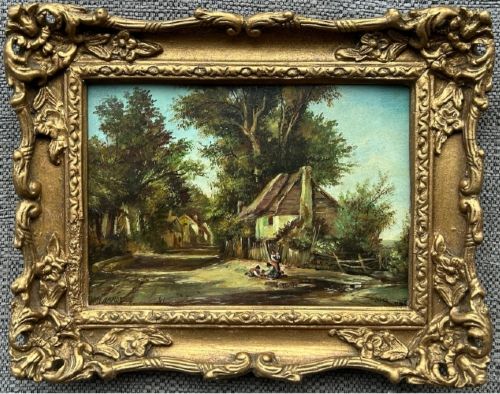
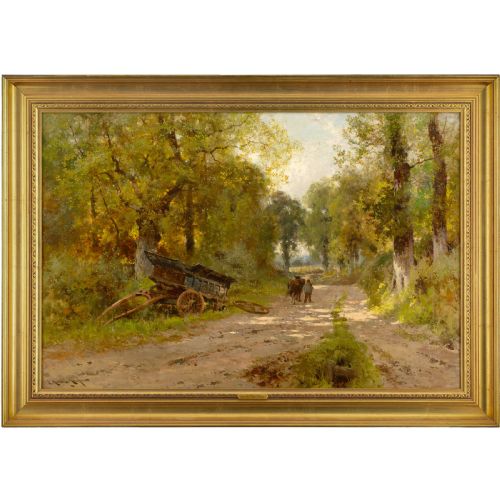
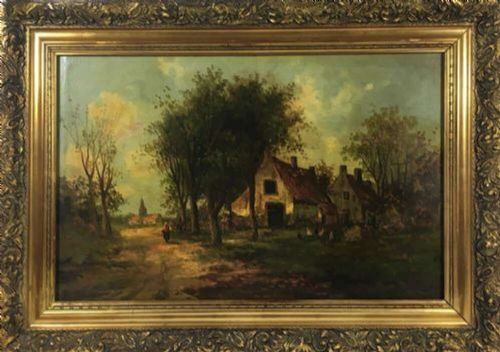
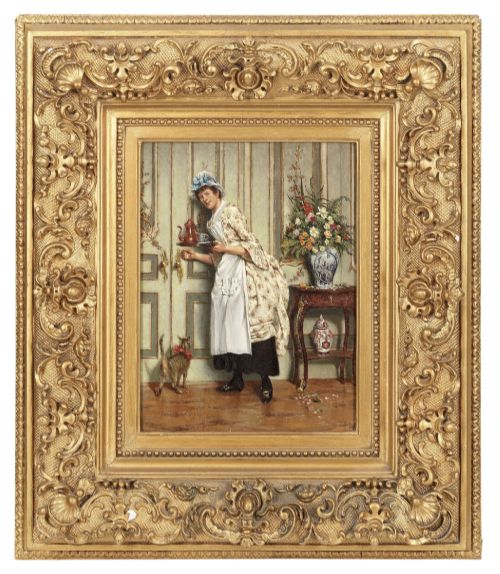
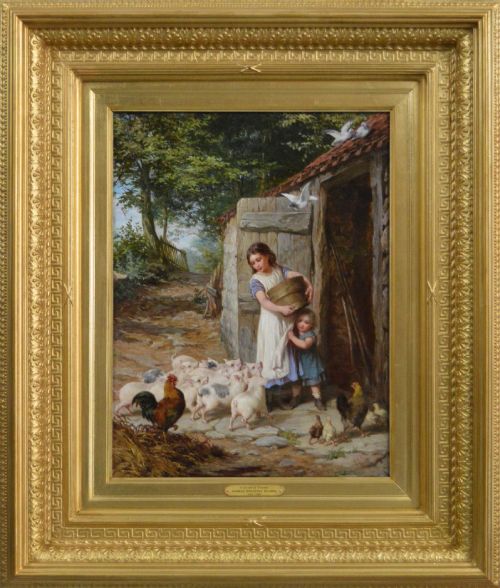
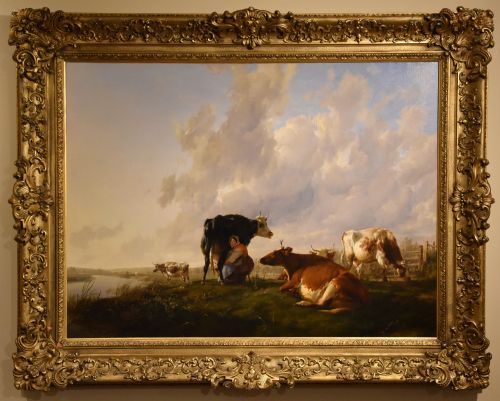
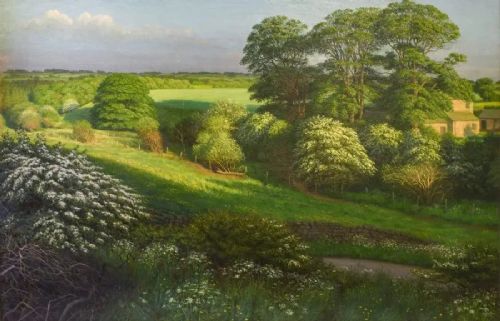
Country Scene Oil Painting
A country scene oil painting captures the quiet rhythm of rural life through traditional brushwork and pastoral subjects.
Country Scene Oil Painting
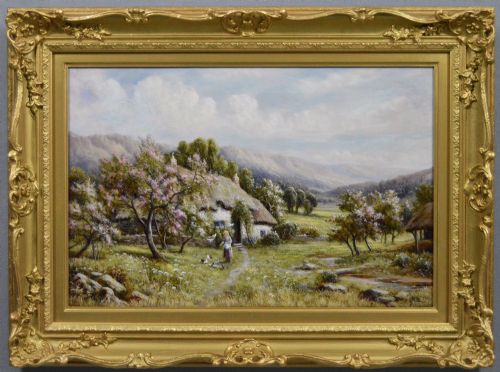
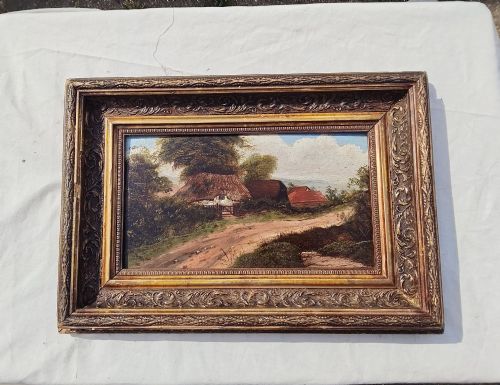
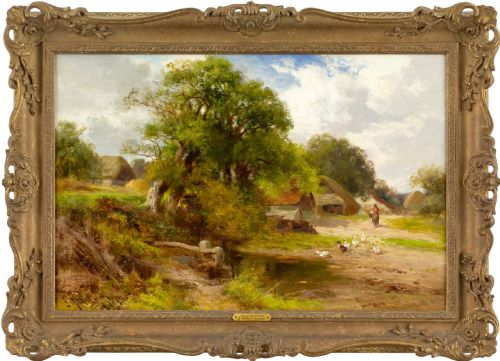
A country scene oil painting depicts rural life, agricultural labour, cottages, and pastoral landscapes produced across the nineteenth and twentieth centuries. These works span British and continental schools, capturing farmyards, rivers, and domestic animals in detailed compositions.
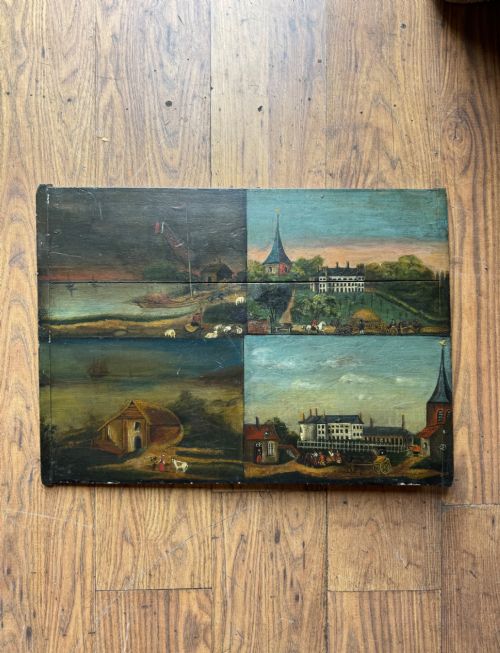
The most common examples on this page are nineteenth-century British and French works executed on canvas or wood panel. They range from naive folk art depictions to academic pastoral landscapes and animal portraits.
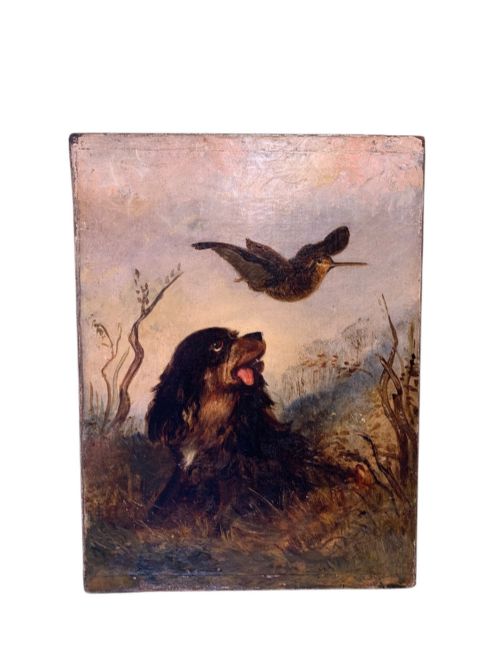
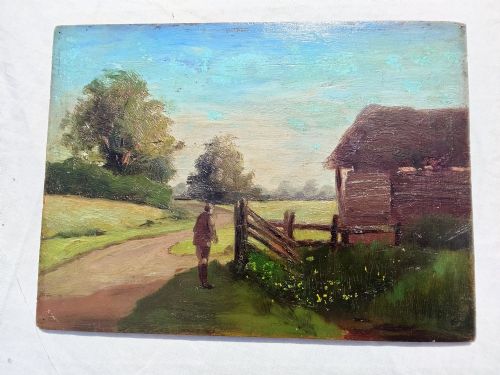
Subjects frequently include figures outside thatched cottages, livestock grazing in meadows, and horse-drawn ploughs working the fields. Buyers encounter both signed cabinet pieces by known artists and unsigned works attributed to regional British schools.
How They Were Made
Artists painted primarily with oil pigments suspended in drying oils, applied to stretched canvas, wooden panels, cards, or board. Wooden supports often received a preparatory gesso layer to seal the surface before painting.
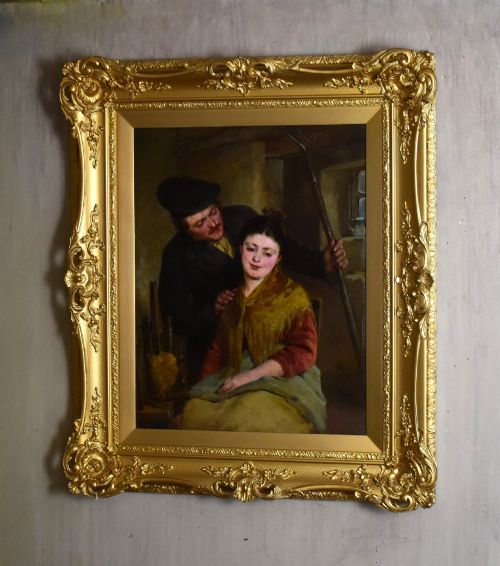
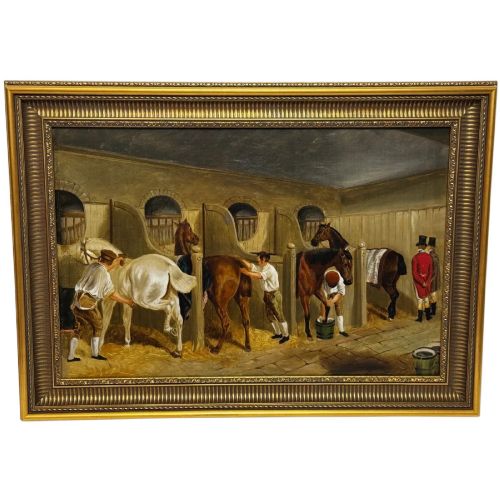
Many works retain their original giltwood or moulded frames, which were constructed specifically to house the canvas or panel. Brushwork varies from tight, academic realism to looser impressionistic applications depending on the period and school.
Several sheep, cows, and attentive farm dogs managed to outlive the painters who recorded them.
What Varies in Quality
Quality rests on the security of the composition, the handling of light, and the anatomical accuracy of figures and animals. Finer works demonstrate a confident command of perspective and atmospheric depth in the rural backdrop.
The preservation of the original paint surface and the integrity of the ground layer dictate condition. Superior examples retain their original gilded frames and show minimal pigment shrinkage or past restoration.
William Howard Hardy·John Horace Hooper·Stephen Samuel Lewin·Robert John Hammond·Howard Helmick·George Augustus Holmes·Thomas Sidney Cooper·Raymond Booth·Frederick Walker·Edgar Hunt·Herbert Royle·Johann Friedrich Voltz·Henry H Parker·Thomas Walker Bretland·Henry Schouten·Sydney Yates Johnson·Hubert Wellington·Henri Jaques Delpy·John Arthur Lomax·Alfred Oliver Townsend·Edmund Bristow·Amy Antill·Henry Charles Woollett·Joseph Thors·Pamela Hughes
The Country Scene Oil Painting Glossary
- Oil on canvas
- Pigment bound in drying oil applied to a woven fabric support stretched across a wooden frame. This remains the primary medium for monumental and cabinet paintings alike.
- Giltwood
- Timber carved and surfaced with thin gold leaf or metal leaf, frequently utilised for nineteenth-century picture frames. It provides a reflective border that isolates the painted landscape from the room.
- Panel painting
- An artwork executed on a rigid wooden board or panel rather than flexible canvas. These supports were common in earlier and provincial works.
- Barbizon school
- A mid-nineteenth-century French art movement focused on tonal realism and direct observation of the countryside. Painters in this circle preferred unidealised farmyards and forest interiors.
- Impressionism
- A style characterised by relatively small, thin yet visible brush strokes and an emphasis on accurate depiction of light. British iterations often apply these principles to pastoral subjects.
Country Scene Oil Painting: Frequently Asked Questions
What periods do these paintings cover?
The listings span from the eighteenth century through the Victorian era and into the mid-twentieth century. Most works cluster in the nineteenth and early twentieth centuries.
Victorian and Edwardian examples dominate the selection, reflecting the high demand for pastoral subjects during those decades.
Are these paintings signed by the artist?
Many works feature visible signatures, monograms, or dated inscriptions left by the original painter. These signatures help attribute the work to specific regional schools or named artists.
Unsigned pieces also appear frequently, often catalogued by their stylistic school or country of origin.
What surfaces were used for these artworks?
Artists utilised stretched canvas, wooden panels, heavy cards, and prepared wooden boards. Canvas remained the standard support for larger framed landscape compositions.
Smaller cabinet paintings were frequently executed on thin wooden panels or artist boards that required rigid backing.
How should I care for a framed oil painting?
Keep the artwork away from direct sunlight, excessive moisture, and rapid temperature fluctuations. Stable indoor environments prevent the wood and canvas supports from warping.
Dust the frame gently with a dry cloth and avoid touching the painted surface directly with bare hands.