





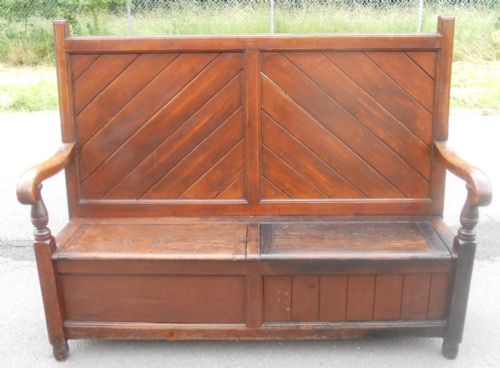


Country Pine Storage Seat
A country pine storage seat offers solid timber utility and rustic charm, combining a comfortable bench with a hidden chest for practical domestic use.
Country Pine Storage Seat
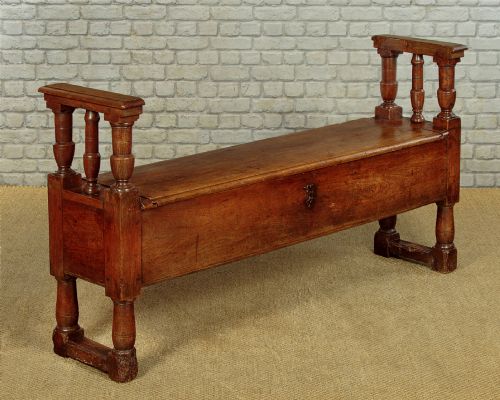
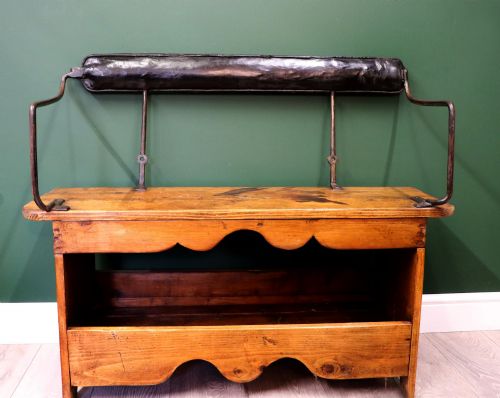
A country pine storage seat serves as a dual-purpose item of furniture, functioning as both a bench for sitting and a trunk for stowing household goods. When you search for a country pine storage seat, you encounter robust domestic furniture originating from various European regions and domestic English workshops.
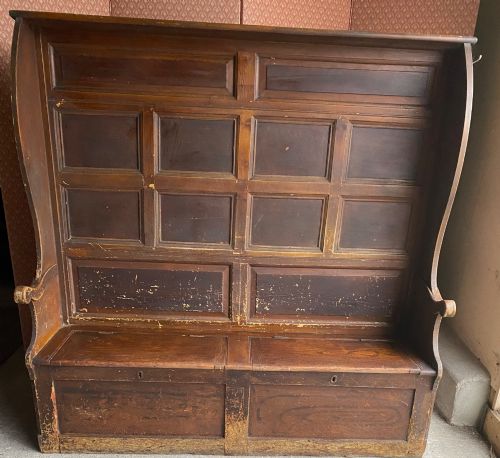
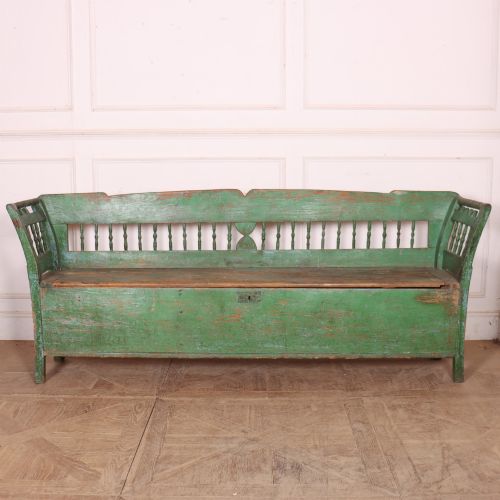
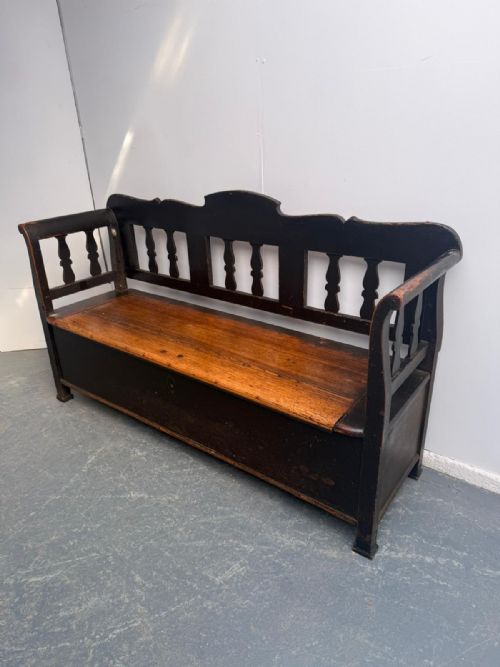
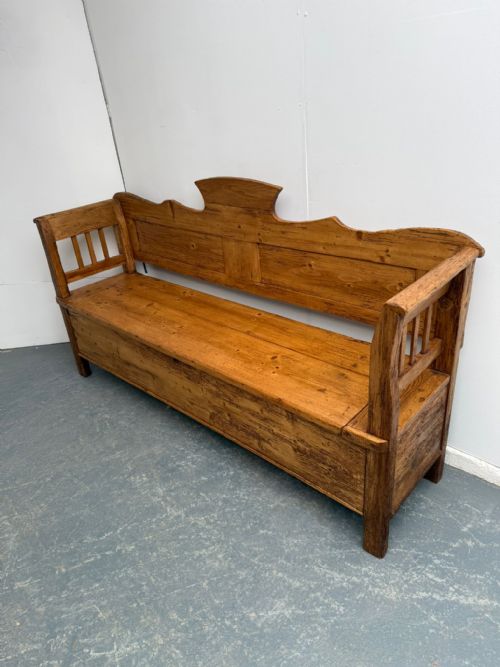
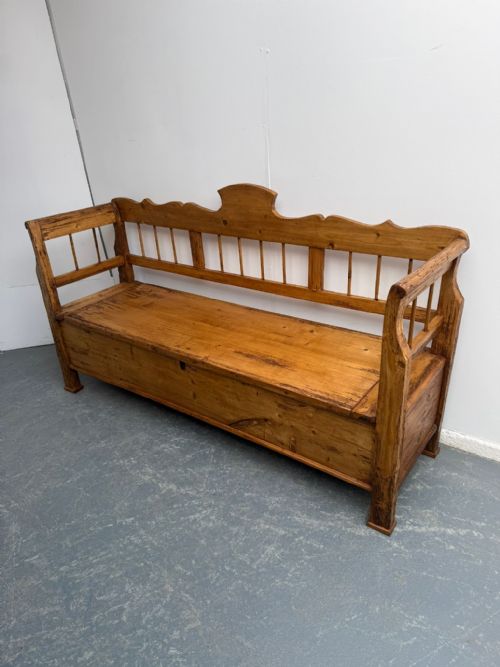
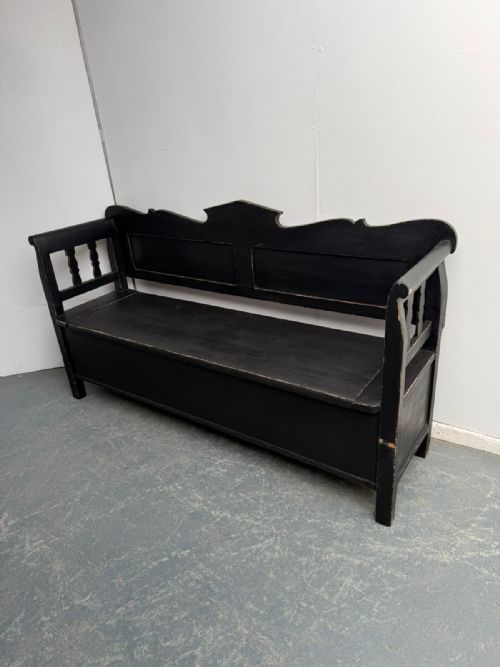
The selections span multiple eras, encompassing Georgian, Victorian, and Edwardian periods alongside broader nineteenth-century examples. You frequently meet box settles and painted benches hailing from Hungary, Sweden, Austria, and England.
Forms vary from large panelled hall benches to smaller two-seater settles and dug-out chairs. These pieces often feature hinged lids on box seats or open underneath for accessible storage.
Materials and construction methods
Makers utilised solid pine timber as the primary material, building sturdy frames designed to withstand generations of daily use in farmhouses, taverns, and country halls. Carpenters employed traditional joinery techniques, such as panelled construction and pegged joints, to ensure structural durability.
Surfaces frequently show historical treatments including wax polishes and original paint finishes in blue, grey, or black. Iron hardware like strap hinges and brackets often reinforce lids and structural joints on box settles.
Country Pine Storage Seat Retail Price Guide 2026
Typical asking prices for country pine storage seat among the pieces listed under this phrase on Sellingantiques today, from the lower quarter to the upper quarter. They describe what is for sale here now, not the wider market.
One stubborn nineteenth-century Swedish dug-out chair refuses any easy definition, having been hewn entirely from a single stubborn log.
Assessing quality and character
The distinction between ordinary and superior pieces rests in the integrity of the original timber and the survival of early painted surfaces. Pieces retaining genuine period paint layers command greater interest among collectors than those stripped down to bare wood.
Proportion and execution also dictate quality, as well-balanced box settles with untouched hardware and sound internal storage compartments demonstrate superior craftsmanship. The presence of regional folk art details or pegged panel work elevates the overall character of an individual bench.
The Country Pine Storage Seat Glossary
- Box settle
- A high-backed wooden bench featuring a concealed storage compartment beneath the seat. The hinged lid allows users to lift the seating surface and access the interior space.
- Tavern settle
- A heavy wooden bench designed for public houses, often featuring a high solid back to block draughts from doors. These robust seats typically stood near hearths in country establishments.
- Dug-out chair
- A primitive form of seating hollowed directly out from a single large log of timber. This ancient technique produces a heavy, monolithic seat.
- Panelled construction
- A method of joining wooden boards where thinner central panels float within grooved frames. This technique accommodates the natural expansion and contraction of pine timber across seasons.
- Folk art
- Decorative embellishments and painting styles rooted in regional traditions rather than formal academic design. Artisans applied these local motifs to domestic furniture.
Country Pine Storage Seat: Frequently Asked Questions
What is a country pine storage seat used for?
These pieces served historically in farmhouses and halls for seating multiple people while keeping blankets, boots, or provisions tucked out of sight.
In modern homes, they function well in hallways, boot rooms, or kitchens to provide both seating and concealed storage for everyday clutter.
How do I date an old pine bench?
Dating relies on examining construction methods, tool marks, and the type of hardware used on hinges and joints. Hand-cut pegs, wrought iron fittings, and native timber shrinkage offer strong clues to a piece's age.
Comparing the style of the back panel and arms to known period examples helps narrow down whether a seat originates from the Georgian or Victorian era.
Are painted finishes on pine benches original?
Determining original paint requires looking for craquelure, wear patterns consistent with age, and microscopic traces of earlier layers beneath the surface. Old paint often shows natural fading and minor chips accumulated over decades of use.
Many pieces were repainted during their working lives, so expert examination of the underlying wood and pigment helps confirm authenticity.
How do I care for antique pine furniture?
Maintain waxed pine surfaces by applying appropriate beeswax sparingly and buffing gently with a soft cloth to nourish the dry timber. Avoid placing these wooden seats near direct heat sources or in damp environments to prevent warping.
Keep painted finishes clean by dusting with a dry microfiber cloth and avoiding harsh chemical cleaners that might strip historical pigments.