
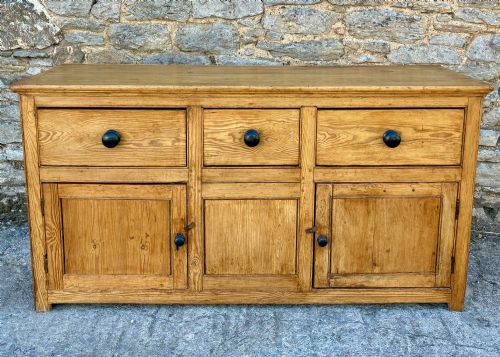
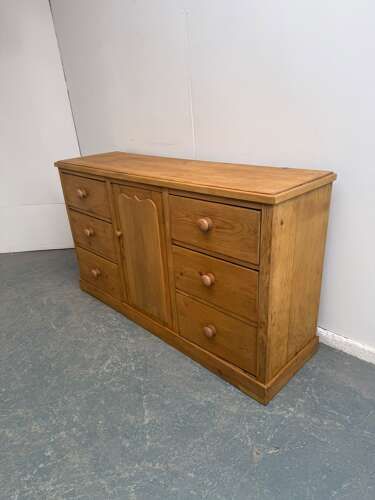
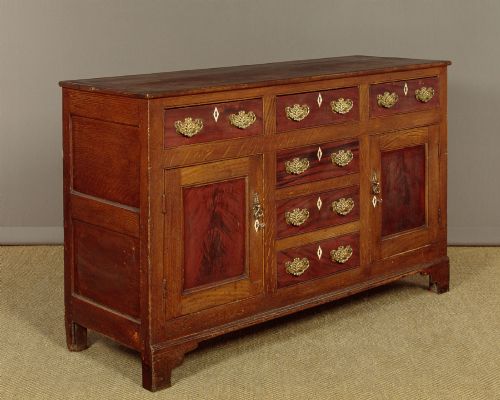
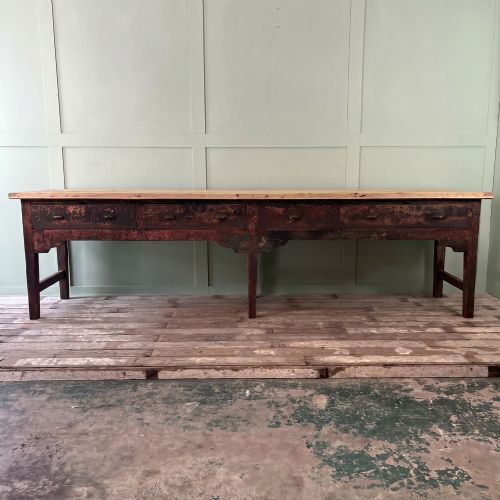

Country Pine Kitchen Server
Country pine kitchen server pieces bring honest utility and warmth to a room, offering sturdy work surfaces and practical storage.
Country Pine Kitchen Server
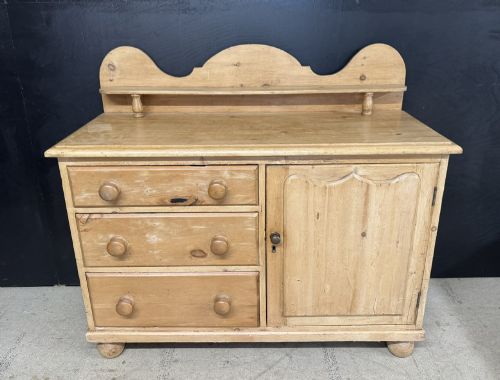
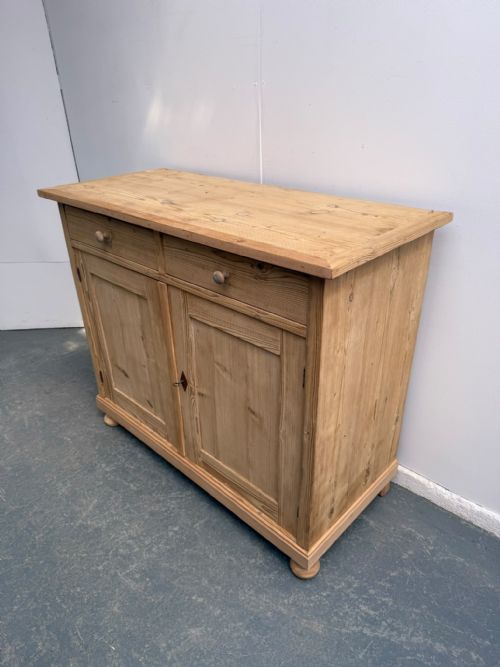
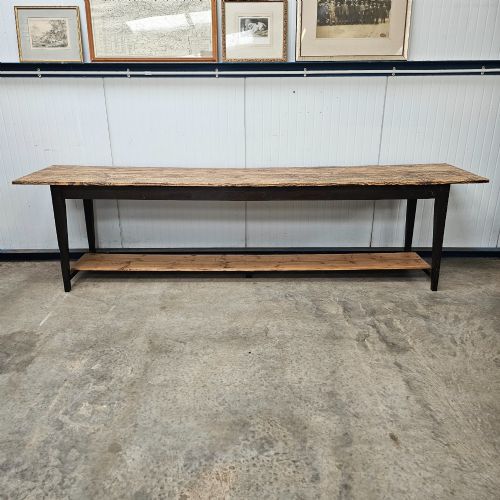
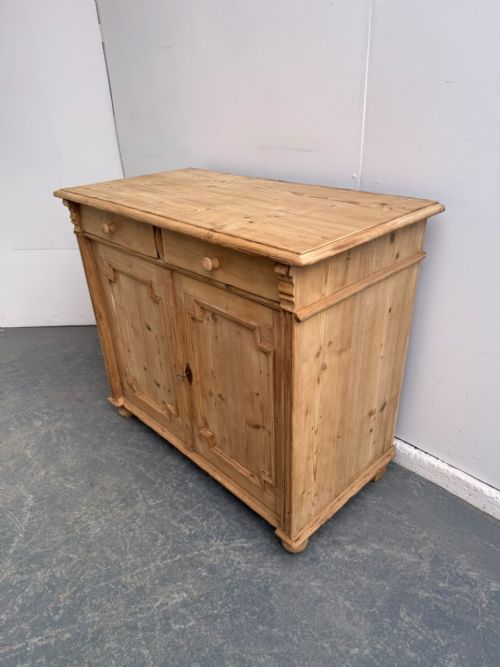
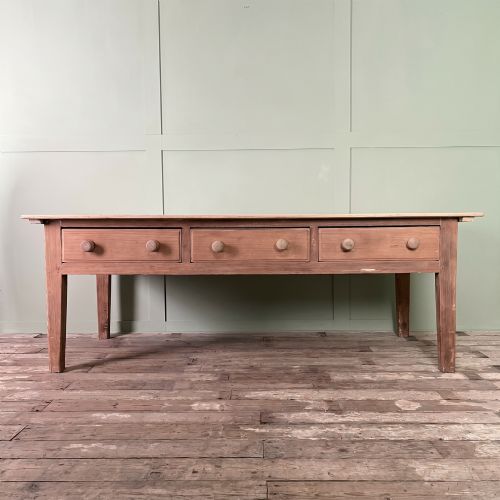
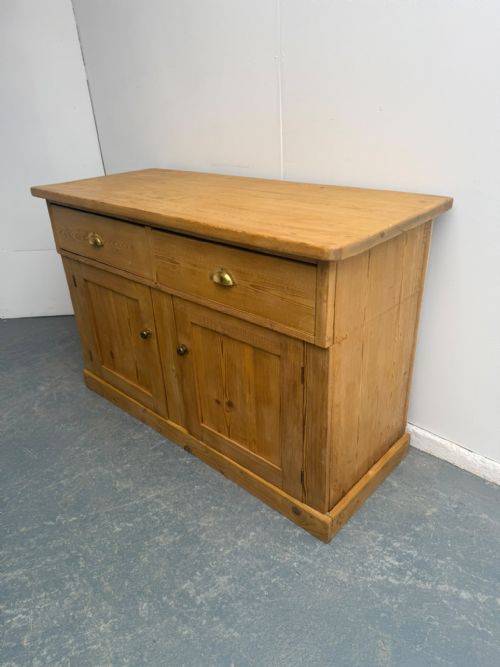
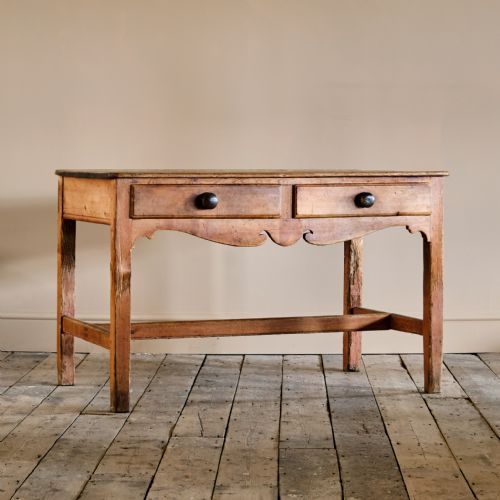
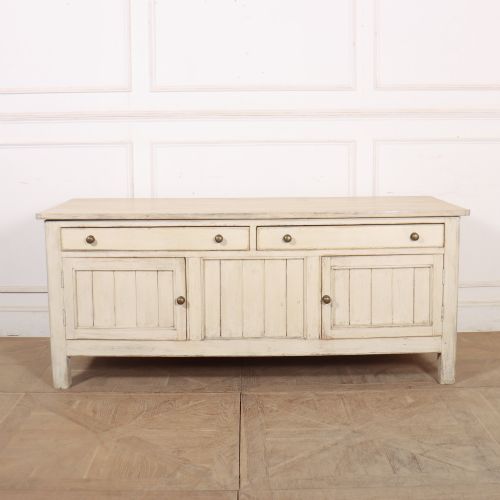
A country pine kitchen server provides robust everyday utility through traditional forms like dresser bases, serving tables, and sideboards. These pieces originate primarily from the nineteenth century, including Victorian and Georgian periods, reflecting practical domestic life.
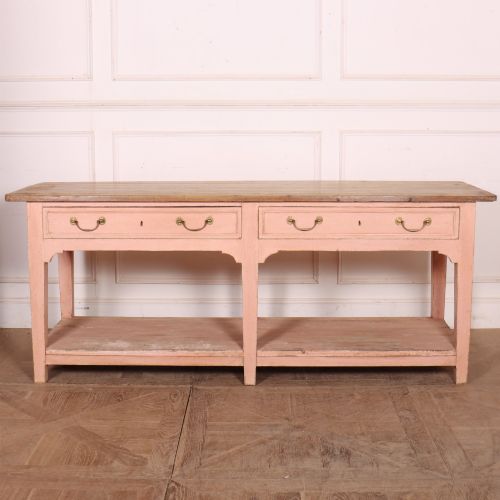
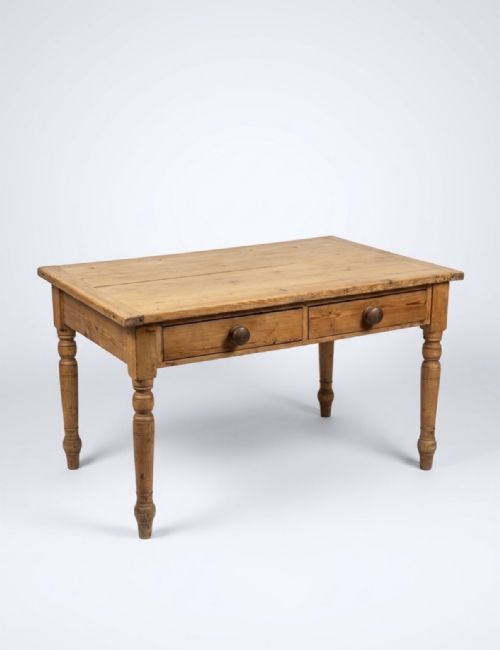
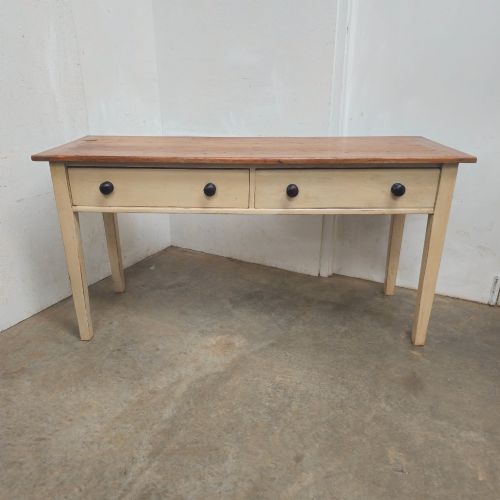
The version most commonly met on this page is the dresser base, often fitted with drawers and cupboards, alongside dedicated dairy tables and serving surfaces. Construction typically employs solid pine, sometimes paired with oak or sycamore, embodying rustic English and Scottish country styles.
Makers built these items for hard work in farmhouse and country house kitchens, resulting in honest proportions and straightforward utility. Surviving examples often display traces of original paint, wax finishes, or scrubbed wooden tops shaped by decades of domestic use.
Materials and construction
Makers relied principally on solid pine for carcasses and tops, occasionally combining it with oak, pitch pine, or sycamore for added durability in high-wear areas like harvest tables and prep surfaces. Iron and brass hardware, including traditional drawer pulls and hinges, secured the functional elements.
Surfaces were either left as bare scrubbed wood, finished with traditional wax, or coated in layered paint that often survives in original or distressed states. Joinery prioritised strength over ornamentation, using pegged joints and solid boards designed to withstand daily kitchen labour.
The listings span from the eighteenth century through the Victorian era, featuring pine, oak, brass, and original paint.
Judging quality in country pine
Quality rests on the integrity of the original timber and the proportion of the piece, where honest proportions and well-balanced drawer and door configurations set superior examples apart. Untouched surfaces bearing genuine patination and original paint carry greater authenticity than heavily restored or stripped carcases.
Structural soundness in the legs, potboards, and drawer runners determines daily usability, distinguishing sturdy utilitarian survivors from weakened pieces. The presence of original hardware and thoughtful details such as bread slides or potboards elevates a piece above standard utility furniture.
The Country Pine Kitchen Server Glossary
- Dresser base
- A low cabinetry unit typically featuring drawers above cupboards, designed for kitchen storage and food preparation. These form the core of surviving country servers.
- Potboard
- An open slatted lower shelf built into the base of a dresser to store pots and heavy kitchen utensils. It provides structural stability while keeping everyday items accessible.
- Bread slide
- A pull-out wooden shelf historically used for cooling bread or expanding workspace in busy kitchens. Finding an operational slide is a mark of a well-preserved piece.
- Dairy table
- A specialised work table constructed with unsealed wood scrubbed clean after handling milk and cheese. They often feature robust pine or sycamore tops.
- Pitch pine
- A dense, resinous variety of pine noted for its durability and distinct grain pattern. Makers utilised it for surfaces requiring extra resistance to wear.
Country Pine Kitchen Server: Frequently Asked Questions
What is a country pine kitchen server?
A country pine kitchen server is a utilitarian piece of furniture, such as a dresser base or serving table, built for domestic work and storage in traditional kitchens.
These pieces typically combine drawers, cupboards, and sturdy wooden tops made from pine and other domestic timbers.
How were these servers used historically?
Families used these pieces for food preparation, storing kitchen utensils, and serving meals in farmhouse and country house settings.
Open potboards and drawers kept heavy cookware and daily provisions close to hand during busy household routines.
How do I care for a waxed pine server?
Maintain waxed pine surfaces by dusting regularly with a soft cloth and applying a traditional beeswax polish when the timber appears dry.
Avoid placing the piece near direct heat sources or damp areas to protect the historic wood and wax finish.
How can I tell the age of a pine server?
Age is indicated by construction methods, such as hand-cut joints, timber characteristics, and the nature of the wear on the working surfaces.
Original paint layers, hardware types, and period proportions also help distinguish nineteenth-century and earlier examples from later pieces.