
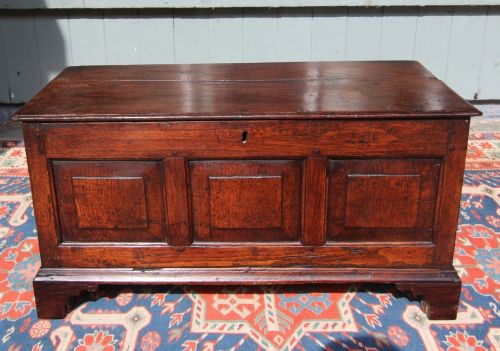
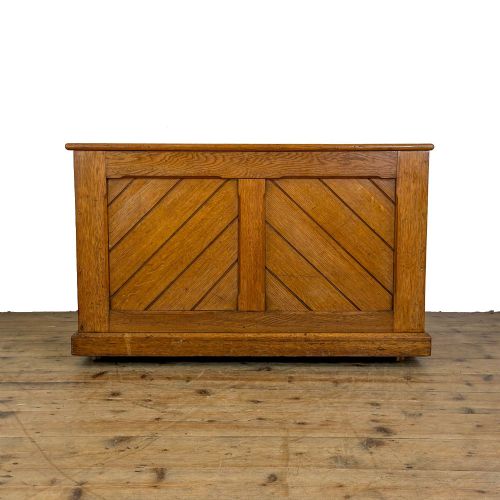

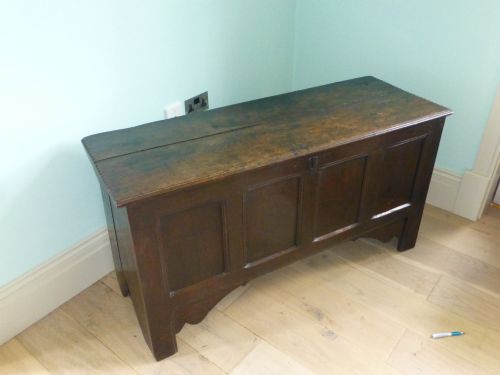
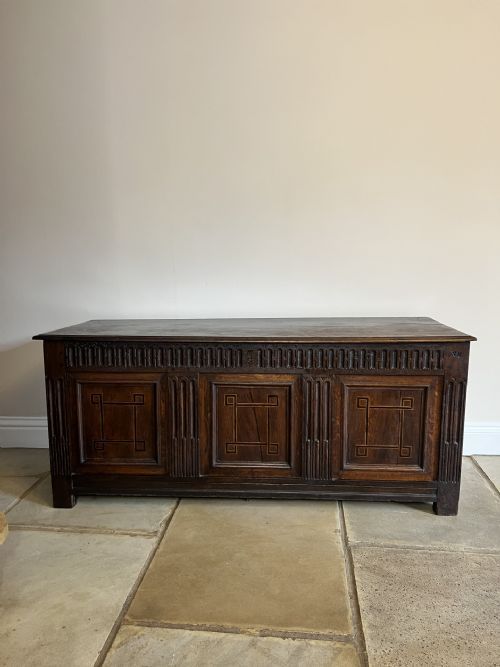
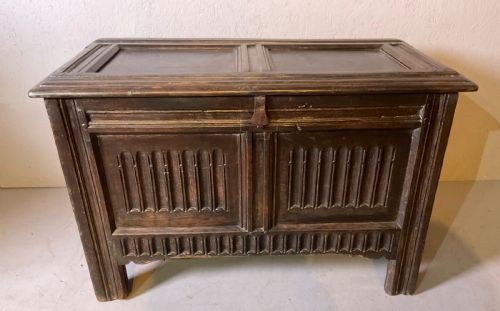

Country Oak Wooden Trunk
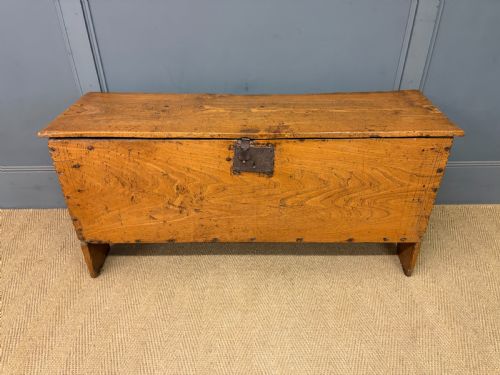
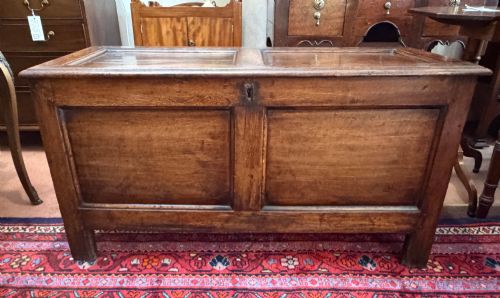
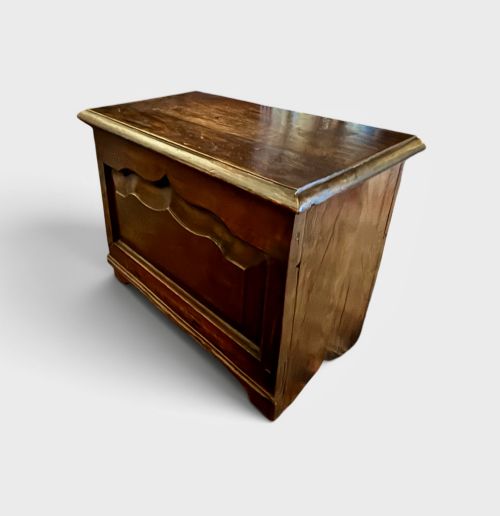
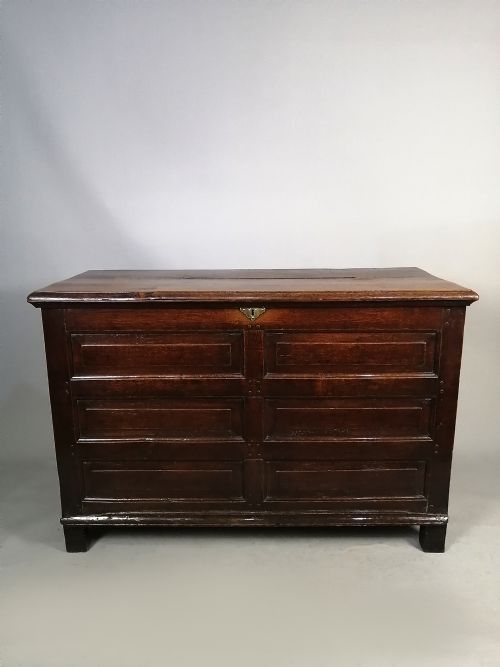
A country oak wooden trunk provides rugged storage with centuries of domestic history woven into heavy timber.

Country Oak Wooden Trunk
When searching for a country oak wooden trunk, buyers encounter utilitarian domestic receptacles designed for secure storage in domestic interiors. These pieces span centuries of rural craftsmanship, appearing in formats ranging from simple boarded boxes to large mule chests fitted with lower drawers.
Materials and Construction Techniques
Carpenters built these receptacles primarily using solid oak timber, frequently supplemented by secondary native woods like elm and pine. Iron and brass hardware, including hinges, straps and locks, reinforced the heavy wooden structures against daily wear.
Joinery methods relied on traditional frame and panel construction, pegged joints and hand-planed boards. Surface finishes developed organically through decades of waxing and handling, though occasional surviving examples retain early paint layers.
Current listings demonstrate extensive use of solid oak, elm and pine, spanning periods from the sixteenth century through the Edwardian era.
Distinctions in Quality and Survival
Quality rests upon the proportion of original timber retained and the integrity of the structural joinery. Pieces maintaining their early ironwork, untouched surface patination and unreplaced boards command greater interest.
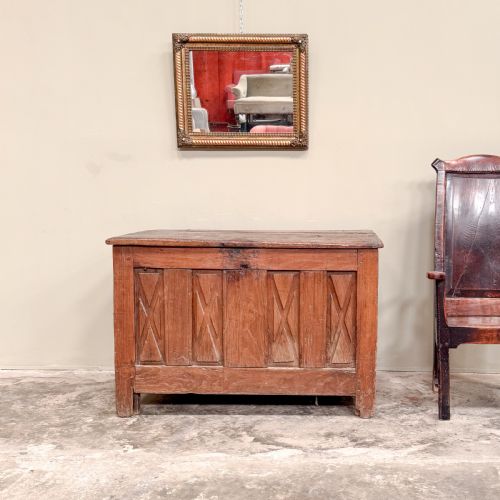
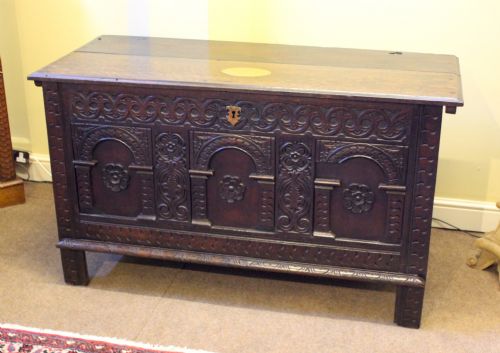
The presence of regional carving details, such as linen fold panels or geometric mouldings, elevates the status of a basic storage box into a decorative work of vernacular art. The survival of internal components like original hinges and till boxes further separates standard utility pieces from finer examples.
The Country Oak Wooden Trunk Glossary
- Coffer
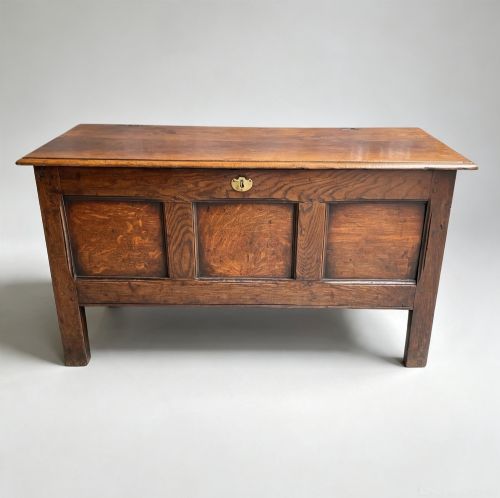
- A heavy wooden chest traditionally used for storing valuables, documents or clothes. Most surviving examples utilise robust oak construction.
- Mule chest
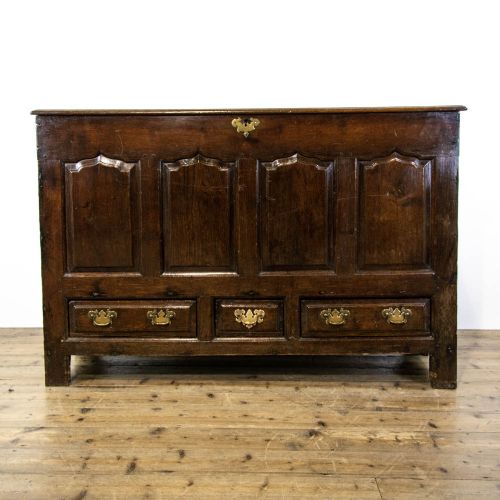
- A storage chest featuring one or more drawers built into the base beneath the main compartment. These hybrid forms emerged as domestic storage needs evolved.
- Cofer bach
- A small Welsh miniature coffer typically produced as a gift or dowry piece. These compact chests mirror the construction of their larger counterparts.
- Linen fold
- A carved decorative panel moulding imitating folded cloth. This motif appears frequently on sixteenth and seventeenth-century English woodwork.
- Boarded box
- A primitive chest constructed from simple thick planks nailed or pegged at the corners rather than utilising a joined frame.
Country Oak Wooden Trunk: Frequently Asked Questions
What were country oak trunks used for?
These robust receptacles served households primarily as secure storage for valuable textiles, garments, bread and important legal documents. Families kept them in principal rooms or chambers where heavy lids protected contents from dust and damp.
Over generations, their functional role shifted as domestic architecture developed built-in closets, turning these sturdy chests into cherished heirloom furniture items used for blanket and linen storage.
How do I date an old oak chest?
Dating relies on observing construction methods, tool marks and hardware styles used by the carpenter. Early seventeenth-century examples typically employ hand-split boards, pegged frame-and-panel assemblies and wrought iron strap hinges.
Later nineteenth-century versions often show circular saw marks, machine-cut nails and standardised dovetail joints on internal till boxes, distinguishing them clearly from Elizabethan and Georgian predecessors.
Are these trunks suitable for daily use?
Solid oak construction makes these chests exceptionally durable for holding blankets, winter woollens and household linens in modern settings. Their heavy hinged lids provide reliable dust-free containment while adding historical character to a hallway or bedroom.
Placing them away from direct heat sources and sudden humidity changes ensures the dry old timber remains stable and prevents warping across the lid panels.
What is the difference between a coffer and a mule chest?
A standard coffer consists of a single deep box compartment accessed solely by lifting the top lid. Retrieving items at the bottom requires removing everything stacked above.
A mule chest introduces one or more pull-out drawers beneath the main lifting lid compartment, allowing easier access to stored clothing without disturbing items placed on top.