

Country Oak Press Cupboard
A country oak press cupboard provides robust storage for linen and provisions, carrying the rich patina of centuries of domestic use.
Country Oak Press Cupboard
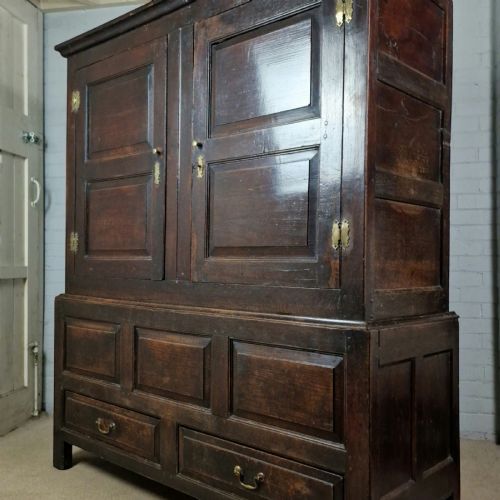
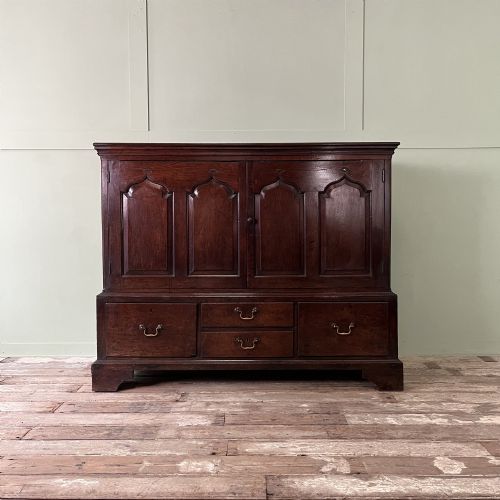
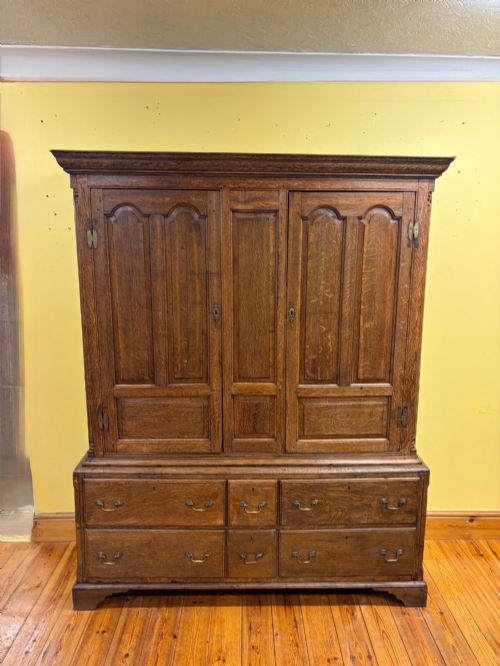
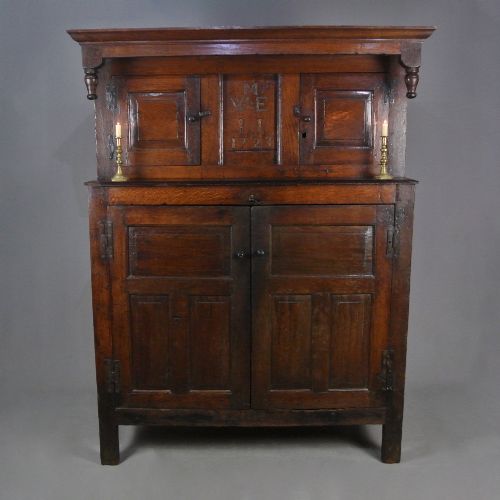
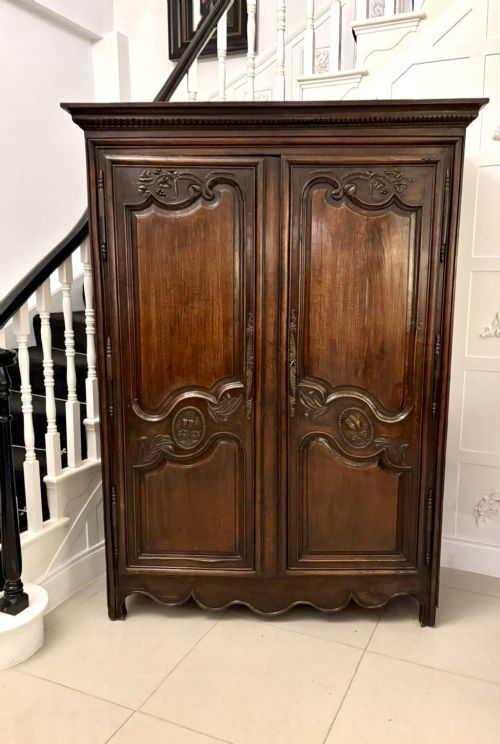
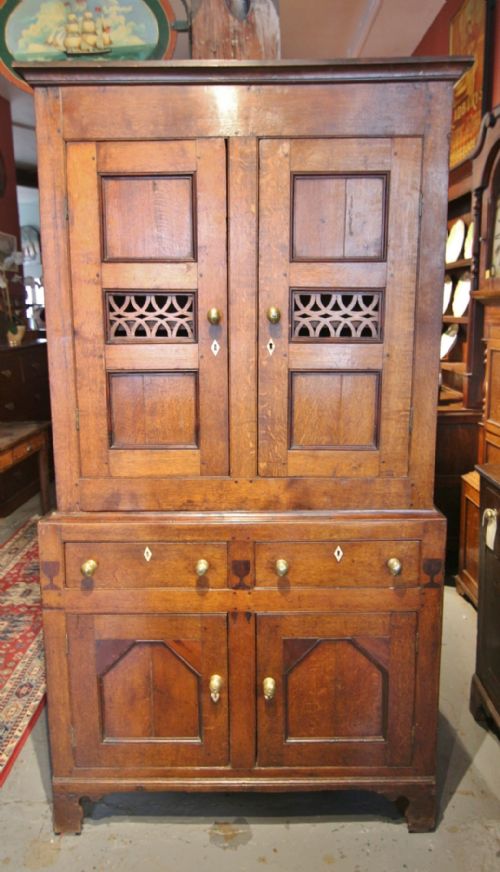
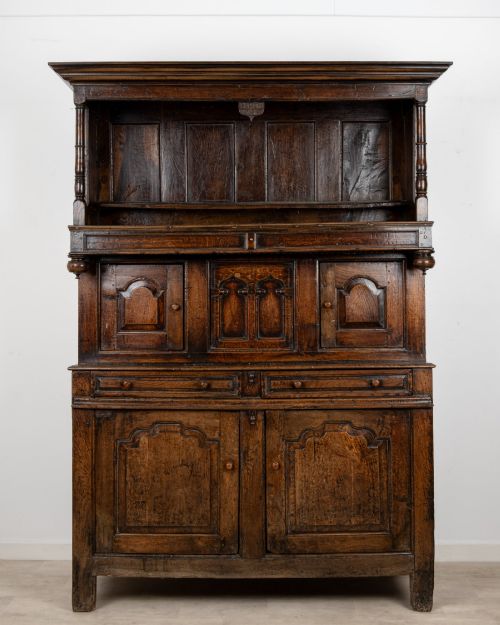
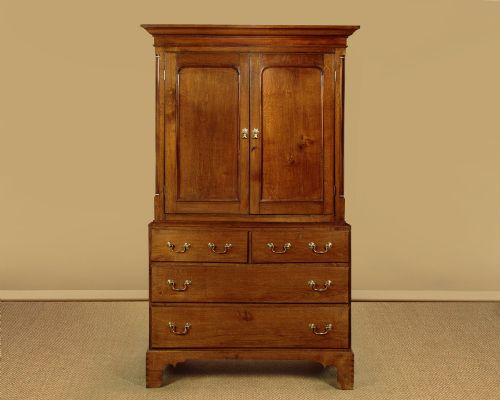
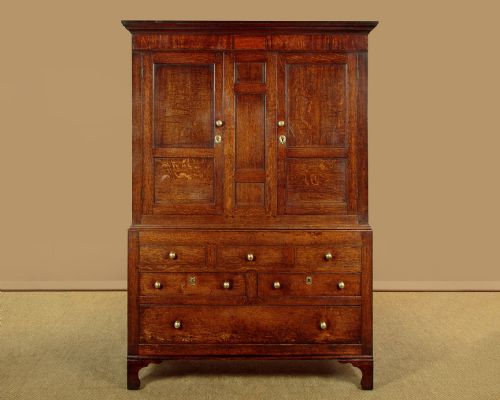
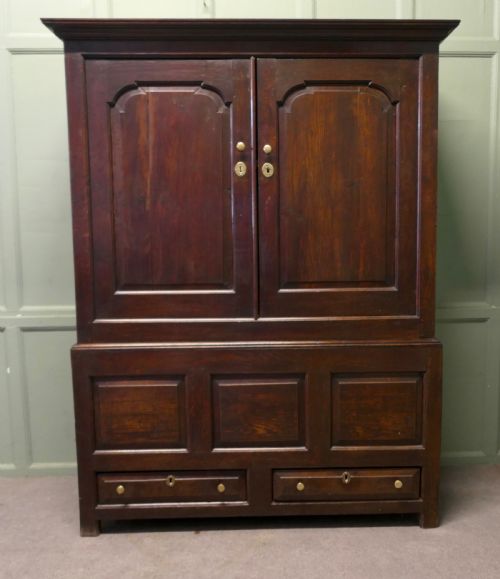
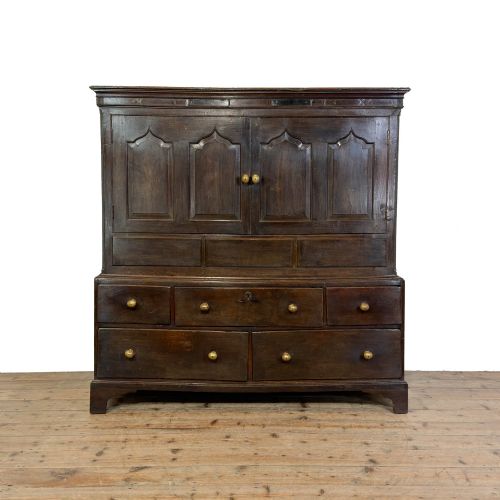
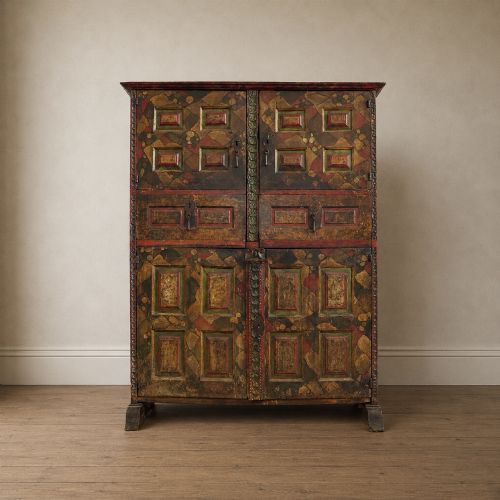
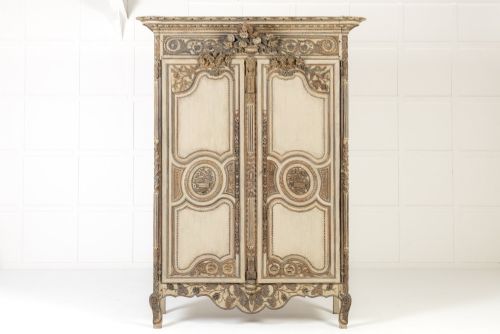
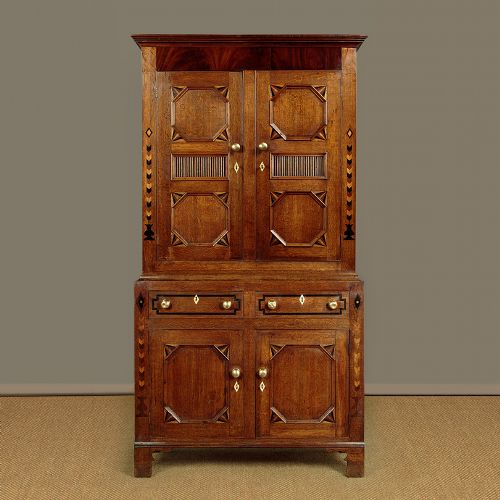
A country oak press cupboard is a substantial storage piece designed for domestic organisation, frequently incorporating upper and lower sections for linen or provisions. When exploring a country oak press cupboard on this page, buyers encounter regional vernacular forms originating from Welsh, English, and French rural workshops. The selection spans robust seventeenth-century court cupboards and tridarns through to eighteenth-century Georgian housekeepers' cupboards and low linen presses.
These functional items reflect the specific domestic needs of country households, ranging from bread and cheese food cupboards to tack and harness storage. Surviving examples demonstrate considerable variety in scale, from tall armoires to dwarf cupboards and hanging variants. The predominant period representation draws heavily from the seventeenth, eighteenth, and early nineteenth centuries.
Materials and Construction Methods
Makers relied primarily on native oak, often combined with secondary woods such as mahogany for contrast or pine for internal shelving. Panels were typically frame-and-panel construction, allowing the timber to expand and contract naturally with seasonal humidity changes in rural homes.
Hardware played an essential structural role, utilising hand-forged iron hinges and blacksmith locks alongside brass keyhole escutcheons. Surface finishes varied from bare waxed timber to polychrome paint or inlaid decoration, depending on the regional workshop tradition.
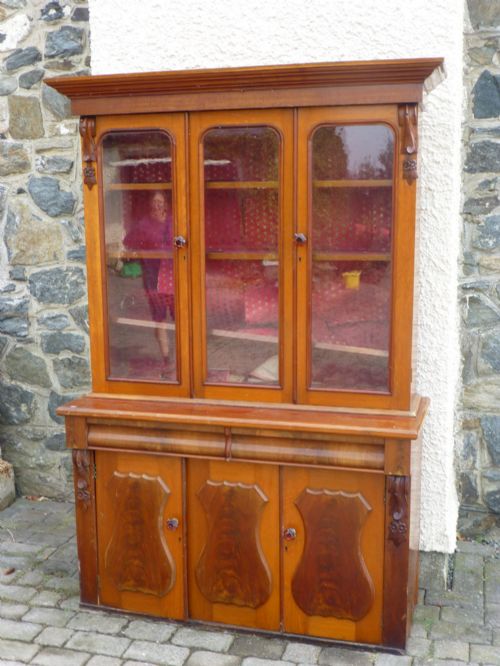
The listings span the seventeenth, eighteenth, and nineteenth centuries, featuring Welsh vernacular, French provincial, and English country styles.
Assessing Quality and Authenticity
Quality in these pieces depends heavily on the integrity of the timber surfaces and the survival of original structural elements. Untouched patination and original blacksmith-made ironwork significantly elevate a piece above examples that have undergone heavy restoration or replacement hardware.
Proportion and regional character also dictate distinction, with well-balanced vernacular forms and crisp carving demonstrating superior craftsmanship. Pieces retaining their original feet, cornices, and internal fittings command greater regard among collectors.
The Country Oak Press Cupboard Glossary
- Press cupboard
- A large storage piece with internal shelving or hanging space enclosed by doors, traditionally used for linen or clothing. It often combines a lower chest section with upper cupboards.
- Court cupboard
- An early form of canted or tiered sideboard and cupboard, originating in the seventeenth century. These pieces often display carved ornamentation and support columns.
- Tridarn
- A traditional Welsh three-tier cupboard featuring an open middle stage and enclosed upper and lower sections. They served as prominent display and storage units in rural homes.
- Housekeeper's cupboard
- A large utilitarian storage cabinet traditionally utilised in large country houses for domestic stores and linens. They frequently incorporate multiple doors and internal drawers.
- Patina
- The deep surface sheen and colour developed by wood over centuries through handling, waxing, and exposure to light. It acts as a primary indicator of age and authenticity.
Country Oak Press Cupboard: Frequently Asked Questions
How were country oak press cupboards used originally?
These pieces stored household textiles, folded linens, and dried provisions in rural dwellings. Their compartmentalised interiors kept items organised and protected from household dust.
Larger variants served multi-functional roles in domestic spaces, acting as central storage hubs for the daily management of the household.
Where were these cupboards manufactured?
Country workshops across England, Wales, and France produced these pieces using locally sourced timber. Regional styles developed distinct characteristics based on local woodworking traditions.
Welsh vernacular pieces, for instance, often incorporate specific regional naming conventions and unique structural proportions compared to English counterparts.
How do I care for antique oak furniture?
Maintain stable room temperatures and avoid placing the timber near direct heat sources or strong sunlight. These precautions prevent the oak from drying out and splitting.
Apply traditional beeswax periodically to nourish the surface and preserve the historic patina without creating a synthetic shine.
How can I tell the period of a cupboard?
Examine the construction methods, tool marks, and hardware types used throughout the piece. Hand-forged iron hinges, pegged joints, and panel construction methods provide reliable chronological clues.
Stylistic motifs like seventeenth-century strapwork differ notably from the cleaner architectural lines associated with Georgian pieces.