

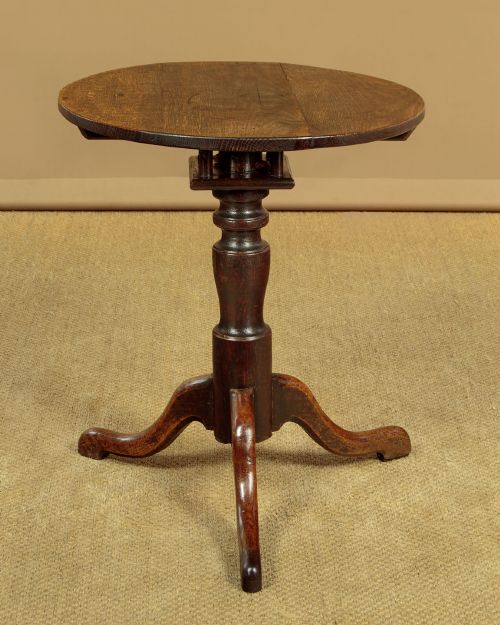


Country Oak Pedestal Table
A country oak pedestal table brings honest timber and sturdy tripod or single-column support into a room.
Country Oak Pedestal Table
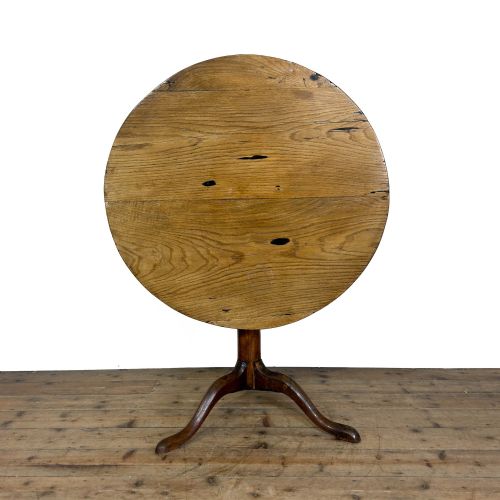
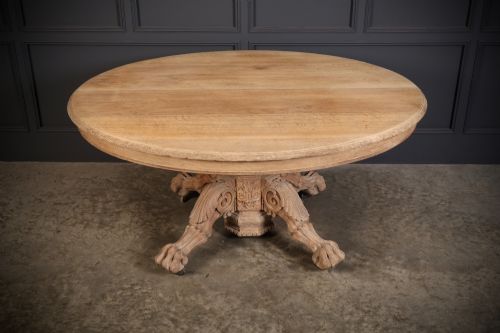
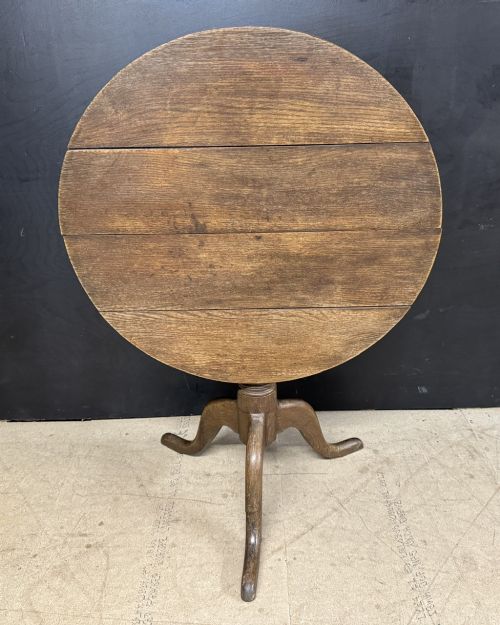
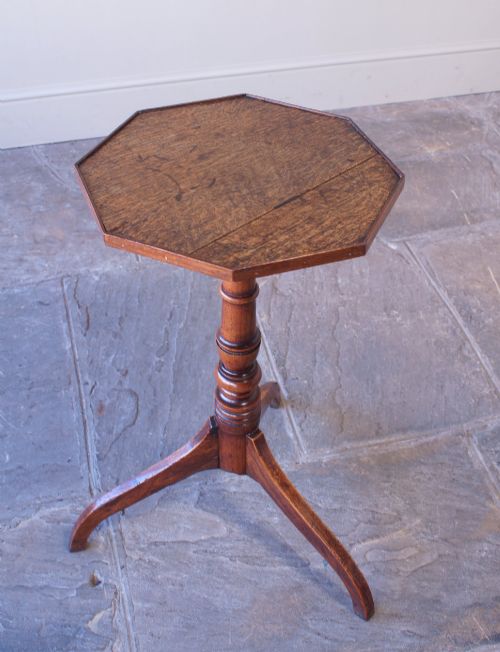
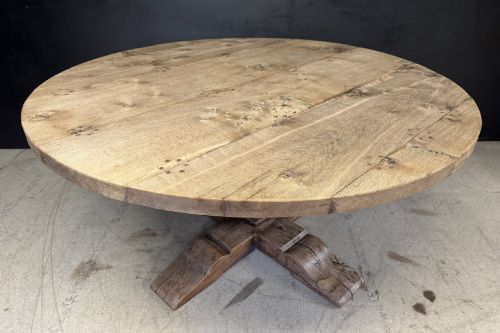
A country oak pedestal table encompasses both compact tripod occasional tables and larger single-pillar dining forms found across domestic interiors. When searching for a country oak pedestal table, buyers typically encounter sturdy tilt-top or fixed occasional designs originating from the eighteenth century through to the early twentieth century.
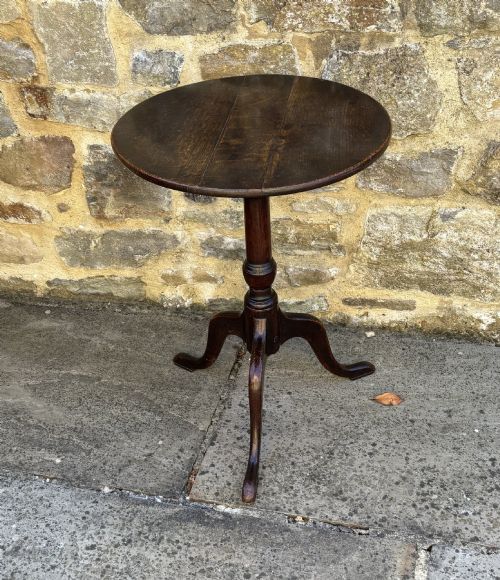
Makers often combined oak with elm, pine, or yew, reflecting the practical timber supplies available to regional workshops. Forms range from simple Welsh vernacular examples to Georgian occasional tripod tables supported by three shaped legs.
Materials and construction
Construction relies heavily on solid oak boards for tops and pillars, frequently paired with elm for occasional table tops or pine for secondary framing timbers. Joinery methods prioritise utility, utilising pegged tenons, turned central columns, and splayed legs fixed firmly to the pedestal base.
Surfaces show the natural grain of timber, sometimes enriched by centuries of wax polishing or later bleaching techniques. Turning appears on columns and legs, displaying regional variations from plain cylindrical shafts to barley twists.
Country Oak Pedestal Table Retail Price Guide 2026
Typical asking prices for country oak pedestal table among the pieces listed under this phrase on Sellingantiques today, from the lower quarter to the upper quarter. They describe what is for sale here now, not the wider market.
One listed piece is recorded simply as a carved twig table from the nineteenth century.
Evaluating quality and proportion
Quality rests primarily on the balance of the tripod base and the thickness of the solid oak top. Better examples maintain crisp turning on the pillar and securely fitted original legs without excessive movement at the block.
The choice of secondary woods and timber selection also distinguishes finer regional pieces from utilitarian utility tables. Uniform colour and minimal warping across wide single-board tops indicate superior selection by the original maker.
The Country Oak Pedestal Table Glossary
- Tripod table
- A small freestanding table supported by a central pillar and three legs. These versatile pieces gained popularity during the Georgian period for tea or reading.
- Tilt-top
- A hinged table top that folds vertically when not in use. This mechanism allowed tables to be stored flat against a wall to save floor space in smaller rooms.
- Vernacular
- An architectural or furniture style rooted in local traditions rather than formal academic design. These pieces utilise regional materials and practical construction methods.
- Refectory table
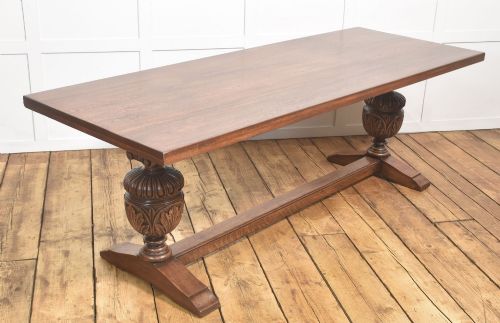
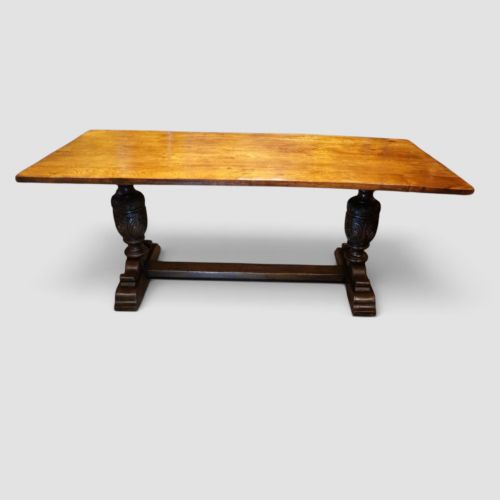
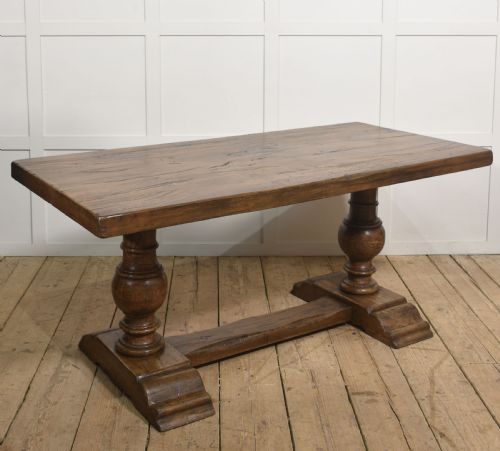
- A long dining table historically used in communal halls. Country iterations utilise thick oak tops and sturdy trestle or pillar supports.
Country Oak Pedestal Table: Frequently Asked Questions
How do I date an oak pedestal table?
Dating relies on examining construction marks, timber preparation methods, and leg profiles. Eighteenth-century examples often feature hand-sawn boards and pegged joints without modern metal fixings.
Later revival pieces from the Victorian and Edwardian eras show machine-cut timber components and standardised turning patterns. Comparing the wear patterns around the pedestal base also helps determine age.
Were tilt-top tables used for dining?
Smaller tilt-top tables served primarily for tea service, reading, or card games rather than formal meals. Their folding mechanism was designed for convenient storage against parlour walls.
Larger dining requirements were met by refectory or trestle tables with fixed frames. Pedestal bases on smaller tables allowed diners to sit comfortably without corner legs obstructing their chairs.
How should I care for antique oak?
Maintain oak surfaces by applying traditional beeswax periodically to nourish the dry timber. Avoid placing tables near direct heat sources or strong sunlight, which can cause wood to split.
Cleaning requires only a soft, dry cloth to remove dust. Moisture should be wiped away immediately to prevent water marks on the polished finish.