
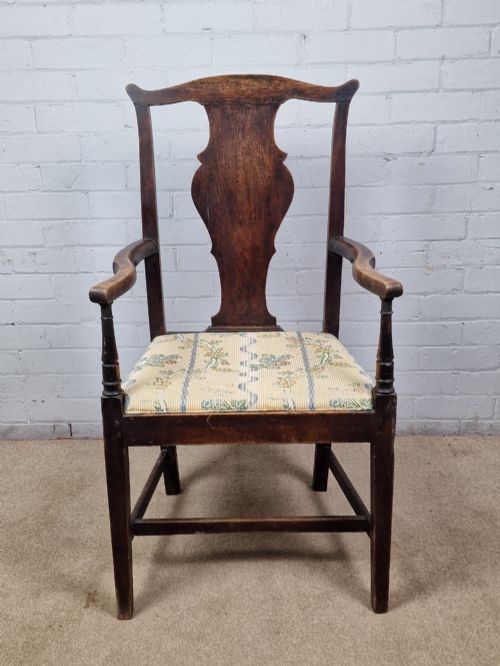
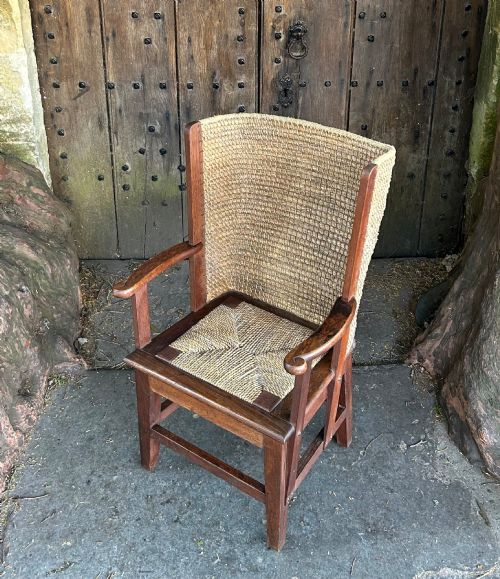
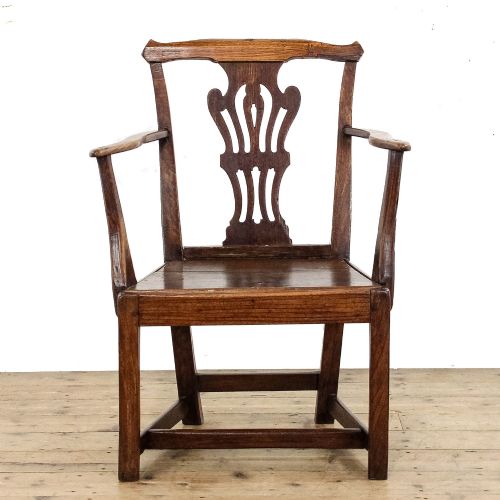
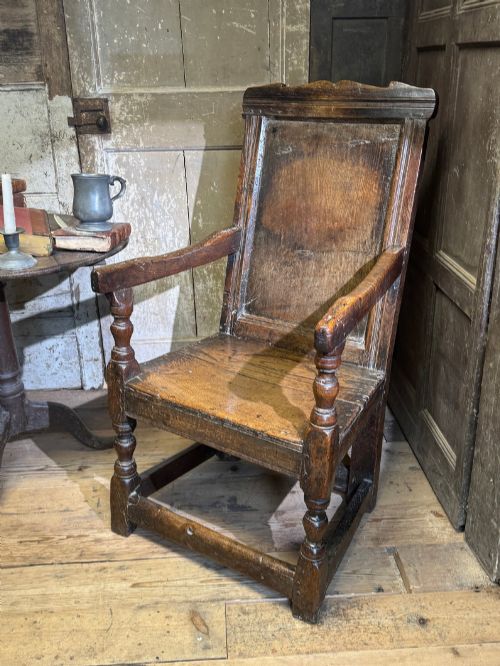


Country Oak Open Armchair
A country oak open armchair brings solid timber construction and regional vernacular design directly into a living space.
Country Oak Open Armchair
A country oak open armchair is a sturdy wooden seat built by regional makers for everyday domestic use. When searching for a country oak open armchair, buyers encounter pieces originating from English, Welsh, Scottish, and Irish workshops across several centuries.
The selection here spans functional forms including wainscot chairs, ladder backs, spindlebacks, and shepherds crook designs. Examples range from robust seventeenth-century wainscot builds to eighteenth-century Georgian carvers and later nineteenth-century vernacular seating.
Most pieces rely on solid timber framing, often paired with woven seats or drop-in cushions. Regional variations show up in high panelled backs, carved crest rails, and broad arm supports suited to domestic interiors.
How they were made
Joinery relies on heavy oak frames assembled with traditional mortise and tenon joints pegged together by hand. Secondary timbers such as elm and beech appear in specific structural components or secondary framing.
Seating areas often feature rush, straw, cane, or upholstered fabric pads dropped into wooden frames. Regional craftspeople shaped upright stiles, turned spindles, and carved back panels using manual drawknives, chisels, and saws.
Several armchairs incorporate woven rush or straw seating designed to cradle tired seventeenth-century backs.
What varies in quality
Quality rests on the integrity of the original timber and the depth of regional character preserved in the frame. Pieces that retain their early surface patination and untouched structural joinery stand apart from heavily restored examples.
Proportion and carving detail dictate the distinction between standard utility seating and master commissions. Bold turnings, crisp panel mouldings, and balanced arm assemblies indicate superior regional craftsmanship.
The Country Oak Open Armchair Glossary
- Wainscot chair
- A heavy wooden armchair featuring a panelled back and solid wooden seat. This form dates back to the seventeenth century and earlier.
- Carver
- A term used for an armchair designed to match a set of smaller dining chairs. These usually feature open arms to accommodate wider clothing.
- Rush seat
- A seating surface woven from dried marsh grass twisted into cords. It provides a resilient and traditional base within the wooden frame.
- Spindleback
- A chair back constructed from multiple thin turned wooden rods set vertically between the crest rail and seat. This style lightens the visual weight of the timber.
- Shepherds crook
- An armchair design characterised by curved, rounded armrests that resemble a traditional crook. These pieces often offer deep enclosed seating for warmth.
Country Oak Open Armchair: Frequently Asked Questions
What is a country oak open armchair?
A country oak open armchair is a utilitarian wooden seat produced by regional makers rather than urban cabinetmakers. These chairs emphasise robust construction and local vernacular styles over fashionable metropolitan trends.
They serve as practical seating with open arms, distinguishing them from fully enclosed panelled or hooded forms like lambing chairs.
How do I date a wooden armchair?
Dating relies on observing construction methods, tool marks, timber shrinkage, and regional style developments. Seventeenth-century pieces typically show heavy panel construction and pegged joints, while eighteenth-century examples adopt lighter Georgian proportions.
Secondary woods and hardware fastenings also help narrow down the period of manufacture.
Where were these chairs made?
These chairs originated in regional workshops across England, Wales, Scotland, and Ireland. Distinct local traditions influenced the carving, turning styles, and timber selections.
Welsh and West Country makers developed particular regional forms that survive in panelled backs and deep proportions.
How do I care for antique oak?
Antique oak benefits from stable indoor humidity and protection from direct heat sources and strong sunlight. Regular dusting with a dry cloth keeps the surface clean without stripping historic patination.
Occasional application of appropriate wax maintains the moisture balance in older timber.