

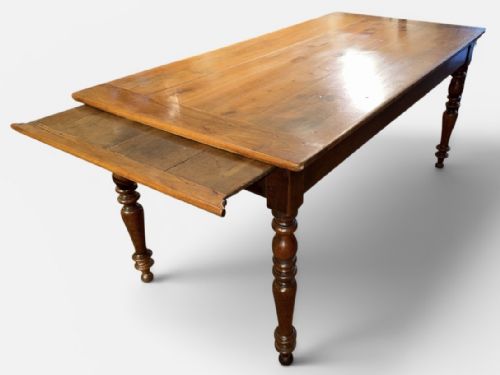


Country Oak Harvest Table
A country oak harvest table brings heavy timber, working history and everyday seating straight into the modern dining room.
Country Oak Harvest Table
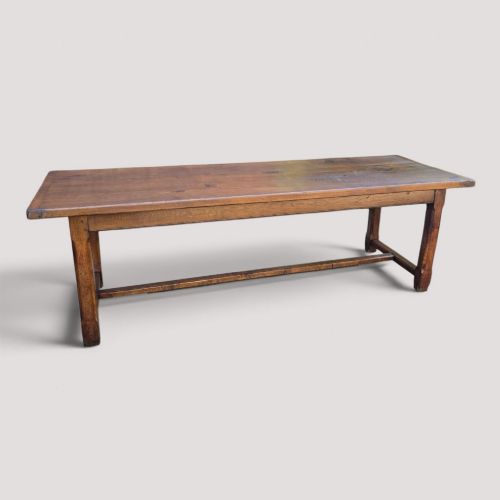
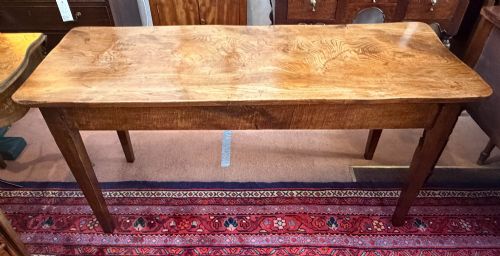
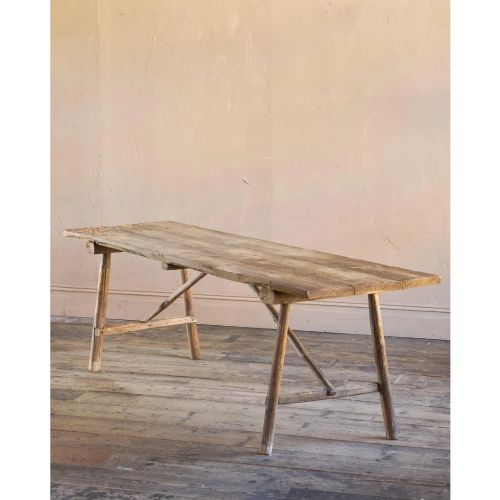
When you search for a country oak harvest table, you encounter large dining pieces designed for communal meals, spanning the eighteenth and nineteenth centuries. These tables often appear under descriptions like farmhouse, refectory or primitive country.
Most examples originate from English and French traditions, utilising robust timber frames built to last generations of daily use. You will find both compact formats and long variations reaching over three metres in length.
What varies in quality
Quality rests upon the integrity of the original timber and the proportion of the base relative to the top. Tables retaining their unreduced original height and substantial timber thickness command greater interest than heavily restored alternatives.
The sophistication of the underframe, such as an H-stretcher or turned legs, distinguishes standard utility pieces from finer vernacular examples. Surface patination, achieved through decades of wax polishing and wear, separates honest aged timber from over-scraped boards.
Country Oak Harvest Table Retail Price Guide 2026
Typical asking prices for country oak harvest table among the pieces listed under this phrase on Sellingantiques today, from the lower quarter to the upper quarter. They describe what is for sale here now, not the wider market.
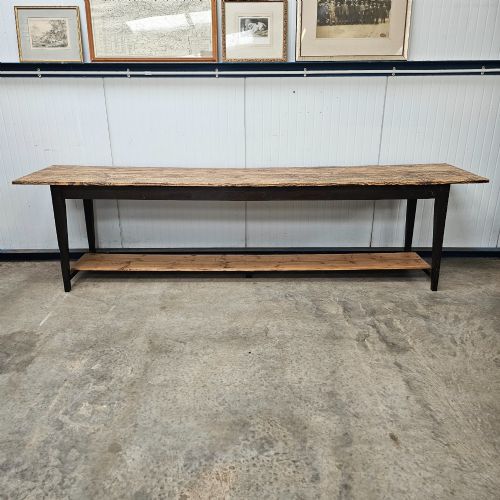
Formats range from compact rustic kitchen boards to extended refectory structures measuring over three metres long.
The Country Oak Harvest Table Glossary
- Refectory table
- A long narrow dining table originally built for monastic dining halls and later adopted in country homes. This form provides substantial seating capacity along both flanks.
- H-stretcher
- A horizontal timber brace shaped like the letter H that connects the legs of a table for added rigidity. It prevents the legs from bowing outward under heavy loads.
- Patina
- The deep sheen and surface texture developed on wood over years of handling and polishing. It serves as a visual indicator of age and genuine use.
- Mortise and tenon
- A traditional woodworking joint where a projecting tongue fits snugly into a matching cavity. This method secures the frame without relying on metal fasteners.
- Vernacular furniture
- Objects made by local craftsmen using regional materials and traditional styles rather than high academic designs. These pieces reflect the practical needs of rural households.
Country Oak Harvest Table: Frequently Asked Questions
How many people do they seat?
Length dictates capacity, with larger examples stretching past three metres to comfortably accommodate twelve diners or more.
Shorter variants fit smaller rooms while still providing ample knee clearance beneath sturdy wooden aprons.
Are they suitable for daily dining?
These pieces were originally built for hard, practical use in farm kitchens and dining halls, making them exceptionally robust for modern meals.
Routine care involves simple waxing to protect the aged surface from moisture and daily wear.
How can I date an old table?
Dating relies on examining the tool marks left by hand planes, the style of the stretcher base, and the method of joint construction.
Eighteenth-century examples often display different board widths and peg placements compared to later nineteenth-century adaptations.
What is the difference between French and English styles?
English versions often feature straightforward plank tops and simpler structural supports, reflecting Georgian or regional country house traditions.
French provincial examples sometimes incorporate fruitwood or cherry timbers alongside slightly softer leg profiles and stretcher arrangements.