

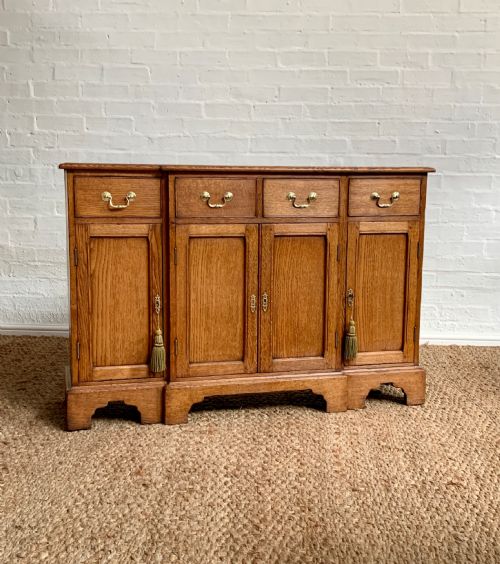
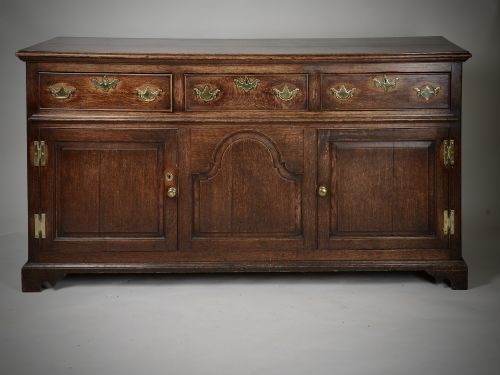
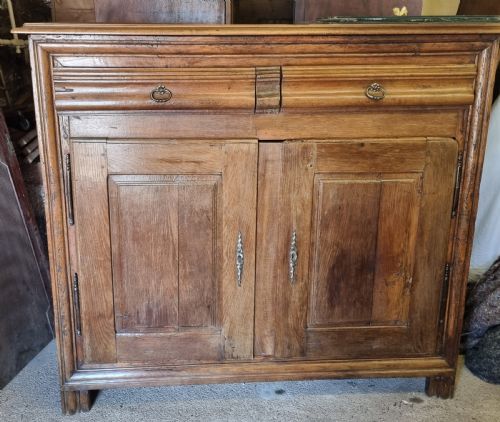
Country Oak Credenza
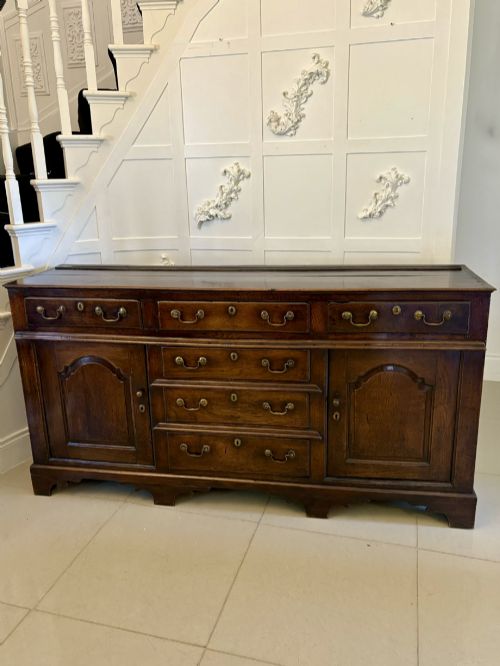
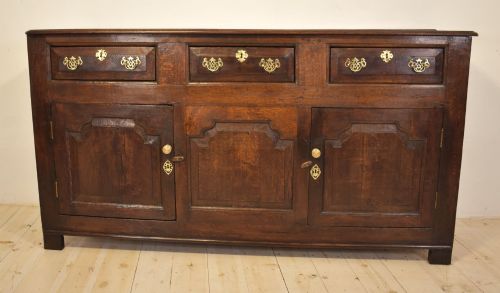
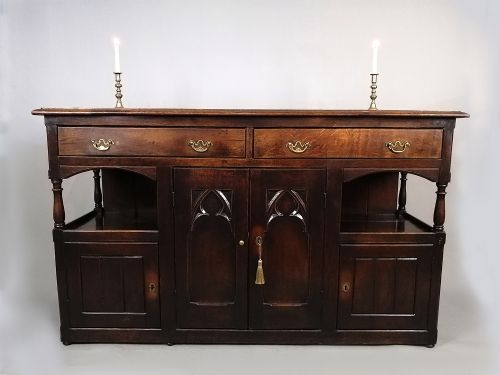
A country oak credenza search brings up sturdy timber sideboards and dresser bases built to anchor domestic spaces.
Country Oak Credenza
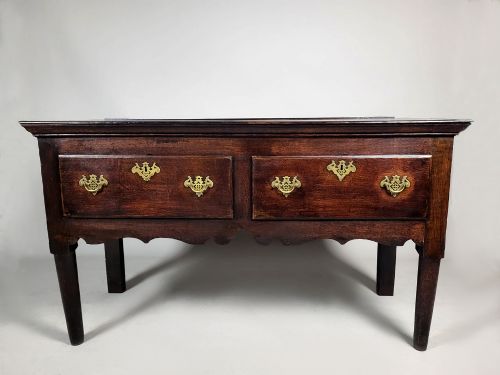
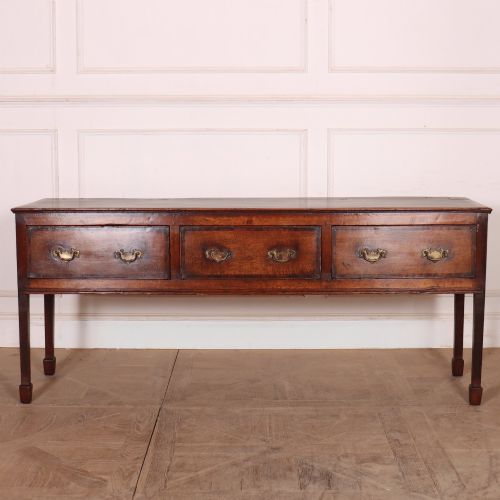
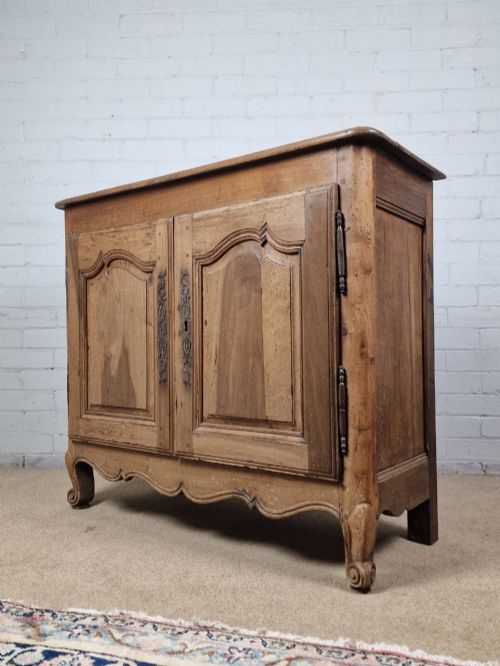
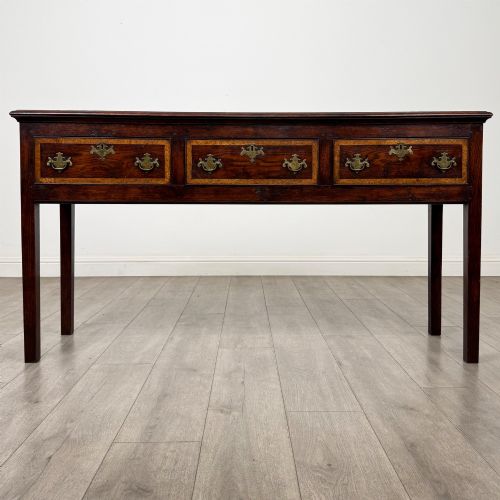
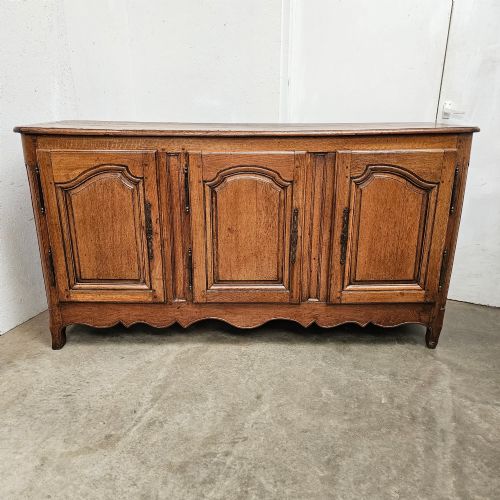
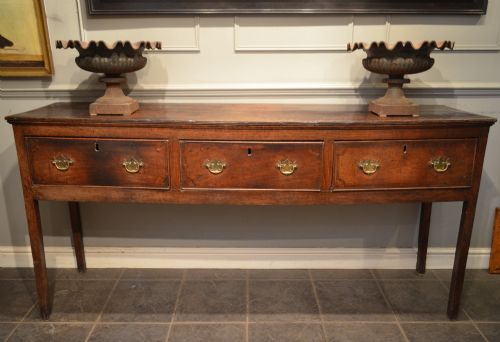
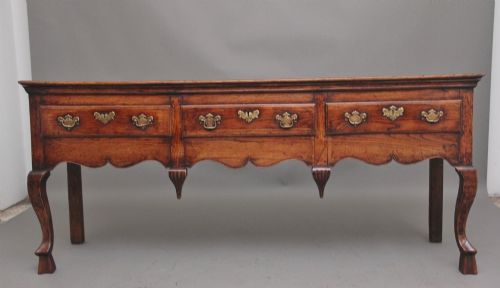
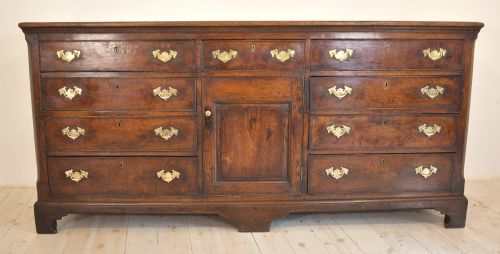
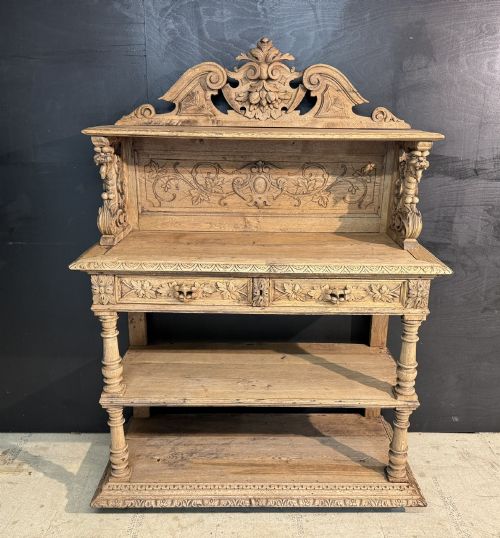
A country oak credenza search leads buyers to robust wooden furniture intended for storage and serving, though the actual inventory consists primarily of oak dresser bases and sideboards rather than formal credenzas. These utilitarian forms originated in domestic kitchens, halls, and dining rooms across England, Wales, and France.
The pieces appearing on this page span several centuries, with the 18th century and the Georgian period providing the bulk of the domestic items. Regional variations such as Welsh dresser bases and French provincial buffets surface frequently among the listings.
Makers fashioned these low boards with deep drawers, cupboards, and open potboards beneath to hold heavy kitchenware and dry stores. Buyers choose them to bring warmth, practical surface area, and centuries of utility into modern rooms.
How they were made
Cabinet makers relied primarily on solid oak, frequently supplemented with secondary woods like fruitwood and elm for drawer linings and internal framing. Panels were hand-planed and joined using traditional mortise and tenon construction to withstand daily kitchen labour.
Hardware played a functional role, utilising brass drop handles, escutcheons, and wrought iron hinges that secured heavy doors and deep drawers. Timber surfaces developed a natural patina over decades of polishing and handling rather than relying on modern synthetic finishes.
Housemaid cupboards kept heavy linens secure while enduring decades of enthusiastic scrubbing by domestic staff.
What varies in quality
Quality rests upon the integrity of the timber selection and the degree of original hardware remaining intact. Pieces retaining their period brasses and unblemished oak tops command greater regard than those subjected to heavy timber replacement.
Proportion and regional character distinguish finer examples from plain utilitarian work. Well-moulded drawer fronts, sound potboards, and crisp hand-carved detailing separate superior country furniture from standard workshop output.
The Country Oak Credenza Glossary
- Dresser base
- A low wooden storage unit with drawers and cupboards, historically used for food preparation and serving before upper plate racks were added.
- Potboard
- An open lower shelf beneath a dresser base designed for storing pots, pans, and heavy earthenware.
- Enfilade
- A long sideboard or cabinet featuring a succession of doors in a single unbroken line, commonly found in French provincial furniture.
- Escutcheon
- A protective brass plate surrounding a keyhole that prevents the surrounding wood from wearing down through repeated use.
- Patina
- The deep sheen and surface warmth acquired by aged oak through centuries of handling, waxing, and exposure to light.
Country Oak Credenza: Frequently Asked Questions
What is a dresser base?
A dresser base is a low, heavy sideboard equipped with drawers and cupboards. These units provided essential surface space and storage in historical kitchens.
Over time, they moved into dining rooms and hallways as practical storage furniture.
How do I care for antique oak?
Feed the timber periodically with traditional beeswax to maintain the moisture in the wood. Avoid placing oak furniture near direct heat sources to prevent splitting.
Keep surfaces dry and dust them gently with a soft cloth to protect the historic finish.
Where were these pieces made?
Carpenters built these items in regional workshops across England, Wales, and France. Local vernacular traditions heavily influenced the design and timber choices of each region.
Welsh and provincial French pieces often display distinct regional styling compared to English urban work.