


Country Ladderback Side Chairs
Country ladderback side chairs offer honest vernacular charm and sturdy timber construction for everyday domestic seating.
Country Ladderback Side Chairs
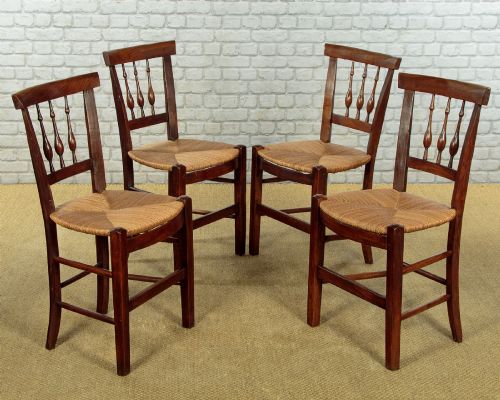
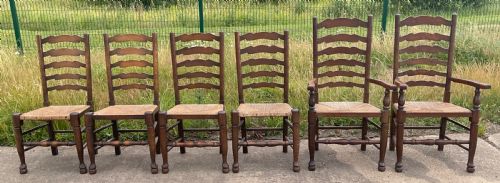
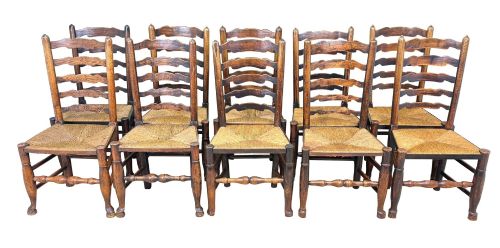
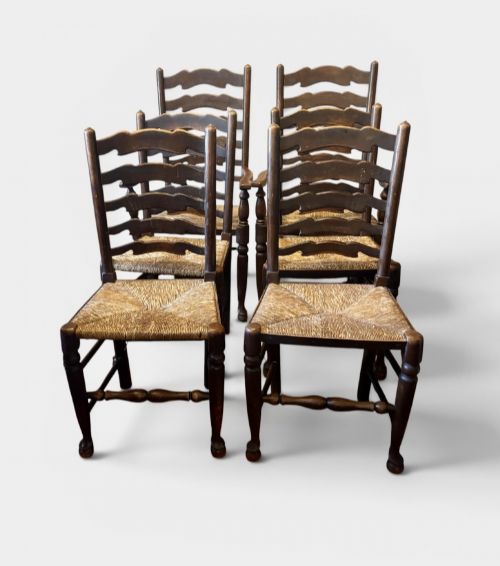
Country ladderback side chairs span utilitarian kitchen seating and vernacular dining sets dating from the eighteenth century through to the early twentieth century. You will frequently encounter sets in oak, elm, and beech originating from English, Irish, Welsh, and French rural traditions.
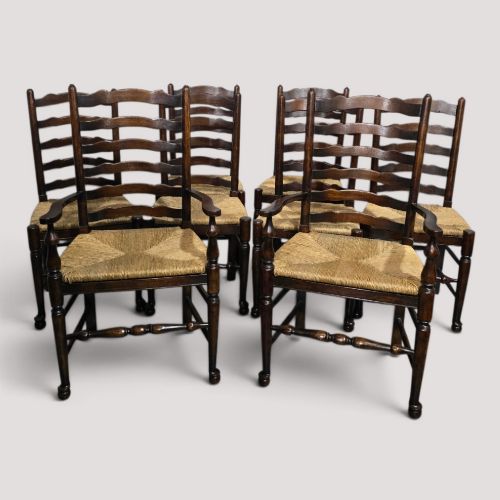
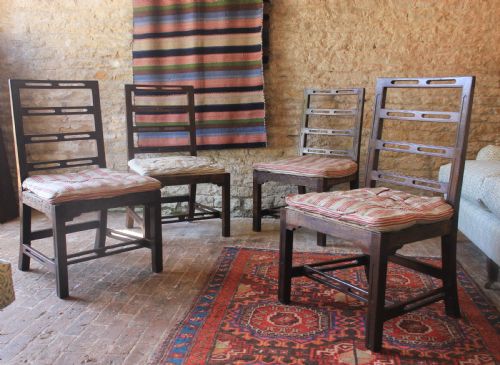
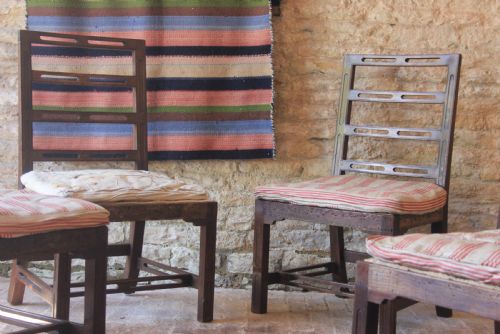
These pieces serve primarily as practical dining or kitchen seating rather than formal parlour furnishings. The form relies on horizontal slats set between upright rear posts to provide lumbar support without upholstery.
How they were made
Cabinetmakers and rural joiners constructed these frames using native timbers such as oak, elm, ash, and beech, frequently combining woods within a single piece to utilise the best material for legs, rails, and spindles. Turned components were shaped on pole lathes before assembly with pegged mortise and tenon joints.
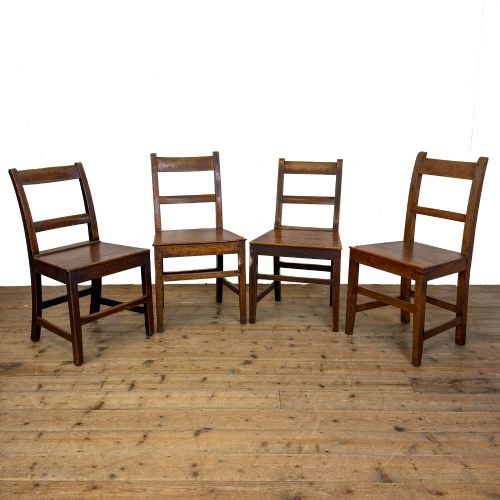
Seats were woven using natural materials like rush or plaited straw, known locally as súgán, wrapped tightly around the seat rails. Selected examples employ solid timber boards or leather inserts secured with brass tacks.
Regional variants represented include Dales chairs, Lancashire chairs, and French provincial ladderbacks alongside Arts and Crafts iterations.
What varies in quality
The integrity of the timber frame and the tightness of the joinery dictate the durability and structural merit of each chair. Original rush or plaited straw seating surfaces that remain intact and taut indicate careful historical preservation and superior workshop execution.
Edward Gardener·Heals
The Country Ladderback Side Chairs Glossary
- Ladderback
- A chair design featuring multiple horizontal wooden slats between the rear uprights. This structural arrangement provides back support while keeping the frame light.
- Rush seat
- A seating surface woven from marsh rushes twisted around a core. This traditional method yields a resilient and supportive platform.
- Súgán
- An Irish term for plaited straw or hay used to weave rustic chair seats. It provides a durable and flexible alternative to rush.
- Vernacular
- Everyday domestic furniture made by regional craftsmen for local use rather than high-style metropolitan workshops. These pieces reflect local timber availability and traditional building methods.
Country Ladderback Side Chairs: Frequently Asked Questions
How do I care for rush seats?
Keep rush and straw seats away from excessive moisture and direct heat sources to prevent the natural fibres from becoming brittle.
Clean them gently with a dry brush and apply a neutral beeswax sparingly to adjacent wooden frames.
Are these chairs suitable for daily use?
Solid construction in woods like oak and elm makes these chairs well suited for regular dining room use.
Check that the joints remain firm and the rush weaving is secure before placing them into service around the table.
How do I distinguish regional styles?
Irish and Welsh pieces often utilise ash or oak with distinctively turned uprights and local weaving methods like súgán. French provincial examples frequently exhibit shaped slats and lighter fruitwood or oak frames.
English country chairs show regional variations such as Dales ladderbacks with multiple closely spaced slats.
What defines a harlequin set?
A harlequin set consists of chairs that share a similar period, form, or material but were not originally made together as a single matched group.
These gatherings evolved as owners collected individual chairs over time to build a usable dining set.