
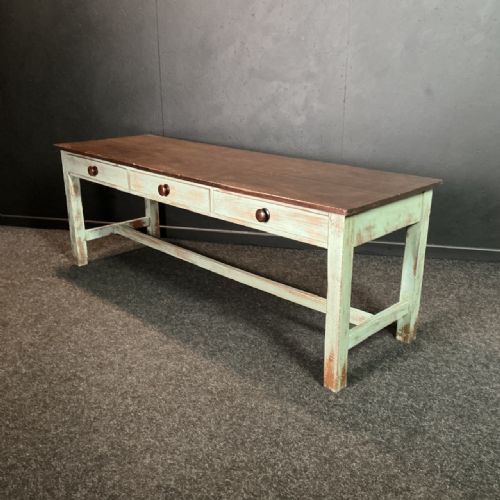
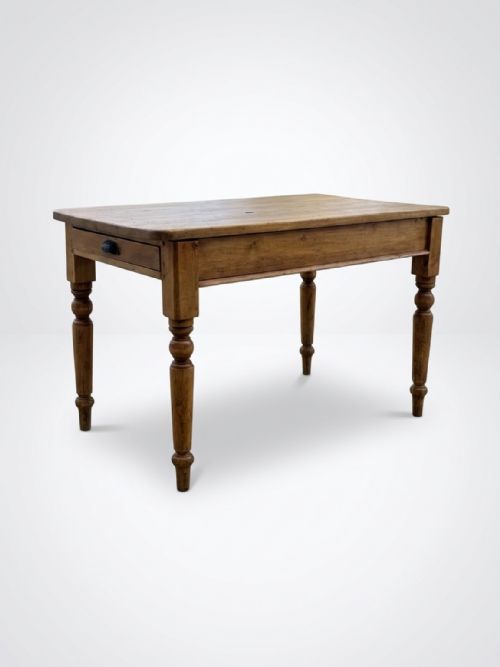
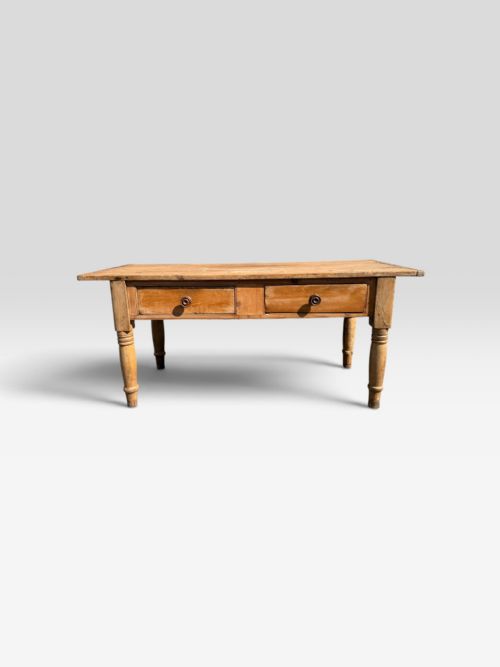
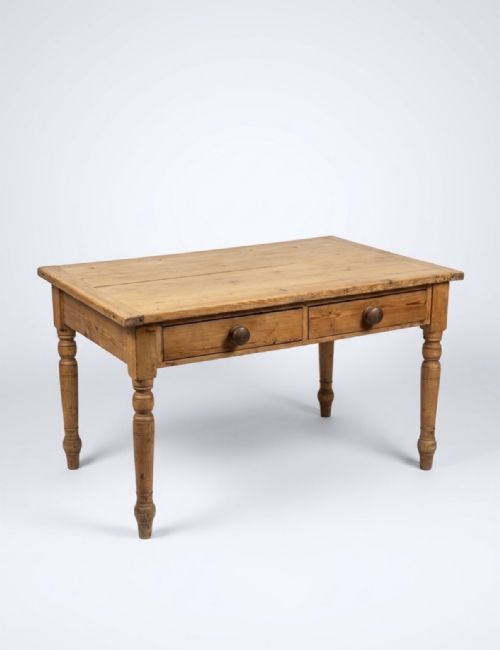
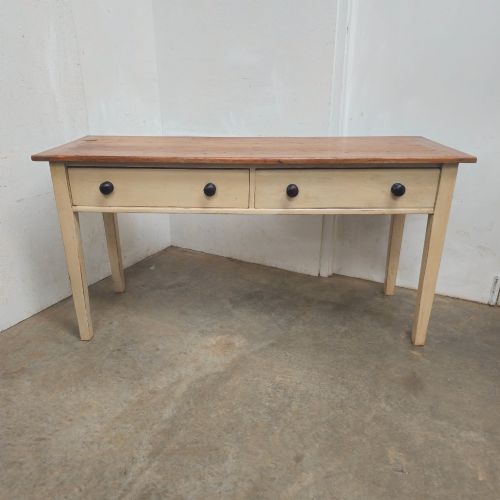
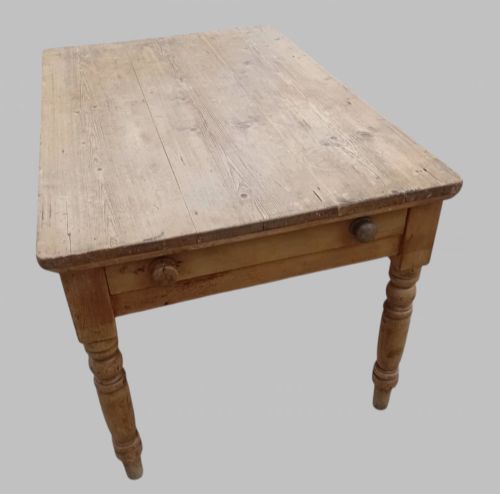
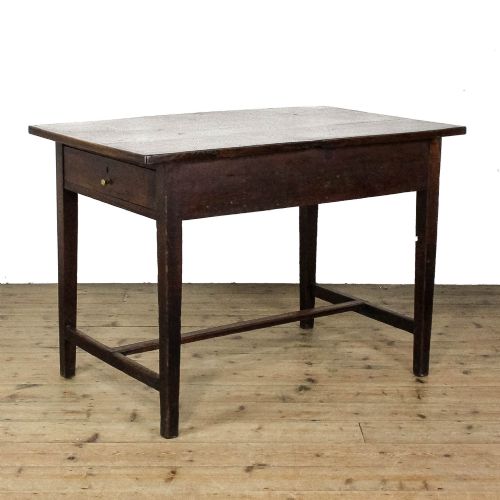
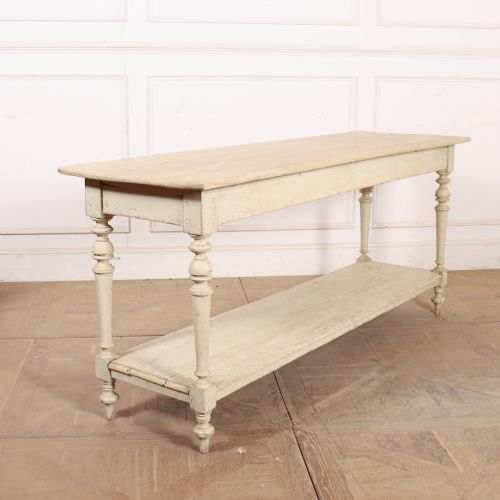
Country Kitchen Side Table
Country kitchen side tables are sturdy utilitarian pieces in pine, oak and fruitwood that bring honest history and practical charm to domestic spaces.
Country Kitchen Side Table
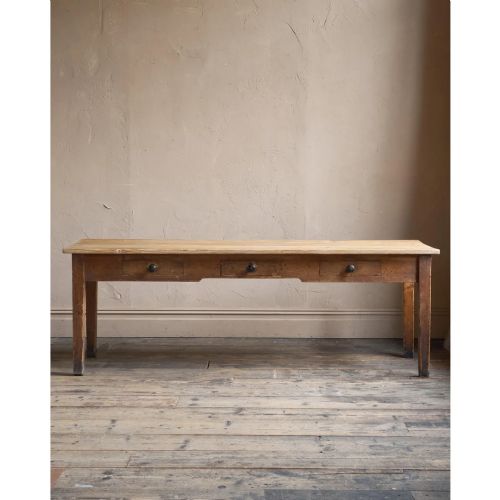
A country kitchen side table encompasses working surfaces such as prep tables, serving tables, scullery tables and console tables rooted in domestic utility. These practical pieces bridge the gap between dining and food preparation, serving diverse roles across working rooms.
The selections available here span from the eighteenth century through the Victorian era and into the early twentieth century, reflecting both English and French provincial traditions. Pine dominates the current group, often accompanied by oak, fruitwood and elm.
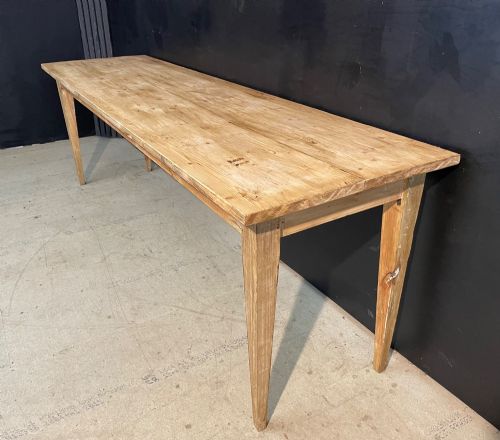
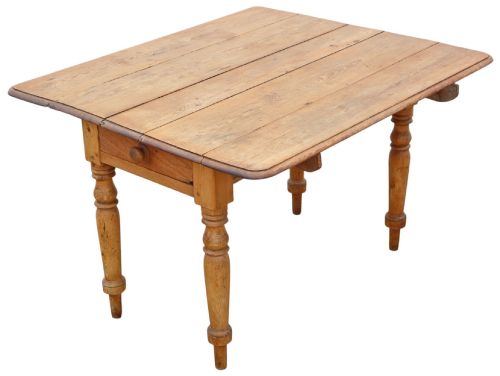
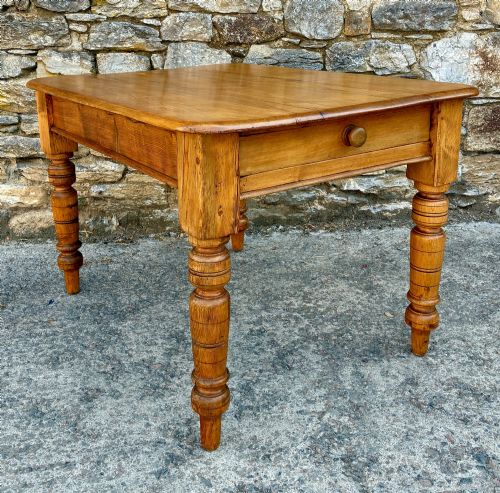
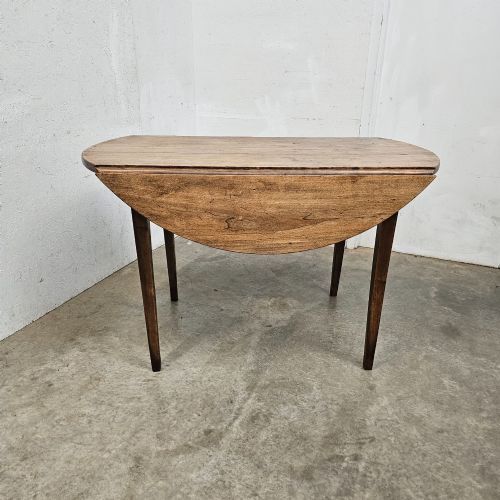
Buyers most frequently encounter nineteenth-century pine examples featuring single drawers or drop-leaf actions. These working surfaces carry the marks of domestic service, from scrubbed tops to later painted finishes.
Materials and Construction
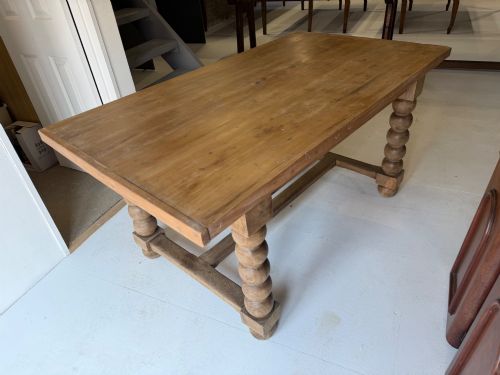
Makers relied on solid timbers such as pine, oak, walnut and fruitwood to build surfaces intended to withstand daily culinary labour. Plank tops, bobbin legs and drop-leaf mechanisms reveal the practical joinery methods employed by regional carpenters.
Hardware elements in brass and iron appear alongside wooden construction, while painted surfaces and natural scrubbed timber finishes protect the underlying wood. Carpenters joined structural elements to endure heavy use in sculleries, dairies and kitchens.
Listings feature woods including pine, oak, fruitwood, elm and walnut across pieces dated from the eighteenth to the early twentieth century.
Distinctions in Quality
Quality rests in the integrity of the timber, the honesty of the surface wear and the proportion of the piece. Tables retaining original painted legs or untouched scrubbed tops demonstrate superior historical survival compared to those with unsympathetic modern alterations.
The choice of materials also signals distinction, moving from utilitarian softwoods like pitch pine to dense hardwoods like eighteenth-century oak and French walnut. Refined leg turnings, dovetailed drawer construction and well-proportioned dimensions separate standard utilitarian furniture from exceptional regional examples.
The Country Kitchen Side Table Glossary
- Scrub-top
- A wooden table top cleaned repeatedly with water and sand until smooth and pale. This process leaves a tactile, weathered surface characteristic of dairy and kitchen tables.
- Dresser base
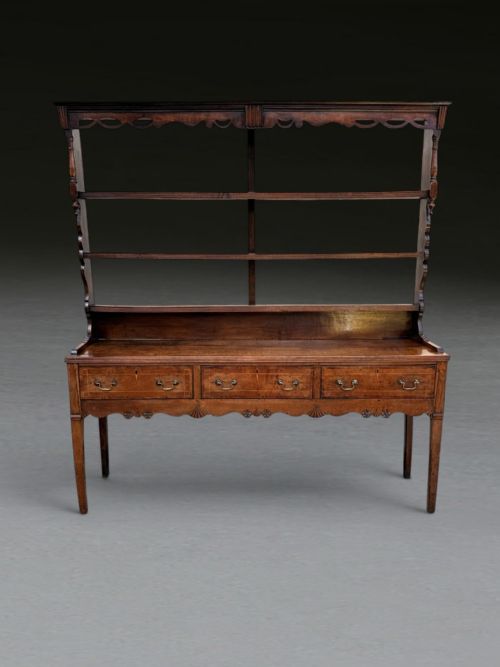
- A lower cabinet or sideboard featuring drawers and cupboards, used historically for storing tableware. These pieces often doubled as auxiliary prep surfaces in country kitchens.
- Drop-leaf
- A table design featuring hinged flaps that fold down to save space or lift up to extend the surface. This mechanism offered flexibility in smaller domestic quarters.
- Dairy table
- A specialised low-porosity wooden table used in cheese making and milk processing. These functional surfaces often utilised pine or scrubbed timber to withstand damp environments.
- Refectory table
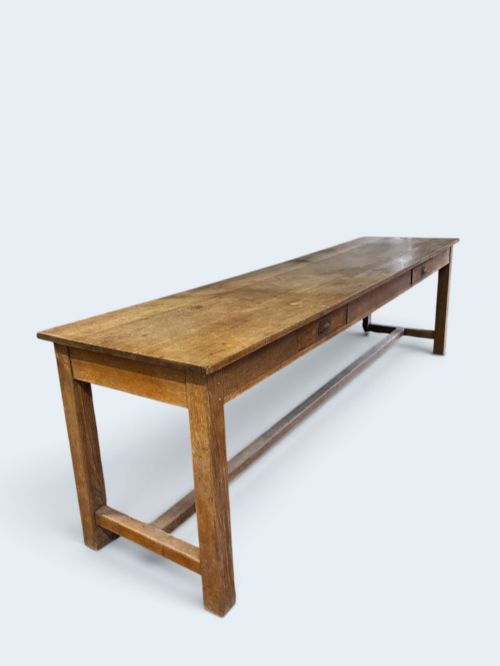
- A long dining table traditionally used in communal halls and large country houses. Early examples feature sturdy plank tops supported by heavy wooden stretchers.
Country Kitchen Side Table: Frequently Asked Questions
How were country kitchen side tables used historically?
These tables served as heavy-duty work surfaces for food preparation, baking and scullery tasks. They functioned as central hubs for domestic labour before fitted kitchens existed.
Servants and family members used the drawers to store utensils, linens and dry goods close to hand. Their sturdy construction allowed for pounding, rolling dough and butchery.
What is the difference between a prep table and a console table?
Prep tables were built strictly for utility, featuring thick scrubbed wooden tops designed to withstand heavy daily chores. They prioritized stability and workspace above decorative appearance.
Console tables often served lighter decorative or serving duties against walls. While both appear in country interiors, prep tables carry deeper evidence of working use.
How do I care for a vintage pine table top?
Maintain antique pine surfaces by dusting with a dry cloth and avoiding excessive moisture. Use coasters and trivets to protect the timber from heat and liquid rings.
Apply natural beeswax periodically to nourish dry wood and preserve the patina. Avoid modern chemical polishes that can degrade historical finishes.
How can I tell a Victorian table from an earlier piece?
Victorian pieces often utilise softer pine, machine-sawn components and standardised drawer construction methods. They frequently display turned legs and simpler proportions suited to nineteenth-century homes.
Earlier eighteenth-century and Georgian pieces tend to feature dense oak or walnut timbers, hand-cut joinery and pegged construction. Their patination reflects decades of earlier domestic wear.