


Country Kitchen Cabinet
A country kitchen cabinet is a working storage piece built for domestic utility, offering deep shelves and broad surfaces for daily food preparation.
Country Kitchen Cabinet
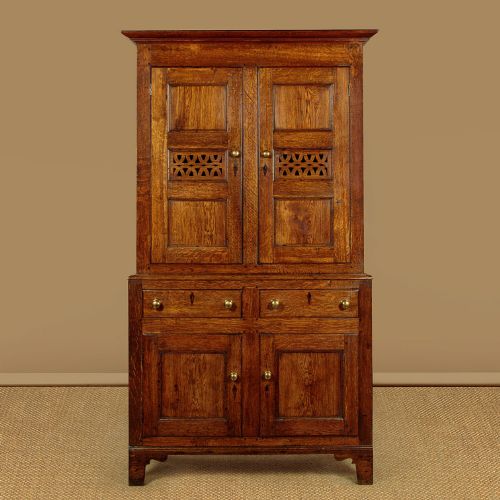
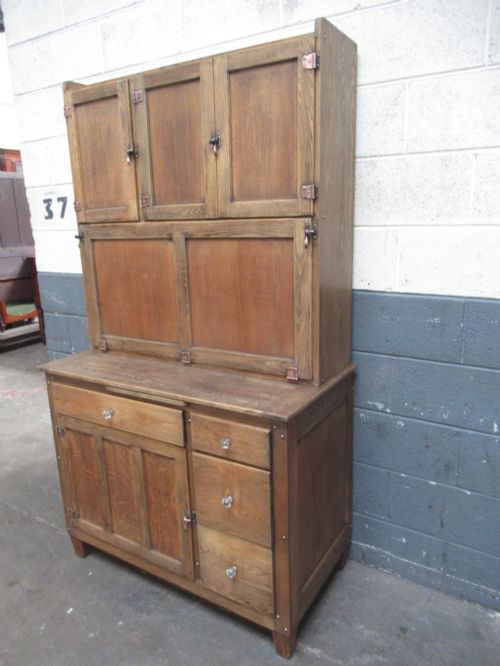
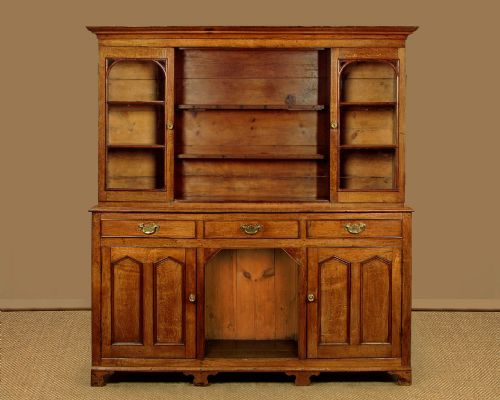
A country kitchen cabinet brings together utilitarian dressers, housekeepers cupboards, and larder units designed for daily storage in domestic spaces. These pieces span periods from the eighteenth century through the Edwardian era and mid twentieth century, reflecting generations of practical kitchen use.
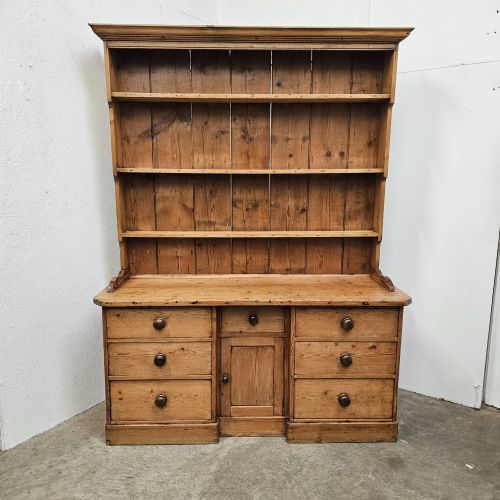
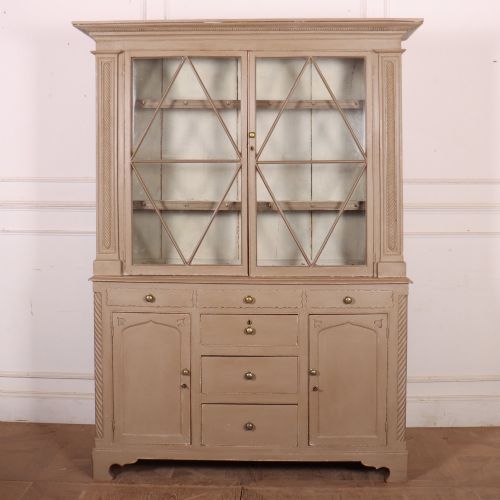
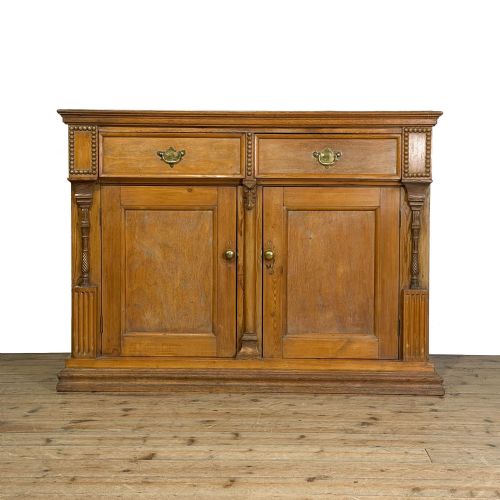
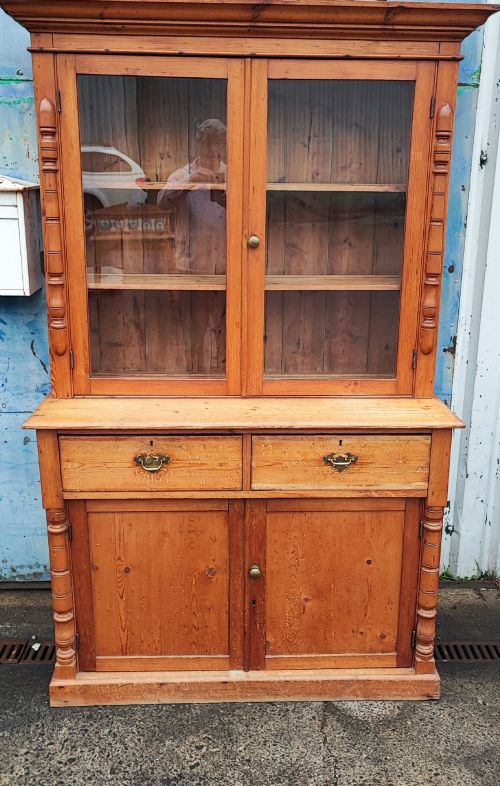
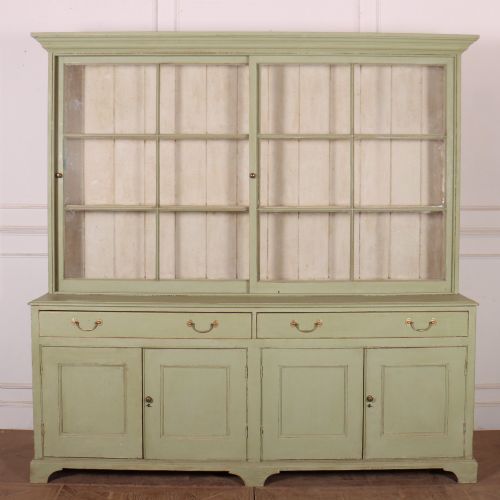
The version most commonly encountered on this page is constructed from pine or oak, often featuring two parts with an open plate rack or glazed upper section above a lower base of drawers and doors. Examples originate from English, Welsh, Scottish, Irish, and French regional workshops.
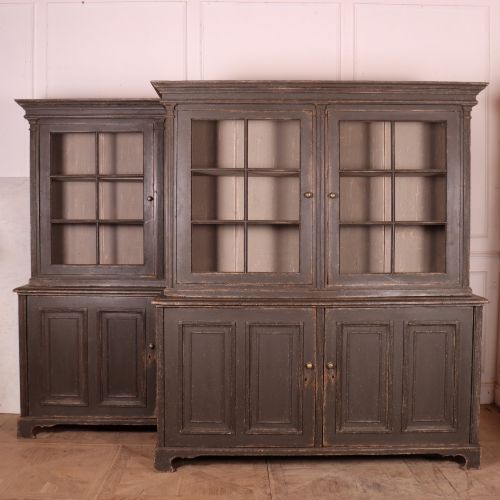
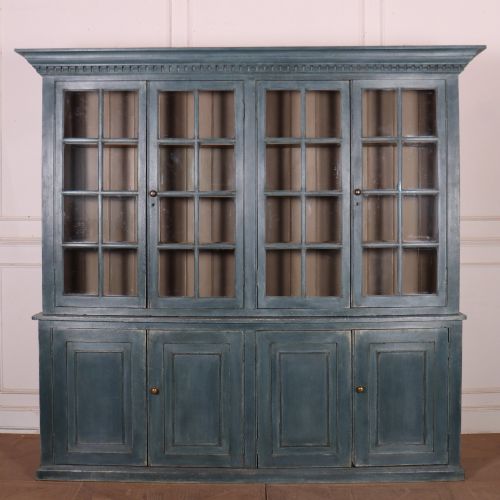
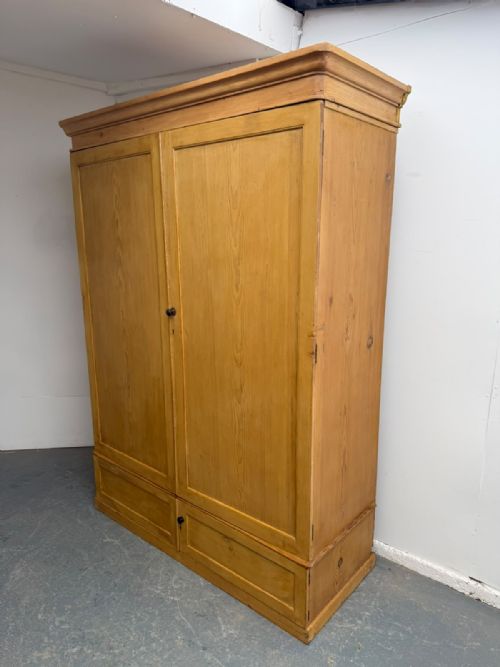
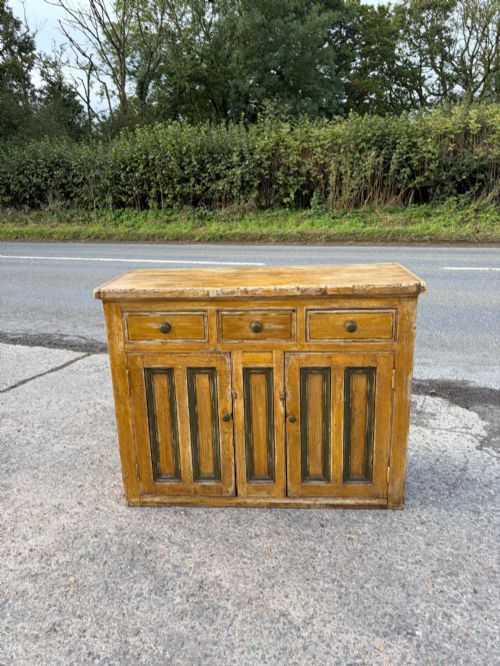
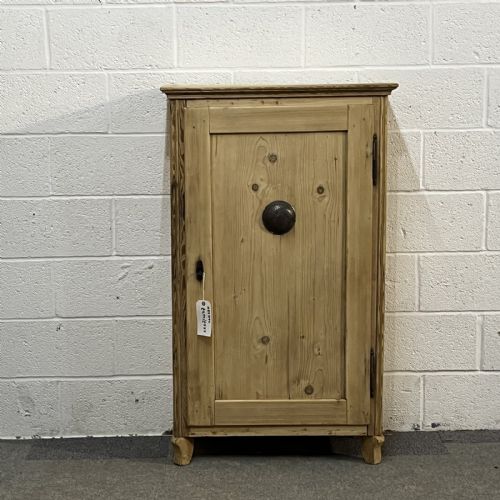
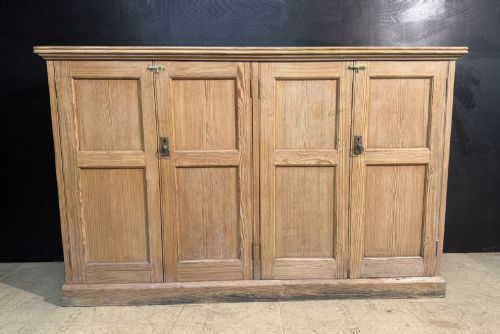
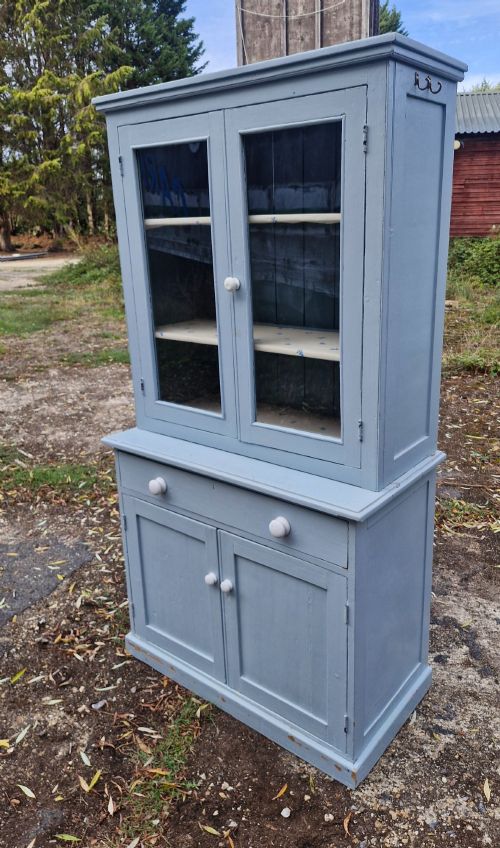
Forms vary from tall narrow housekeepers cupboards and glazed bookcase cabinets to low dresser bases and potboard dressers. Many retain traces of original paint or wax finishes applied during their working lives.
Materials and construction
Makers relied on solid timber construction, predominantly utilising pine and oak for structural durability, occasionally pairing oak with mahogany or incorporating glass panels and brass hardware. Surfaces were finished with wax, left in original paint, or treated to show the natural grain of the wood.
Joinery techniques focused on robust daily utility, utilising pegged joints, tongue and groove boards, and sturdy drawer construction to withstand heavy loads of crockery and provisions. Iron hinges and brass pulls secure doors that open to shelved interiors designed for systematic storage.
Country Kitchen Cabinet Retail Price Guide 2026
Typical asking prices for country kitchen cabinet among the pieces listed under this phrase on Sellingantiques today, from the lower quarter to the upper quarter. They describe what is for sale here now, not the wider market.
Several cupboards include original paint finishes that survived generations of kitchen grease, flour dust, and morning tea.
Distinctions in quality
Quality rests upon the integrity of the timber and the preservation of original surfaces, such as early paint layers and patinated waxed finishes. Pieces retaining their original configuration, including untouched hardware and unaltered plate racks, demonstrate superior preservation.
Proportion and regional vernacular characteristics also define the upper tier of pieces, where balanced dimensions and thoughtful details like turned legs or arched upper sections elevate standard utility furniture into notable examples of country craftsmanship.
Rushworth's
The Country Kitchen Cabinet Glossary
- Welsh dresser
- A traditional regional cabinet featuring open plate shelves above a lower section fitted with drawers and cupboards.
- Housekeepers cupboard
- A tall storage piece traditionally used for linens and provisions, typically enclosing multiple shelves behind large doors.
- Potboard dresser
- An open-based dresser featuring a low shelf near the floor specifically designed for storing heavy pots and pans.
- Confiturier
- A French jam cupboard designed for storing preserves and small kitchen items, usually built with a single door and drawer.
Country Kitchen Cabinet: Frequently Asked Questions
What is a country kitchen cabinet used for?
These cabinets served as the central storage hub for food, tableware, and kitchen utensils in traditional homes. Deep cupboards and open shelves held provisions and displayed everyday ceramics.
Today, they function effectively in modern kitchens or dining rooms for storing dinnerware, dry goods, or glassware while adding historic character to the space.
How do I tell an 18th century piece from a Victorian one?
Eighteenth-century examples often exhibit hand-carved details, pegged joinery, and specific regional proportions shaped by local vernacular traditions. They frequently show deep patination from decades of wax application.
Victorian and later pieces often incorporate standardised hardware, machine-sawn elements, and occasionally glazed upper doors or turned legs. Examining the interior construction and timber type helps clarify the manufacturing era.
Are these cabinets made of solid wood?
Yes, construction relies on solid timbers such as pine and oak for both the structural frames and internal shelving. Backboards and drawer linings are typically built from matching native woods.
This solid construction allows the pieces to endure heavy daily use and makes them suitable for restoration or rewaxing.
How do I care for a waxed pine cabinet?
Maintain waxed pine surfaces by occasionally applying a traditional beeswax polish to nourish the timber and preserve the finish. Avoid placing the cabinet near direct heat sources or strong sunlight to prevent the wood from drying out.
Dust regularly with a soft cloth and wipe up moisture promptly to protect the original patina.