
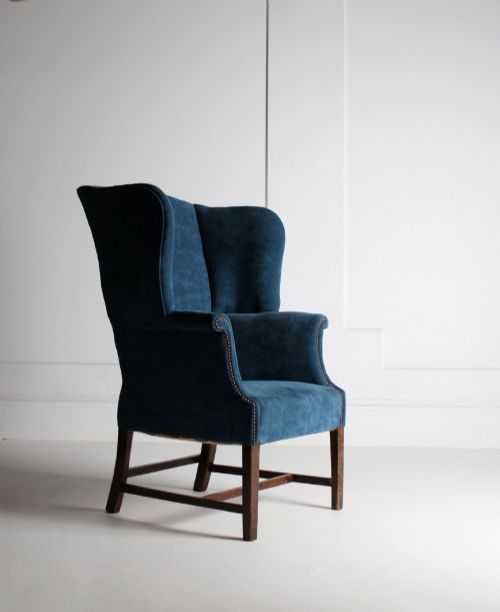


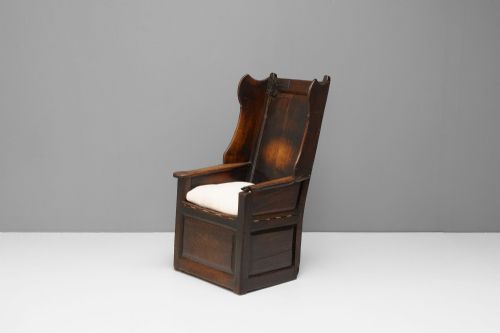


Country House Wingback Chair
These country house wingback chair pieces offer deep seats and high sides designed to block drafts, spanning George III to Edwardian periods.
Country House Wingback Chair
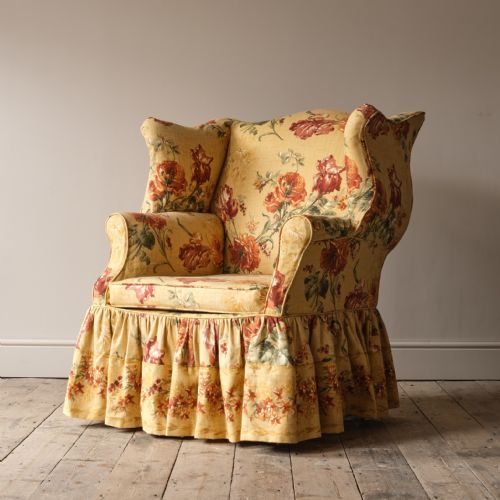
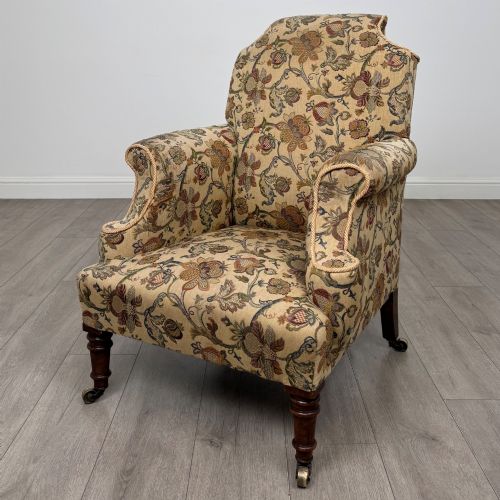
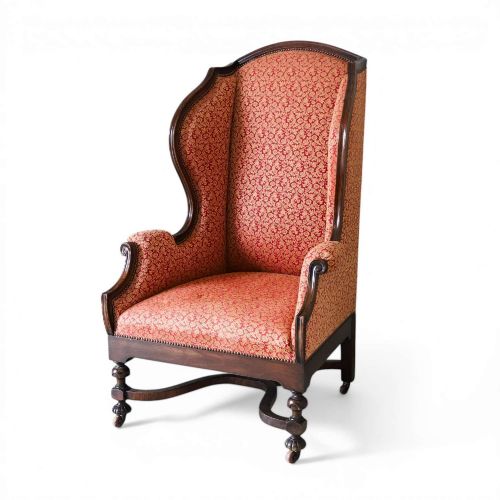
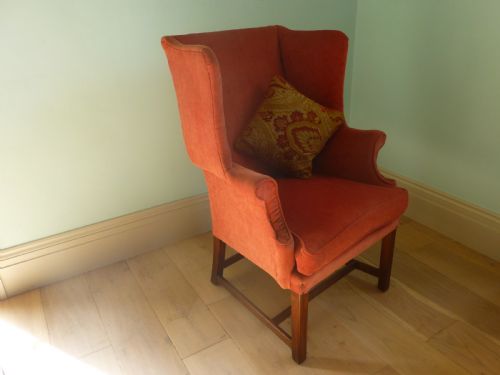
A country house wingback chair combines deep seating with protective side panels, designed originally to keep fireside draughts away from the sitter. These traditional armchairs appear across several eras, including George III, Victorian, Edwardian, and 1920 pieces.
The assortment includes standard armchairs, barrel back forms, and related seating such as lambing chairs and double wingback sofas. Upholstery choices range from plain ticking fabric and burnt orange chenille twill to floral patterns and red textiles.
Examples on this page span the eighteenth, nineteenth, and early twentieth centuries, reflecting classic English country house comfort. Buyers encounter both restored items ready for the hearth and frames awaiting new fabric.
How they were made
Frames rely on timber, hardwood, walnut, and mahogany, providing sturdy structural skeletons underneath the upholstery. Joinery techniques from the eighteenth and nineteenth centuries ensure long-term durability for daily use.
Outer layers utilise varied fabrics including velvet, chenille, and traditional ticking, fastened securely over internal padding. Exposed wooden elements such as legs and stretchers often show polished mahogany or walnut surfaces.
Listings feature timber frames in mahogany and walnut, paired with fabric, velvet, and brass details across Victorian and Edwardian eras.
What varies in quality
The distinction between standard examples and finer items rests in the timber selection and the precision of the frame carving. George III pieces and works attributed to known makers demonstrate superior structural confidence compared to later vernacular versions.
Condition of the underlying woodwork and the integrity of the upholstered wings dictate the overall standard of each armchair. Original proportions and authentic period frames hold greater interest than later revival interpretations.
Sopwith·Howard and Sons
The Country House Wingback Chair Glossary
- Wingback
- An armchair featuring high side panels attached to the arms to deflect draughts. These upholstered extensions wrap around the sitter's head.
- Carolean Revival
- A nineteenth-century style imitating late seventeenth-century Carolean furniture design. It often incorporates carved woodwork and ornate structural flourishes.
- Chenille
- A fuzzy woven fabric utilised for soft and tactile upholstery. This material appears on nineteenth-century seating.
- Ticking
- A tightly woven cotton or linen fabric traditionally used to contain feather or down fillings. It provides a durable, utilitarian cover for classic upholstered frames.
- Barrel Back
- A seating form where the backrest curves continuously into the arms. This enclosed shape offers enhanced protection against cold air.
Country House Wingback Chair: Frequently Asked Questions
What is a country house wingback chair?
A country house wingback chair is a traditional upholstered armchair featuring protective side wings designed to shield the sitter from draughts by the hearth.
These pieces range from eighteenth-century George III examples to Edwardian and 1920s variations, utilising timber frames and diverse fabric coverings.
Are these chairs suitable for modern daily use?
These armchairs provide deep seating and high backrests that lend themselves well to comfortable daily lounging in contemporary living spaces.
Many examples have been recently reupholstered or retain sturdy internal frames capable of handling regular sitting.
What fabrics are used on antique wingback chairs?
Upholstery materials seen across these listings include velvet, cotton ticking, floral textiles, and textured chenille twill.
Some pieces arrive with historical fabric coverings, while others are sold ready for re-upholstery in a buyer's chosen material.