


Country House Wardrobe
These country house wardrobes are large storage pieces built to hold heavy garments and linens in grand domestic interiors.
Country House Wardrobe
A country house wardrobe provides substantial storage across varied forms including linen cupboards, presses, and large multi-door wardrobes. These pieces emerge from periods spanning the seventeenth through the nineteenth centuries, reflecting both formal Georgian architecture and vernacular rural traditions.
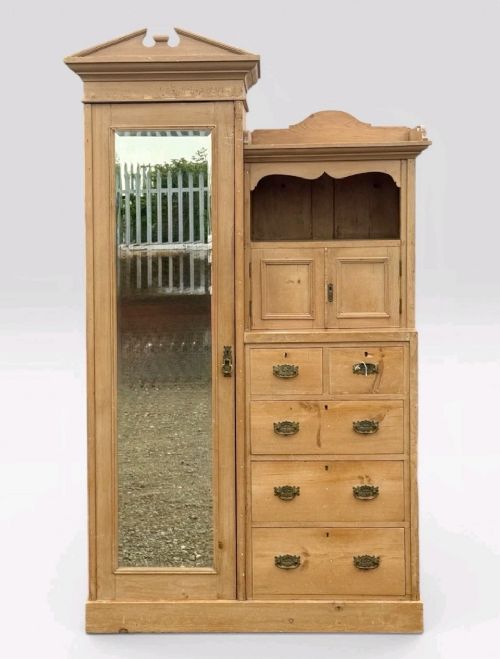
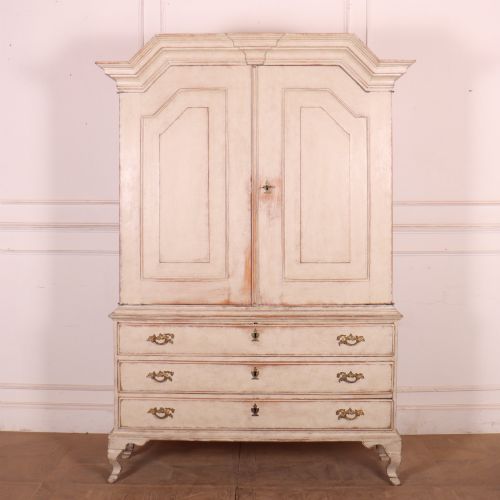
The pieces appearing on this page range from stripped pine and painted Scandinavian cupboards to polished flame mahogany and oak breakfront wardrobes. Smaller items like chifferobes and hanging cupboards sit alongside grand triple and quadruple door cabinets from country estates.
How they were made
Makers utilised solid timbers such as oak, pine, and ash alongside decorative veneers including flame mahogany, birds eye maple, satin birch, and burr walnut. Brass hardware, iron fixtures, and glass elements completed the construction of these large storage items.
Surface finishes vary widely between natural waxed wood, traditional paint layers in Swedish and English folk styles, and high-gloss polished mahogany. Knockdown construction methods allowed large Georgian and Victorian wardrobes to be assembled on site within large rooms.
The inventory includes regional vernacular styles alongside formal Georgian and Victorian estate pieces.
What varies in quality
The distinction between standard utility storage and top-tier estate furniture lies in the selection of timbers and the sophistication of the cabinetry. Flame mahogany veneers, breakfront facades, and detailed inlay distinguish grand urban pieces adapted for country estates from simpler vernacular pine cupboards.
Internal configuration and proportions also define the tier of the piece, with multi-door triple or quadruple wardrobes offering complex hanging and drawer space. Original painted surfaces or documented provenance from titled estates separate ordinary utility items from superior examples.
Gillows of Lancaster
The Country House Wardrobe Glossary
- Breakfront
- A cabinet design where the central section projects forward from the flanking sections. This configuration often appears on large mahogany wardrobes.
- Chifferobe
- A hybrid storage piece combining wardrobe hanging space with drawer compartments. These items provide versatile storage in domestic settings.
- Compactum
- A multi-functional wardrobe containing various combinations of hanging space, shelves, and internal drawers. These units maximise storage efficiency.
- Linen Press
- A tall piece of furniture featuring upper cupboard storage for textiles above a base section of drawers. Older examples frequently utilise oak or pine.
- Sentry Box Wardrobe
- A narrow, single-door wardrobe designed to fit compact spaces while maintaining vertical hanging height. They are commonly executed in mahogany.
Country House Wardrobe: Frequently Asked Questions
What is a country house wardrobe?
A country house wardrobe is a large storage cabinet originating from historic estates, designed to hold clothes, linens, and garments. These pieces range from simple pine cupboards to grand mahogany breakfront wardrobes.
They reflect the diverse aesthetic tastes of large British and European country homes, incorporating styles from Georgian formal design to vernacular painted folk art.
How do I date an antique wardrobe?
Dating relies on identifying the primary wood species, construction techniques, and stylistic markers associated with specific centuries. Eighteenth-century pieces often feature solid oak or painted pine, while nineteenth-century examples frequently utilise flame mahogany or satin birch.
Hardware styles and assembly methods, such as knockdown pegged joints, also help establish the chronological period of the furniture.
Where were these wardrobes used?
These wardrobes stood in bedrooms, dressing rooms, and linen stores of large country properties and country houses. Their substantial scale suited expansive rooms with high ceilings.
Smaller variants like hanging cupboards and tack rooms storage served utility spaces, while grand breakfront cabinets occupied primary sleeping chambers.
How do I care for antique wood?
Maintaining wooden wardrobes involves keeping them away from direct heat sources and fluctuating humidity. Regular application of traditional wax preserves polished mahogany and bare pine surfaces.
Painted surfaces require gentle dusting without harsh chemical cleaning agents to protect the historic pigment and finish.