

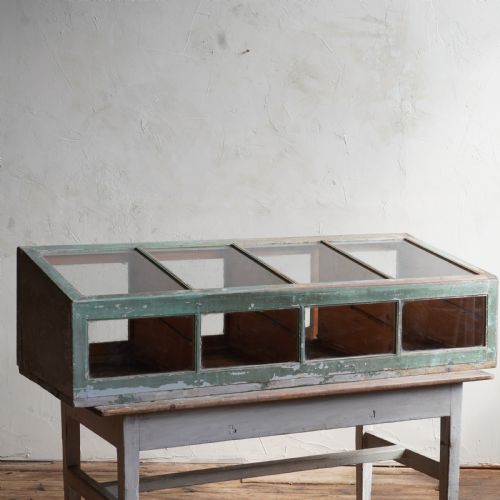


Countertop Display Cabinet
A countertop display cabinet sits on a shop counter or table to hold small goods for trade or collection.
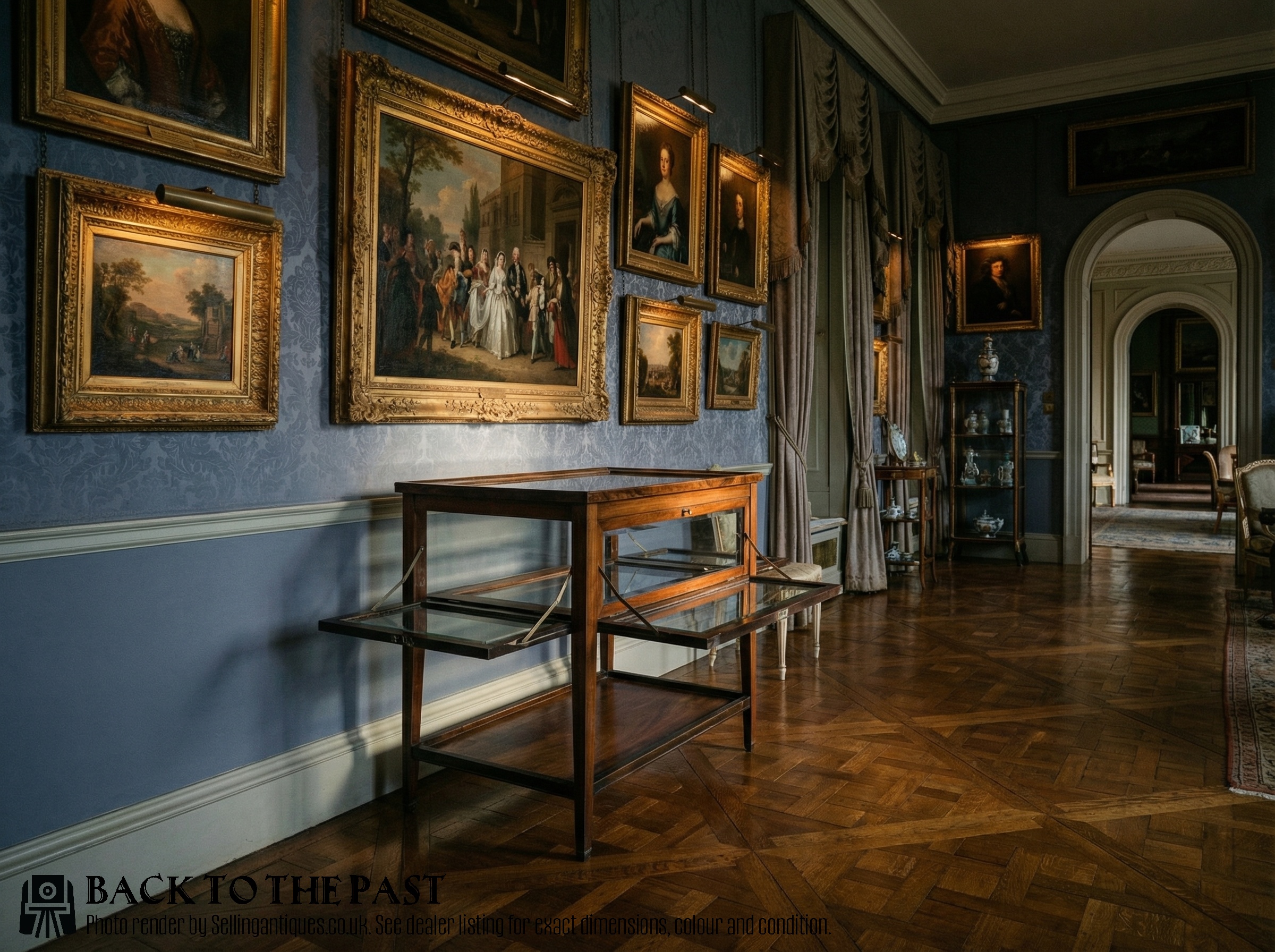
Countertop Display Cabinet
A countertop display cabinet stands on shop counters, tables, or desks to present small retail goods or personal collections to the eye. Buyers searching for a countertop display cabinet will encounter glazed wooden boxes, shop showcases, and haberdashery or apothecary drawers dating from the Victorian and Edwardian eras through the 1920s and Art Deco periods.
The specimens seen here range from utilitarian oak or mahogany shopfitters' cases to brass jewellery boxes lined with felt or velvet. Many originate from commercial use, carrying sign-written advertising for chocolate or sewing cottons on their glass panels or wooden frames.
How they were made
Makers constructed these cabinets using timber frames of oak, mahogany, walnut, or ebonised wood joined to glazed panels of glass that allowed light to reach the interior. Brass and metal framing also appears, particularly in jewellery and haberdashery cases from the interwar period.
Interiors frequently received linings of felt, mirror, or velvet to cushion small items and enhance their visibility. Sign-writing was applied directly to the glass or wood surfaces to promote commercial brands.
Countertop Display Cabinet Retail Price Guide 2026
Typical asking prices for countertop display cabinet among the pieces listed under this phrase on Sellingantiques today, from the lower quarter to the upper quarter. They describe what is for sale here now, not the wider market.
Listings span the Victorian and Edwardian eras through the 1920s and 1930s, featuring oak, mahogany, brass, and mirrored glass.
What varies in quality
The distinction between standard commercial cases and finer examples lies in the selection of timbers, the crispness of the joinery, and the retention of original glass and fittings. Retail cabinets built by specialist shopfitters display more refined proportions and robust framing than simpler utilitarian boxes.
Originality of surface finish and interior lining influences the character of each piece. Cabinets retaining original advertising signs, bevelled glass, or period velvet demonstrate greater integrity than those with later restorations or replacement elements.
John Stow Ltd of Bradford·Manoah Rhodes & Sons Ltd·F. Sage & Co. London·J.C. King Ltd, London
The Countertop Display Cabinet Glossary
- Haberdashery cabinet
- A small multi-drawer chest or glazed case originally used in drapery shops for ribbons, threads, and sewing accessories. They often incorporate narrow drawers with glass fronts.
- Bijouterie case
- A table-top display box with a glazed lid, designed specifically for jewellery, medals, and small valuables. These frequently feature velvet or silk interior pads.
- Apothecary cabinet
- A small retail or dispensary case built to hold medicines, pills, or chemist supplies. They commonly utilise tight-fitting drawers or glass doors to protect contents.
- Shopfitting
- The trade and craft of manufacturing interior fixtures, display cases, and counters for retail premises. Specialised firms produced these sturdy commercial cabinets for high street shops.
Countertop Display Cabinet: Frequently Asked Questions
What were countertop display cabinets used for?
These cabinets sat on retail shop counters to display small merchandise such as jewellery, chocolates, cigars, and sewing supplies to customers.
Merchants utilised them to protect delicate goods from dust and handling while keeping items clearly visible for purchase.
How do I date a countertop display cabinet?
Dating relies upon timber choices, construction techniques, and stylistic markers such as Victorian mouldings or Art Deco geometric lines.
Commercial lettering, maker plaques, and hardware like brass hinges also provide clear indicators of the period of manufacture.
Are the advertising signs on these cabinets original?
Some cabinets retain their original hand sign-written advertising for confectionery or tobacco, applied directly to the glass or wood.
Other pieces feature later sign-written decoration added during subsequent commercial use or restoration.
How do I live with a countertop display cabinet?
These cabinets work well on sideboards, desks, or tables where you can place small collections inside the glazed enclosure.
Interior velvet or felt linings protect items, while glass panels allow contents to be viewed safely from outside.