

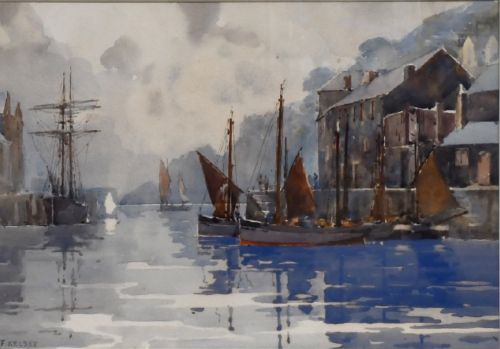


Cornish Landscape Painting
A cornish landscape painting brings the singular light, rugged coastlines and historic fishing harbours of the far southwest directly into a room.
Cornish Landscape Painting
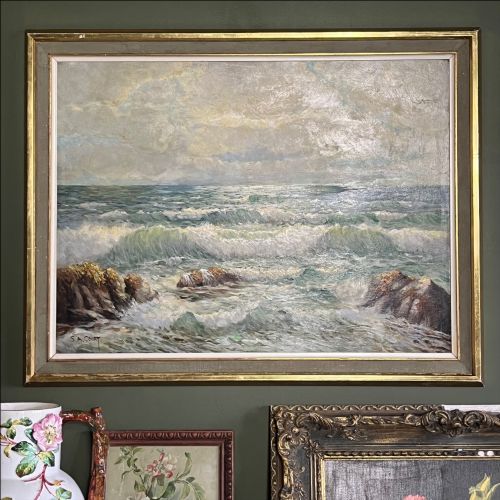
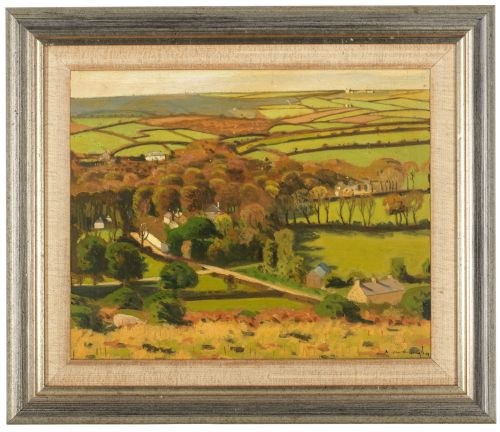
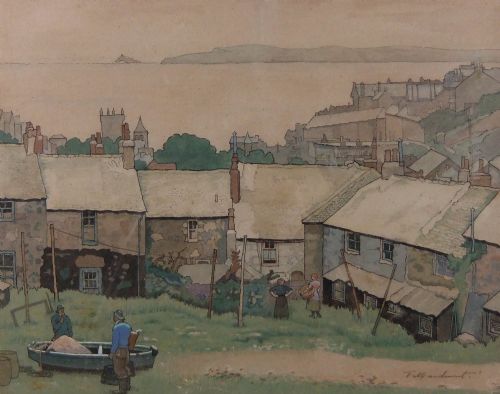
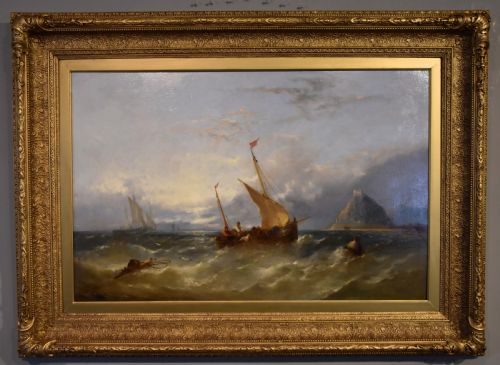
When searching for a cornish landscape painting, you encounter works spanning from the Victorian era through the mid-twentieth century, capturing harbours, cliffs, and rural scenes. The selection on this page relies heavily on watercolours and oil paintings on canvas or paper, reflecting the rich artistic communities that settled along the coast. St Ives, Newlyn, and Polperro emerge as recurring subjects, recorded by artists who painted en plein air or in local studios.
You are most likely to meet works representing the St Ives School, Newlyn School, and British Impressionism alongside traditional Victorian and Edwardian views. These paintings range from intimate watercolour studies of harbour walls to large oil canvases depicting fishing trawlers and dramatic seascapes. Each piece documents a specific coastal village or inland farmyard during periods of significant artistic colony growth.
How they were made
Artists utilised oil paint on canvas or board, and transparent watercolours on paper, capturing the shifting coastal atmosphere of the region. Many works were painted en plein air, requiring portable materials that could withstand salt air and changeable weather on the cliffs.
Gilt wood frames often house these paintings, complementing the oil or watercolour surface behind glass where appropriate. The combination of traditional pigments, canvas supports, and wood framing defines the physical construction of these period artworks.
The listings span periods from the Victorian era through the 1960s, utilising canvas, paper, wood, and glass.
What varies in quality
Quality in these works rests upon the artist's handling of natural light and the distinct atmospheric conditions unique to the western peninsula. The strength of composition, brushwork confidence, and how effectively the piece conveys the texture of granite and sea spray separate ordinary topographical records from accomplished artistic interpretations.
The relationship between the artist's documented association with regional groups, such as the Newlyn or St Ives artistic circles, and the directness of execution influences the standing of an individual work. Evidence of a sure hand in capturing transient weather effects distinguishes the finer examples from standard decorative views.
Sidney A Court·William Banks Fortescue·Robert Morson Hughes·Thomas Maidment·William Henry Williamson·Frank Kelsey·George F Pennington·Joan Gillchrest·Edward Matthew Elliott·Gyrth Russell·George Turland Goosey·Charles Sim Mottram·William Pitt·Joseph Farquharson·Ernest F Hill·Frederick Stuart Richardson·William Lambert Bell·Jack R Mould·Walter Sweet·Hendrik Yan Wolter·S J Lamorna Birch·Cuthbert Crossley·William Edward Webb·John Baragwanath King·J Titcomb
The Cornish Landscape Painting Glossary
- En plein air
- Painting outdoors to capture direct observation of light and weather. This method was central to artists working along the coast.
- Watercolour
- Pigment suspended in a water-based solution applied to paper. It allows for luminous, transparent washes favoured by landscape painters.
- Oil on canvas
- Pigment bound in an oil medium spread across a stretched fabric support. This technique provides rich colour depth and lasting durability.
- Newlyn School
- An art colony based in the Cornish fishing village from the late nineteenth century onwards. Artists focused on naturalistic depictions of local life and coastal scenes.
- St Ives School
- A twentieth-century grouping of artists centred on the Cornish port. It embraces both traditional coastal painting and modernist abstraction.
Cornish Landscape Painting: Frequently Asked Questions
What subjects appear in these paintings?
The works primarily feature Cornish fishing harbours, coastal cliffs, stormy seas, and rural village scenes. Locations such as St Ives, Polperro, and Mousehole recur frequently across the pieces.
Artists also recorded inland farmyards, churchyards, and Lamorna streams, capturing the diverse topography of the region.
Which artistic groups are represented?
Pieces associated with the Newlyn School and the St Ives School form a significant part of the selection. These communities drew landscape and marine painters to the coast.
British Impressionism and Victorian fine art traditions also appear, showing varied approaches to capturing the local scenery.
How should I care for these watercolours?
Watercolours on paper require protection from direct sunlight to prevent fading of the pigments over time. Displaying them away from high humidity sources helps preserve the paper support.
Keeping the original gilt wood frames stable ensures the artwork remains securely housed behind its protective glass.
How are the different periods told apart?
Victorian and nineteenth-century works often employ detailed, traditional academic realism in depicting maritime scenes and harbour life. Twentieth-century pieces frequently show looser brushwork influenced by impressionist and early modern developments.
Stylistic shifts from nineteenth-century maritime recording to mid-century impressionistic freedom mark the transition through the decades.