




Cornish Coastal Artwork
Cornish coastal artwork captures the harbours, fishing boats and waters of the West Country through the eyes of local and visiting painters.
Cornish Coastal Artwork
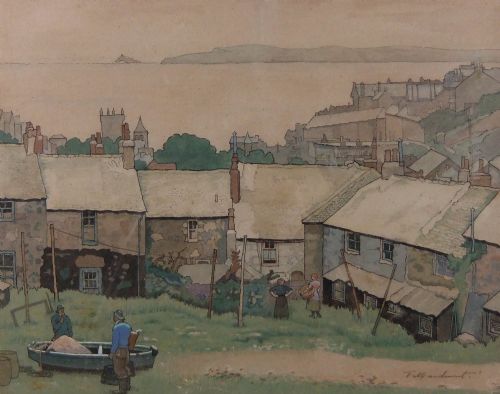
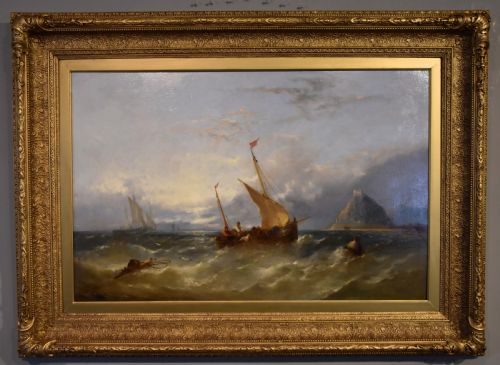
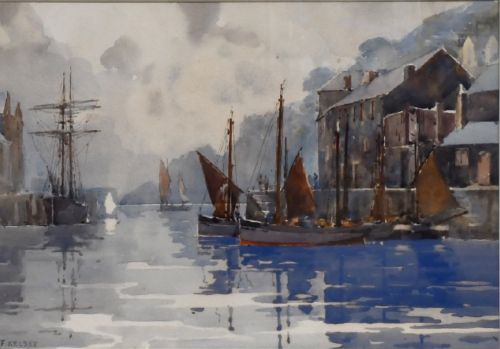
Cornish coastal artwork spans paintings and watercolours depicting harbours, fishing luggers and sea views across Cornwall. These pieces record the maritime life and coastal topography of places such as St Ives, Newlyn, Mevagissey and Polperro from the nineteenth century into the mid twentieth century.
The works reflect distinct regional movements, including the Newlyn School and the St Ives School, alongside British Impressionism and Edwardian marine art. Buyers encounter framed canvases, paper watercolours and woodblock prints that capture the changing light and harbours of the West Country.
Materials and technique
Artists painted en plein air using oil paint on canvas or wood panels, alongside watercolours and pastels on paper. These mediums allowed painters to record immediate weather conditions, coastal tones and harbour activities directly from life.
Many works retain their period framing, frequently in gilt wood that complements the maritime subject matter. Support materials range from stretched canvas to heavy artist paper.
Listings feature works spanning the nineteenth century through the 1960s, executed in oil, watercolour and pastel on canvas and paper.
Distinctions in quality
Quality rests in the handling of light, atmosphere and maritime detail by the artist, distinguishing competent topographical records from accomplished impressionistic interpretations. Works by established figures associated with the Newlyn or St Ives artist colonies show greater command of tone and composition.
Condition of the painted surface and the retention of original framing contribute to the standing of a piece. Fading on watercolours or heavy craquelure on oils affects the visual integrity of the work.
William Banks Fortescue·Thomas Maidment·William Henry Williamson·Frank Kelsey·George F Pennington·Edward Matthew Elliott·Charles Napier Hemy·Richard Harry Carter·Gyrth Russell·George Turland Goosey·William Pitt·Ernest F Hill·Frederick Stuart Richardson·William Lambert Bell·Ralph Todd·Jack R Mould·William Lee Hankey·Walter Sweet·S J Lamorna Birch·Herbert James·Cuthbert Crossley·William Edward Webb
The Cornish Coastal Artwork Glossary
- Newlyn School
- An artist colony based in the Cornish fishing village of Newlyn from the late nineteenth century onwards, known for plein air genre and landscape painting. These artists focused on the daily lives of local fishermen and coastal folk.
- En plein air
- The act of painting outdoors to capture direct observations of light and atmosphere. This method defined much of the maritime and landscape work produced along the Cornish coast.
- Lugger
- A traditional two-masted fishing boat commonly seen in nineteenth and early twentieth century West Country harbours. Artists frequently featured these vessels in maritime scenes.
- St Ives School
- A group of artists working in the coastal town of St Ives, encompassing traditional marine painting and later modernist developments. The town attracted landscape and coastal painters across multiple decades.
Cornish Coastal Artwork: Frequently Asked Questions
What periods do these coastal paintings cover?
The works span from the nineteenth century through the Edwardian era up to the mid twentieth century. Most pieces date from the foundational decades of the Newlyn and St Ives artist colonies.
This timeframe captures the transition from traditional maritime documentation to British Impressionism along the Cornish shoreline.
Where were most of these scenes painted?
Locations cluster heavily around historic Cornish fishing ports and harbours such as St Ives, Newlyn, Mevagissey, Polperro and Mousehole. St Michael's Mount and Penzance also appear frequently.
Artists chose these sites for their active fishing fleets, dramatic tides and distinct coastal light.
Are these works original or prints?
The selection consists primarily of original hand-painted works in oil or watercolour, alongside occasional pastels and prints. Artists executed these pieces directly on canvas, panel or paper.
Signatures, dates and inscriptions on the reverse often confirm the direct origin of the painting.
How should I frame and display these artworks?
Many pieces retain their period frames, which suit the historic nature of the maritime subjects. Direct sunlight should be avoided to protect watercolours and oils from fading or surface degradation.
Stable indoor humidity helps preserve both canvas supports and historic gilt wood frames.