

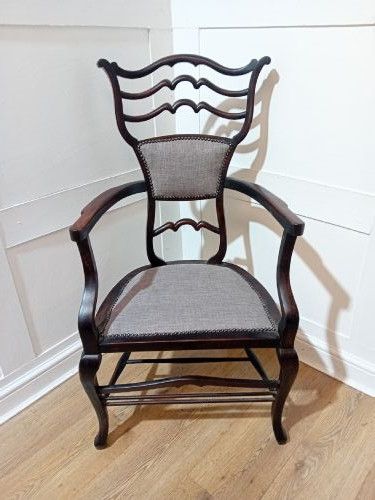
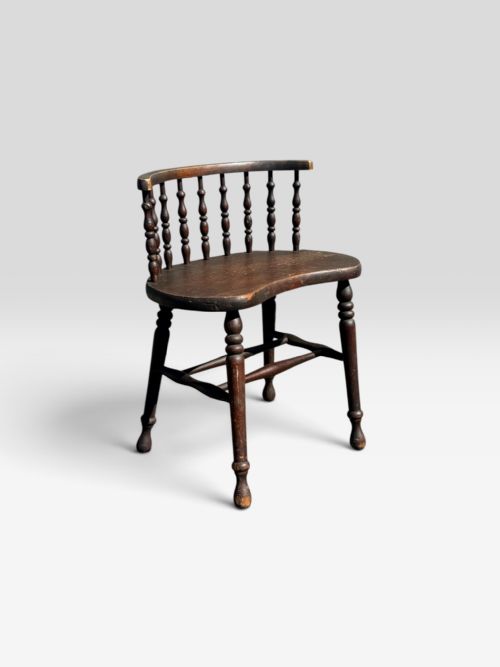
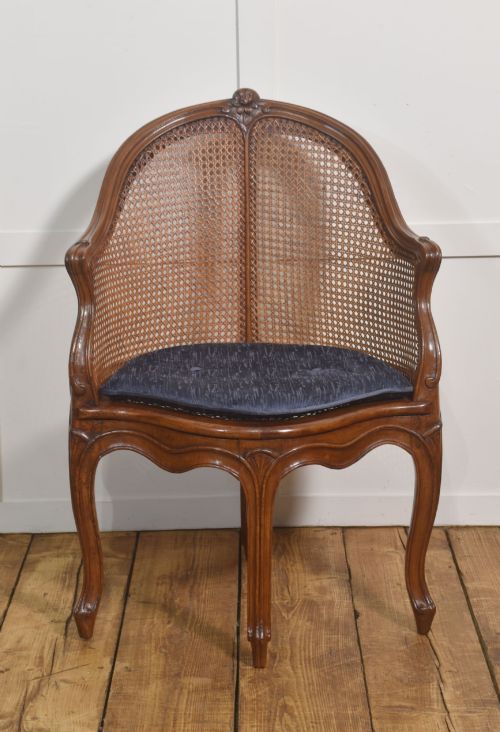
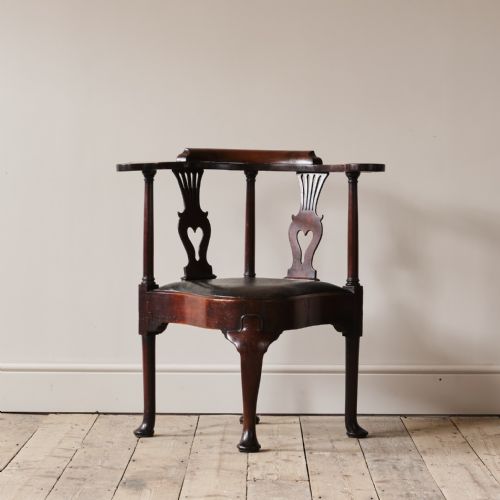
Corner Desk Armchair
A corner desk armchair gives you a sturdy seat designed to tuck neatly into a room's angle while providing solid support for writing.
Corner Desk Armchair
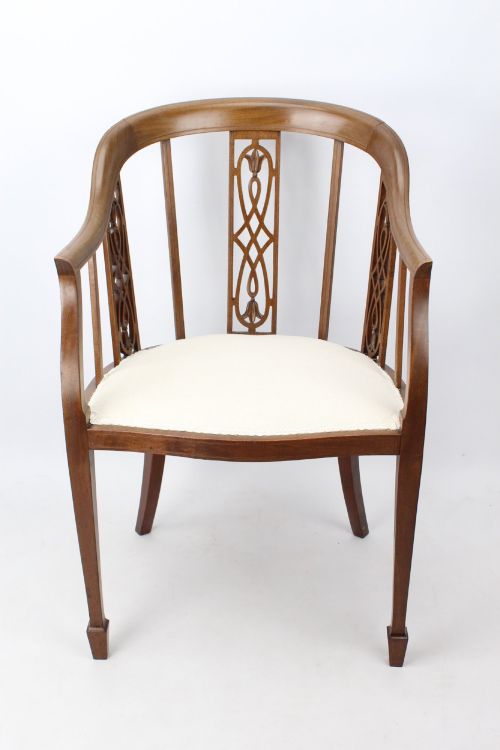
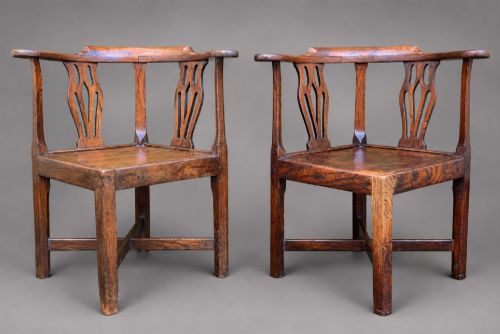
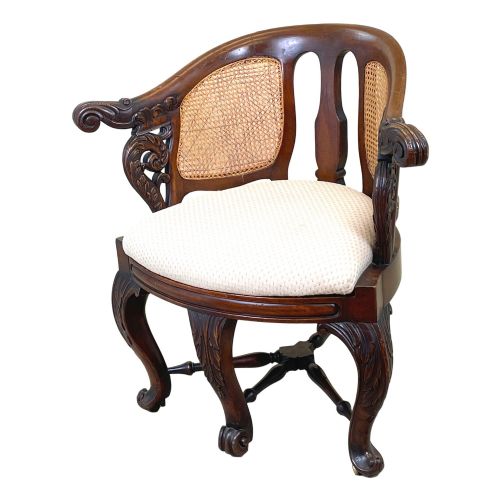
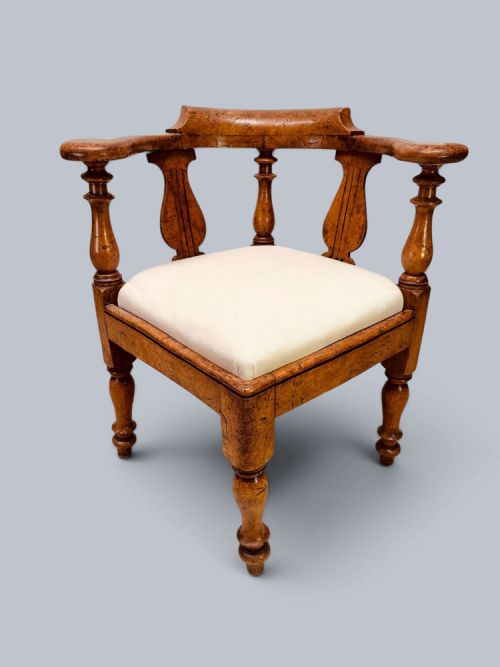
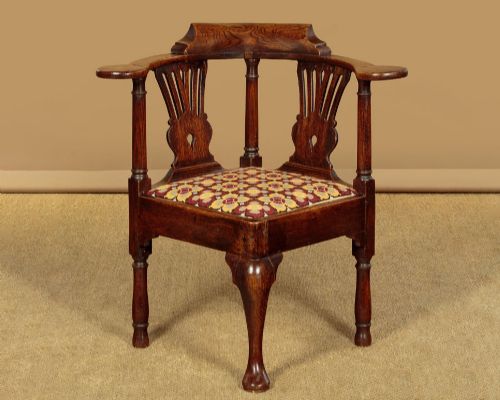
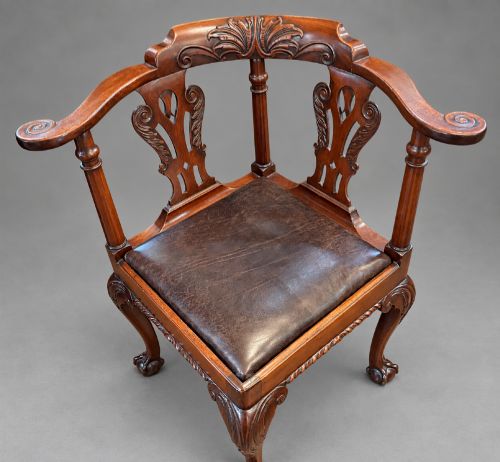
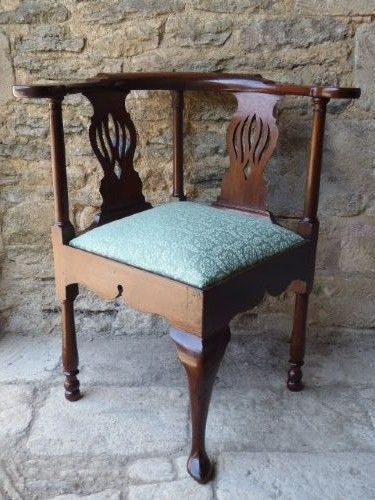
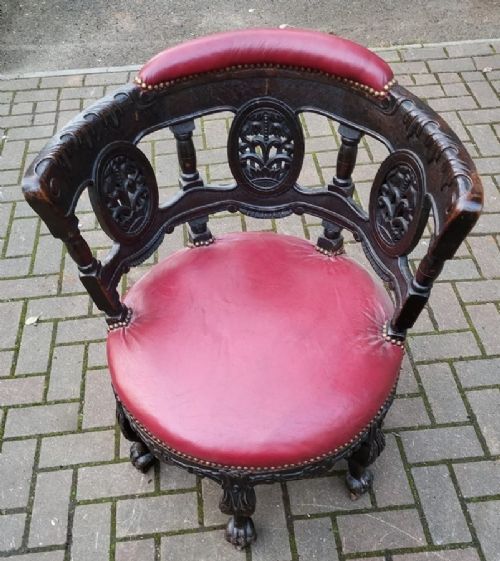
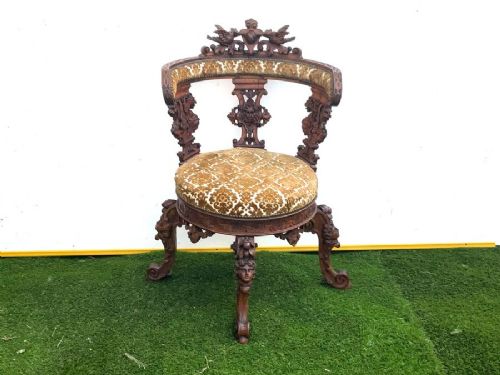
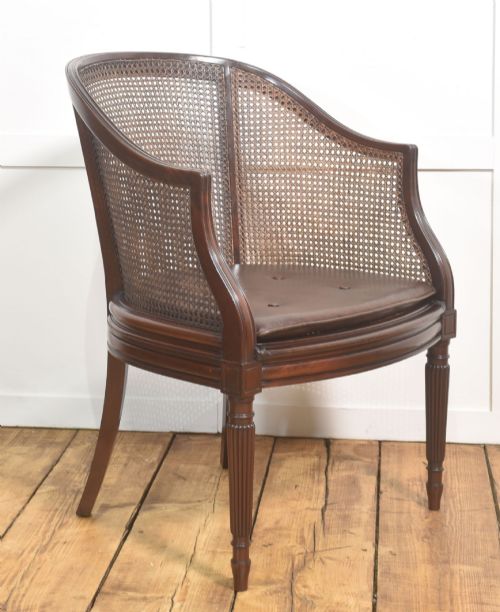
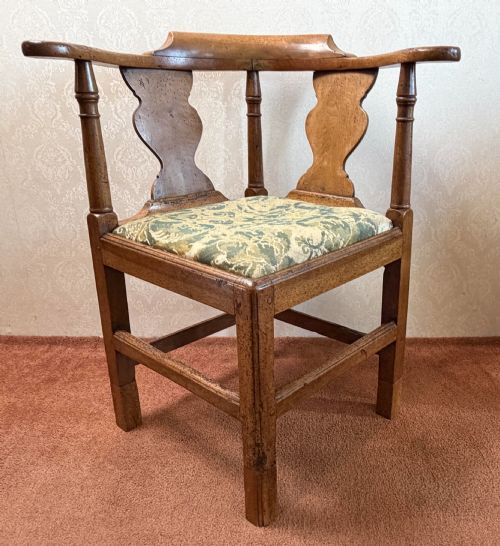
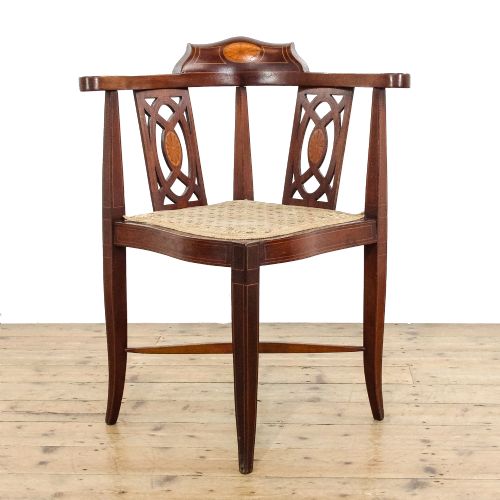
A corner desk armchair is a seating form engineered to fit square against a wall or room corner, offering a curved backrest that wraps around the sitter. You will frequently encounter Edwardian and 18th-century examples fashioned from mahogany, oak, and walnut, often featuring upholstered drop-in pads or cane seats.
The pieces listed here span periods from the early 18th century through the Edwardian era, showing styles including George II, Victorian, and Arts & Crafts. Many serve as occasional salon chairs, dressing seats, or specific writing chairs designed to occupy tight spaces without sacrificing back support.
How they were made
Cabinetmakers constructed these frames primarily using solid hardwoods such as mahogany, oak, walnut, and fruitwood, frequently employing curved structural rails to form the distinctive rounded back. Joinery relies heavily on pegged mortise and tenon joints to withstand the outward pressure placed on corner posts.
Surface decoration ranges from intricate marquetry inlay and carved scroll arms to turned bobbin spindles and cane work panels. Upholstery materials include leather, fabric, and textiles secured over webbing or rush seating.
Corner Desk Armchair Retail Price Guide 2026
Typical asking prices for corner desk armchair among the pieces listed under this phrase on Sellingantiques today, from the lower quarter to the upper quarter. They describe what is for sale here now, not the wider market.
Listings here feature mahogany, oak, walnut, satinwood, and fruitwood alongside textiles, leather, brass, and woven cane.
What varies in quality
The refinement of the carving and the choice of primary timber dictate the standing of a piece, with figured mahogany and finely grained walnut commanding greater attention than plain oak or fruitwood. The complexity of the joinery around the curved back rail and the crispness of inlaid satinwood details distinguish standard workshop output from finer examples.
Proportion and structural integrity define the remaining differences, as chairs retaining their original corner blocks and uncompromised leg assemblies offer better structural balance. The integration of the arm supports into the central back bow reveals the maker's competency.
S&H Jewell
The Corner Desk Armchair Glossary
- Marquetry
- Decorative veneer work arranged in pictorial patterns using various coloured woods. It appears frequently on Edwardian mahogany frames.
- Cane
- Woven rattan material used for seats and back panels. This technique provides a lightweight yet resilient surface.
- Tub chair
- An armchair featuring a continuous curved back and armrest rail shaped like a rounded tub. These provide enclosed support for the sitter.
- George II
- An architectural and decorative style spanning the mid-18th century, characterised by sturdy proportions and carved mahogany. Pieces from this era often display robust cabriole legs.
Corner Desk Armchair: Frequently Asked Questions
Why are corner chairs shaped that way?
The diagonal footprint allowed these seats to tuck securely into room corners where standard chairs would obstruct walkways. This clever geometry maximised floor space in smaller panelled rooms.
Cabinetmakers utilised the central rear leg to anchor a continuous semicircular armrest, distributing the sitter's weight evenly across four or five supporting posts.
Can I use a corner armchair at a modern desk?
Many historic corner chairs served as writing or dressing seats, making them suitable for compact desks. You should check the clearance under your desk drawer, as the low horseshoe backs fit comfortably beneath most standard writing surfaces.
Consider the fixed height of the seat and arms relative to your workspace, as these antique dimensions were built for smaller proportions.
How do I tell an 18th-century chair from an Edwardian copy?
Eighteenth-century examples display hand-cut joinery, timber shrinkage, and tool marks consistent with period bench work. Woods like oak and mahogany show deep patination accumulated over generations of use.
Edwardian revival pieces often feature machine-cut elements, standardised dimensions, and brighter surface finishes typical of early twentieth-century production methods.