

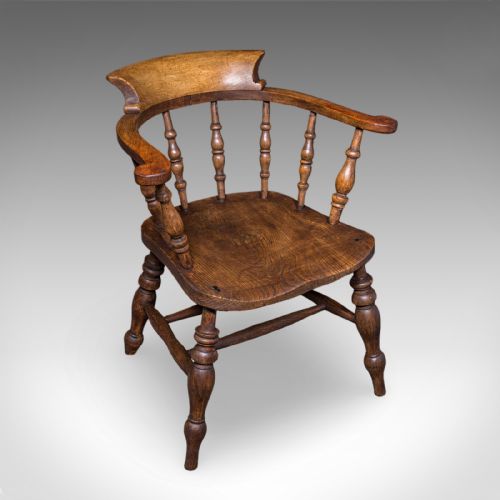


Turned Oak Elbow Chair
A turned oak elbow chair brings robust joinery and historical character to a room, offering sturdy seating grounded in traditional craft.
Turned Oak Elbow Chair
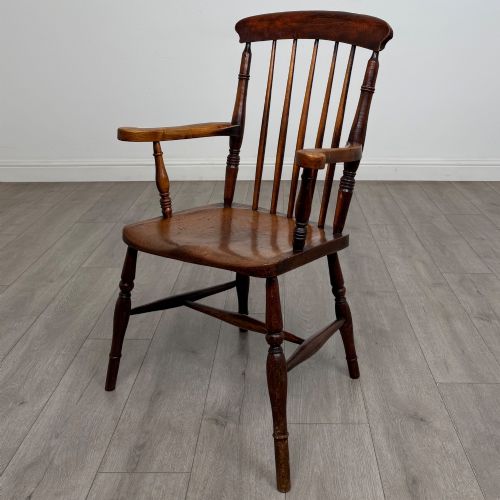
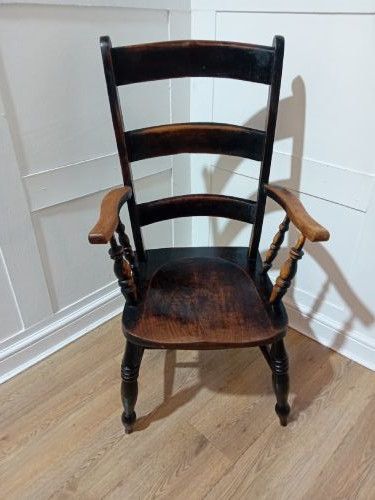
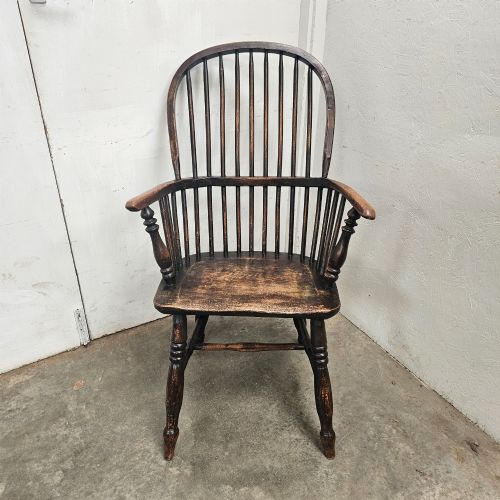
A turned oak elbow chair is a sturdy seat defined by shaped wooden members and supportive armrests, drawing on vernacular English traditions. When searching for a turned oak elbow chair, you encounter forms that span centuries of regional woodworking, from heavy spindleback designs to substantial spindle-turned frames.
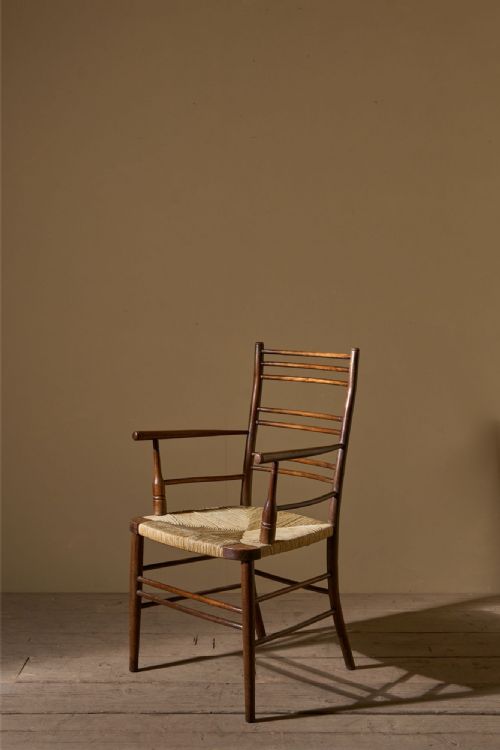
The selections here range across the Victorian and Edwardian eras, incorporating revival movements such as Jacobean, Saxon, and Arts and Crafts styles. Pieces often integrate rush, elm, ash, and beech alongside the primary oak structure, reflecting the diverse material combinations utilised by period makers.
Armchairs, accent chairs, and country house elbow seats dominate the listings, showing how utility and comfort merged in domestic spaces. These chairs serve effectively as fireside seating or occasional statement pieces in traditional and eclectic interiors alike.
Materials and Construction
Makers utilised solid oak for the primary framework, often pairing it with secondary native timbers such as elm for seats, and ash or beech for turned spindles. This mixed-timber construction provided structural stability where flexibility or specific grain strength was required.
Turning lathes shaped the uprights, legs, and stretchers into precise cylindrical and bulbous profiles, which were then assembled using traditional joinery methods. Seats frequently featured carved solid timber or woven rush, cane, and rattan to complete the vernacular construction.
The inventory includes Arts and Crafts, Jacobean Revival, and English Country styles spanning from the mid-nineteenth century to 1920.
Assessing Quality
Quality in these chairs rests upon the crispness of the turned details and the integrity of the original timber framing. Heavier, well-balanced proportions and untouched period surfaces distinguish superior examples from standard utility seating.
The integration of secondary materials, such as genuine rush or cane work alongside solid oak frames, indicates the level of craftsmanship invested in the piece. Original patination and minimal structural alteration preserve the historical value of the furniture.
The Turned Oak Elbow Chair Glossary
- Elbow chair
- An armchair or seat fitted with lateral supports for the arms. These chairs typically provide a wider seat base and greater overall height than standard side chairs.
- Turned
- Shaped on a lathe by rotating the timber against cutting tools to create symmetrical spindles and legs. This technique defines the structural ornamentation of early seating.
- Rush seat
- A seating surface woven from dried marsh grass over a wooden frame. It provides a resilient and traditional texture found on country chairs.
- Spindleback
- A chair back constructed from vertical turned wooden rods or spindles. This design lightens the visual weight of the frame while maintaining sturdy support.
- Jacobean Revival
- A style popular in the nineteenth and twentieth centuries that emulates seventeenth-century English furniture forms. It relies heavily on dark oak, turned components, and carved detailing.
Turned Oak Elbow Chair: Frequently Asked Questions
How do I care for a turned oak chair?
Maintain the timber by applying traditional beeswax periodically to nourish the surface and prevent the wood from drying out. Keep the chair away from direct heat sources and strong sunlight to protect the original finish.
Inspect rush or cane seating surfaces regularly and avoid placing excessive weight on chairs with woven components to preserve their structural integrity.
Where were these chairs used historically?
These elbow seats functioned primarily as principal chairs in farmhouses, country houses, and vernacular domestic settings. Their sturdy construction suited them for daily use around dining tables or by the hearth.
Later revival examples also found places in libraries, studies, and drawing rooms where historical aesthetic styles were cultivated.
How do I identify a revival period piece?
Revival pieces often combine nineteenth- or early twentieth-century manufacturing techniques with seventeenth-century decorative motifs such as heavy turning and panel carving. Examining the tool marks and internal framing helps distinguish these later interpretations from earlier originals.
Styles labelled as Jacobean, Saxon, or Carolean Revival typically point to nineteenth-century and Edwardian manufacturing dates.
What is a Thames Valley chair?
A regional Windsor chair style originating from the Thames Valley area during the nineteenth century, characterised by refined craftsmanship and distinctive bentwood elements. These chairs frequently incorporate elm seats and ash or yew superstructures.
They represent a sophisticated evolution of vernacular country seating traditions.