




Corner China Display Cabinet
A corner china display cabinet fits neatly into a room to hold ceramics behind glass.
Corner China Display Cabinet
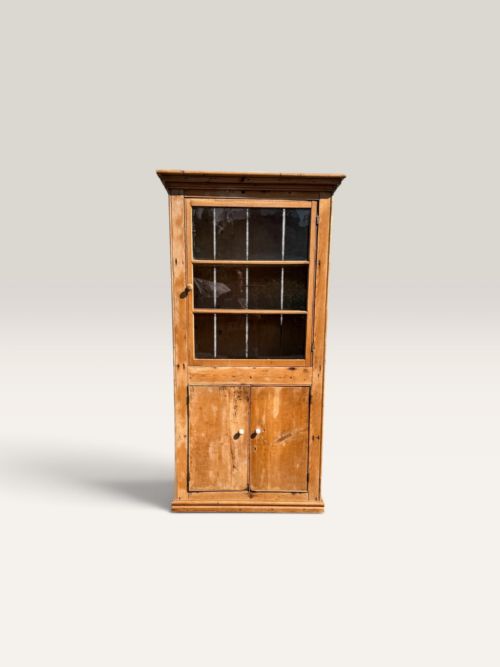
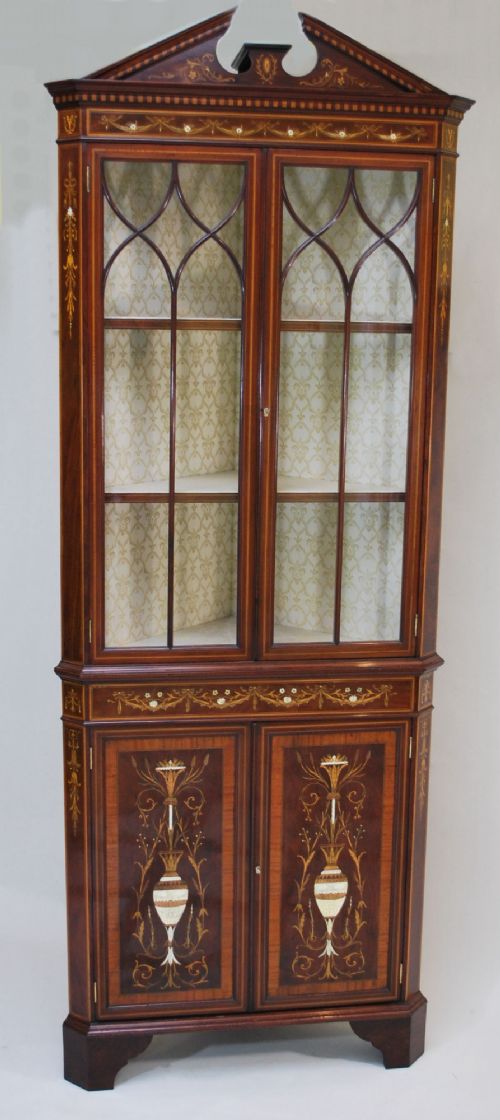
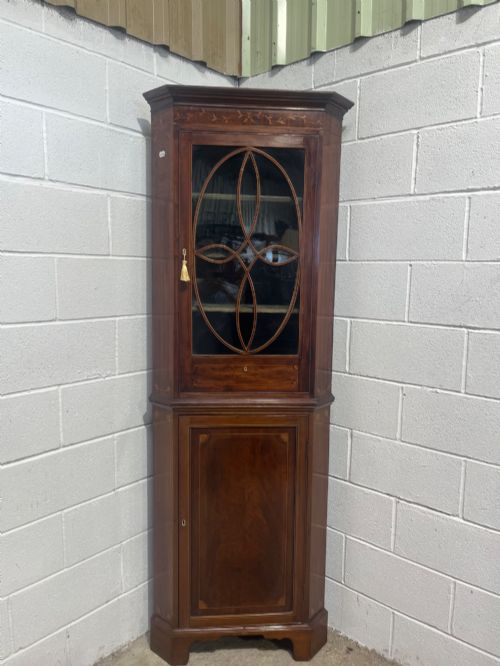
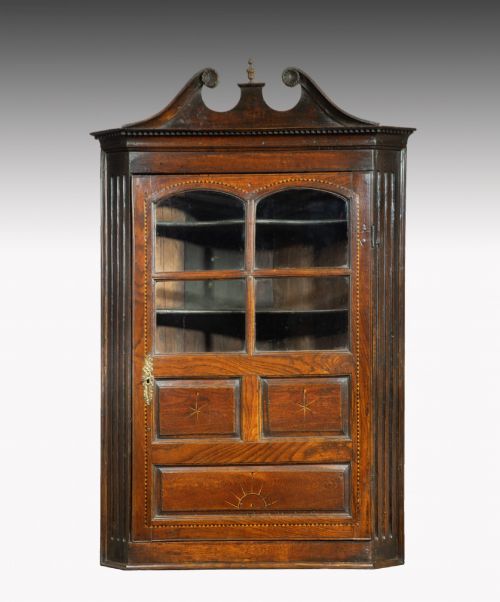
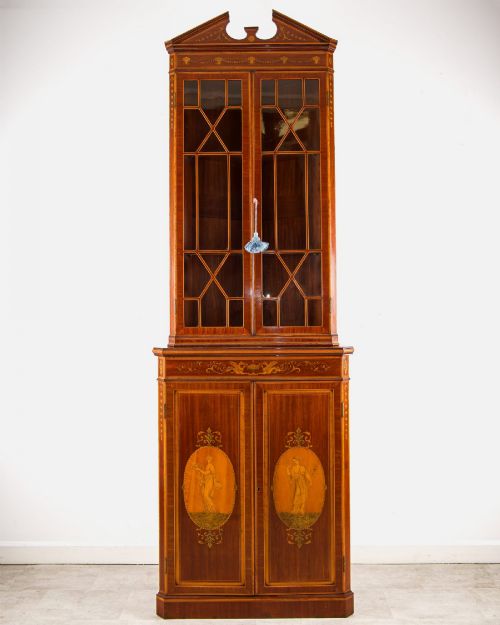
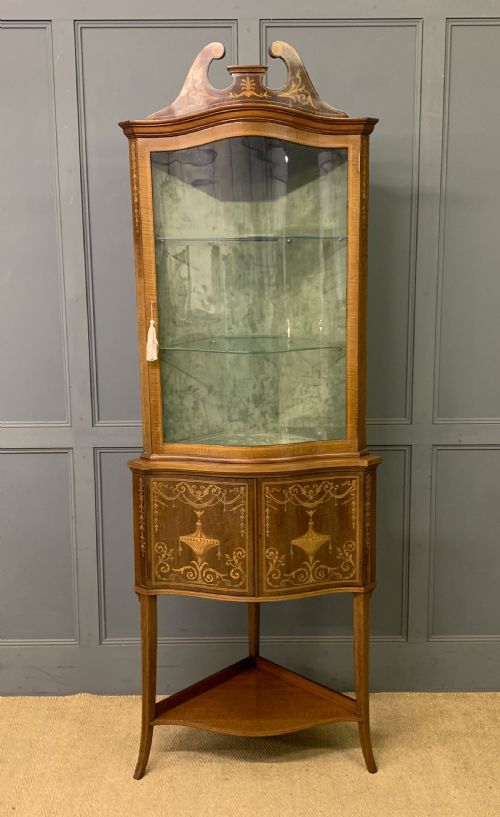
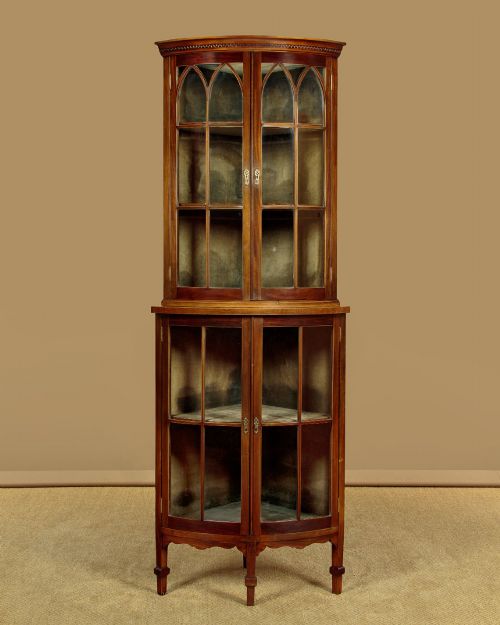
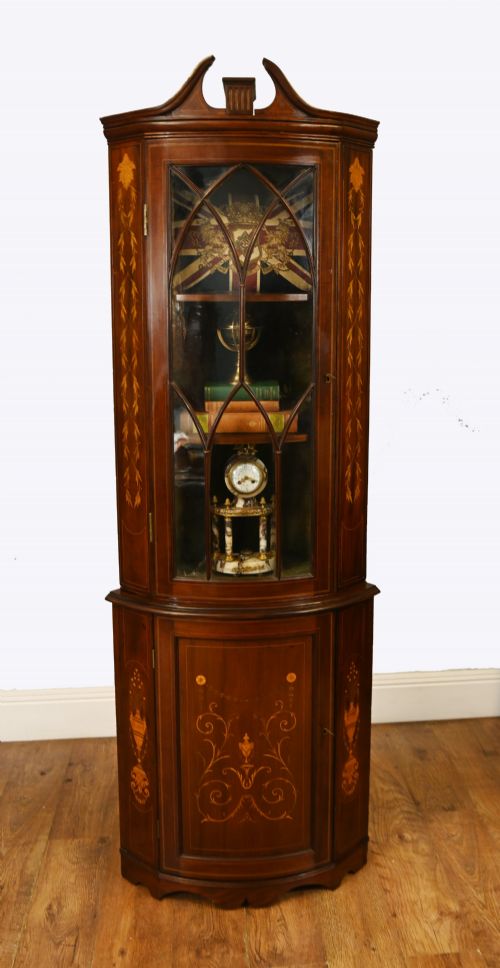
A corner china display cabinet sits in the angle of a room to make use of neglected space while exhibiting ceramics. The pieces on this page span the eighteenth, nineteenth, and early twentieth centuries, taking forms from simple single-door cupboards to tall two-part standing furniture.
Most examples found here date from the Edwardian period and the late nineteenth century, rendered in mahogany with inlaid decoration. Buyers also encounter earlier Georgian oak and walnut pieces alongside later Art Deco designs.
What varies in quality
The refinement of the timber and the crispness of the inlay separate standard items from finer works. Cabinet makers who selected highly figured veneers and executed precise marquetry produced pieces of greater visual depth.
Structural complexity also marks the range, moving from single wall-hung cupboards to substantial two-piece double-height cabinets with complex glazing bars. The handling of curved glass fronts and fitted internal shelving indicates the maker's skill.
Glazing styles include bow fronts, astragal bars, and Dutch painted vitrine panels.
Maurice Adams
The Corner China Display Cabinet Glossary
- Astragal glazing
- Timber bars dividing panes of glass in a door or window. These thin mouldings form geometric patterns across the front of a display cabinet.
- Bow front
- A convex curved cabinet face that projects outward. This shape requires bent woodwork and curved glass.
- Marquetry
- Decorative veneer patterns formed from different coloured woods fitted together. Craftsmen apply these designs to cabinet doors and cornices.
- Sheraton Revival
- A late nineteenth and early twentieth century style copying eighteenth century neoclassical furniture. Pieces typically feature light wood inlay on mahogany.
Corner China Display Cabinet: Frequently Asked Questions
How do I choose the right size?
Measure the wall space in the corner where the unit will stand, noting the depth and height available. Single cupboards suit smaller rooms, while two-part standing cabinets require generous ceiling clearance.
Check whether the door swing clears surrounding furniture when fully opened. Wall-hung cupboards need secure fixings into solid masonry or stud work to support the weight of timber and glass.
Can these cabinets hold heavy items?
Most shelves inside these cabinets are fixed timber boards designed for porcelain, glass, and lighter decorative objects. Heavy ceramic collections should be distributed evenly across lower shelves.
Older shelves may rest on fixed wooden cleats rather than adjustable metal brackets. Inspect the internal supports before loading the cabinet with dense dinner services.
How do I care for the wood and glass?
Dust the timber regularly with a dry cloth and apply a traditional beeswax polish occasionally to nourish the surface. Avoid placing furniture in direct sunlight to prevent the timber and internal fabric lining from fading.
Clean the glass panes using a mild solution applied to a cloth rather than sprayed directly near the wood frames. This stops moisture from seeping into joints and damaging the polish.
How do I distinguish Edwardian from Georgian pieces?
Georgian cabinets from the eighteenth century typically display heavier timber construction, simpler mahogany grains, and hand-cut joinery details. Their proportions are generally more robust and functional.
Edwardian reproductions and original pieces from around nineteen hundred often feature lighter satinwood inlay, refined marquetry, and machine-finished interior components. They reflect a revival of earlier neoclassical styles.