
Corinthian Column Table
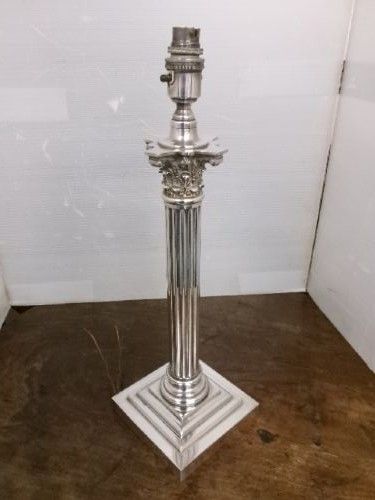
When you search for a corinthian column table lamp or candlestick, you seek classical architectural proportion rendered in miniature for domestic interiors.
Corinthian Column Table
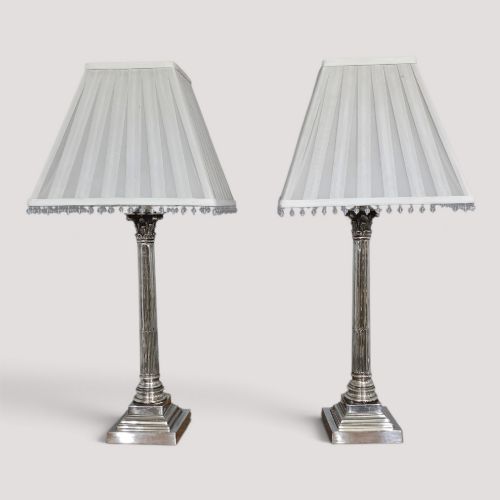
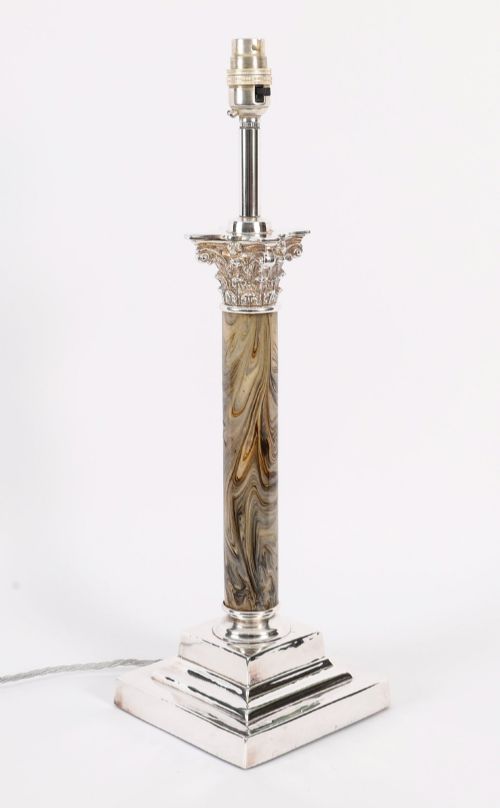
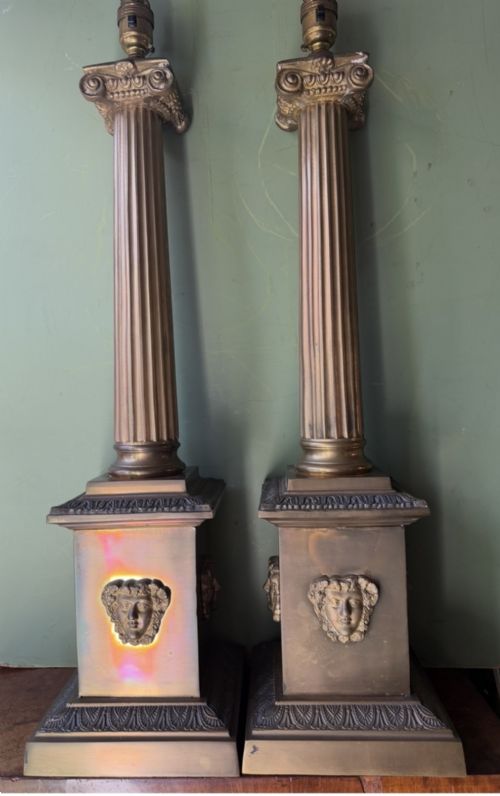
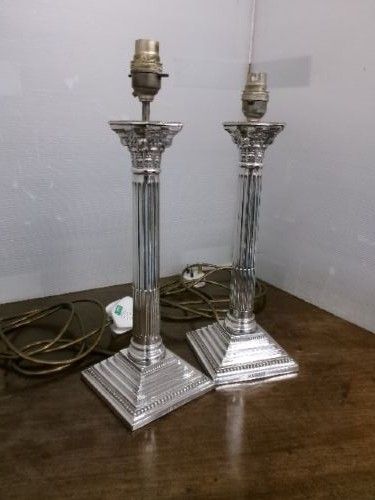
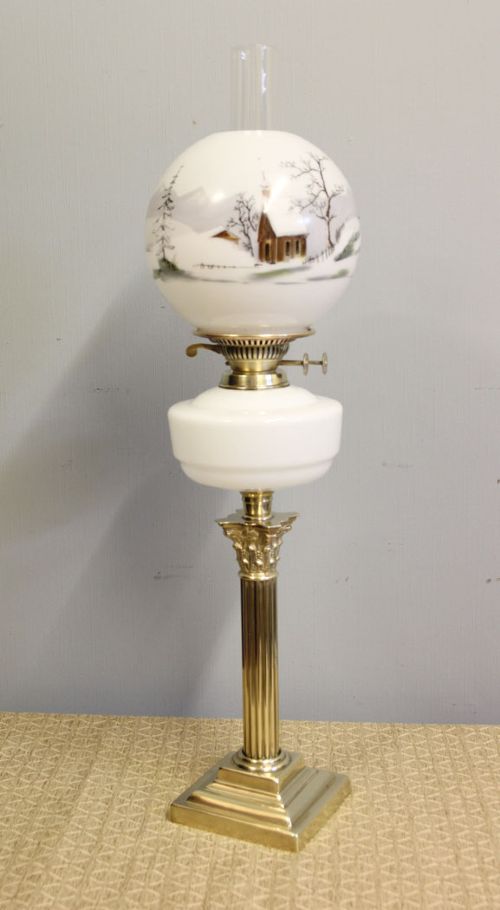
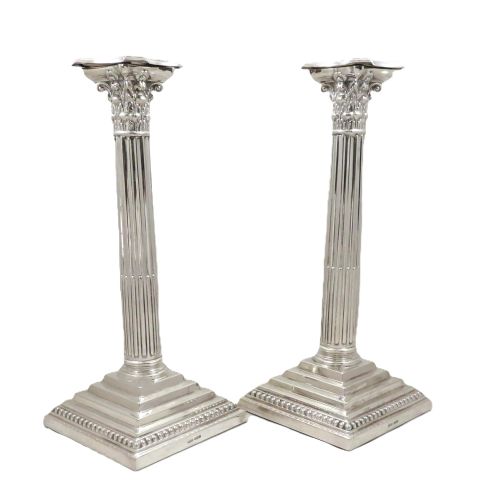
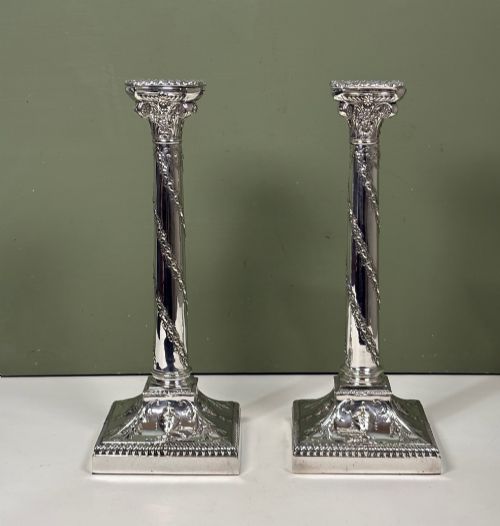
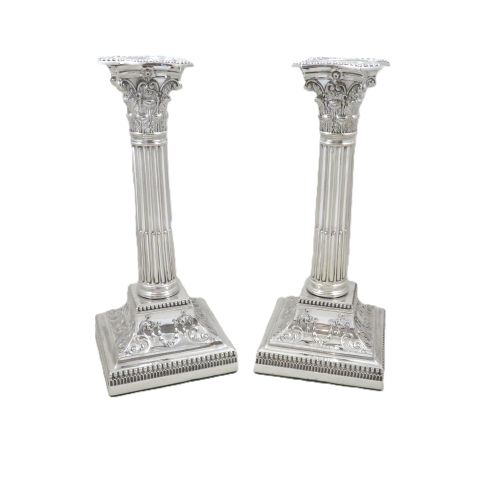
A corinthian column table lamp or candlestick adapts ancient classical orders into stately lighting and display pieces designed for nineteenth and early twentieth century rooms. These items draw directly upon Neoclassical architectural traditions, translating monumental stone orders into domestic scale.
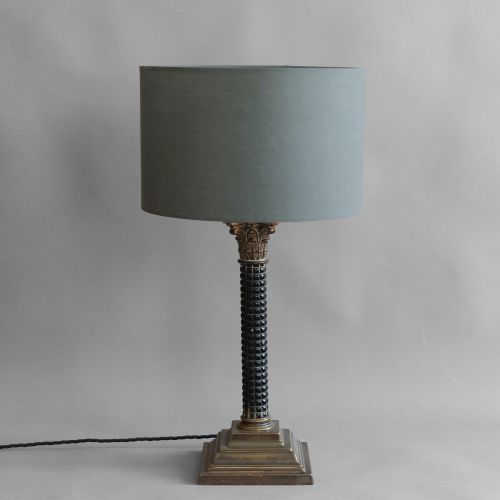
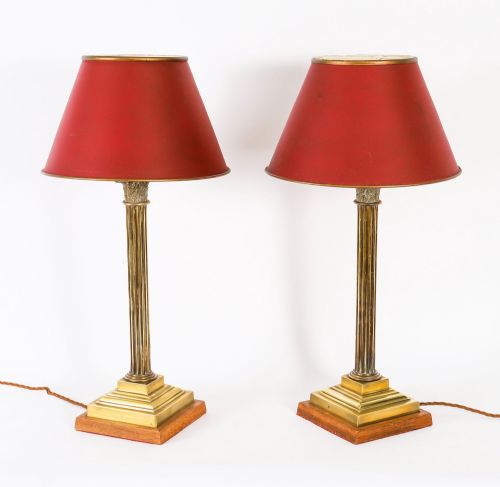
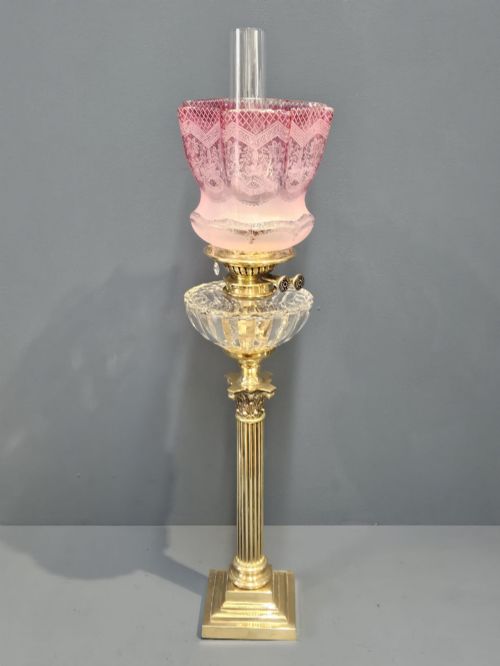
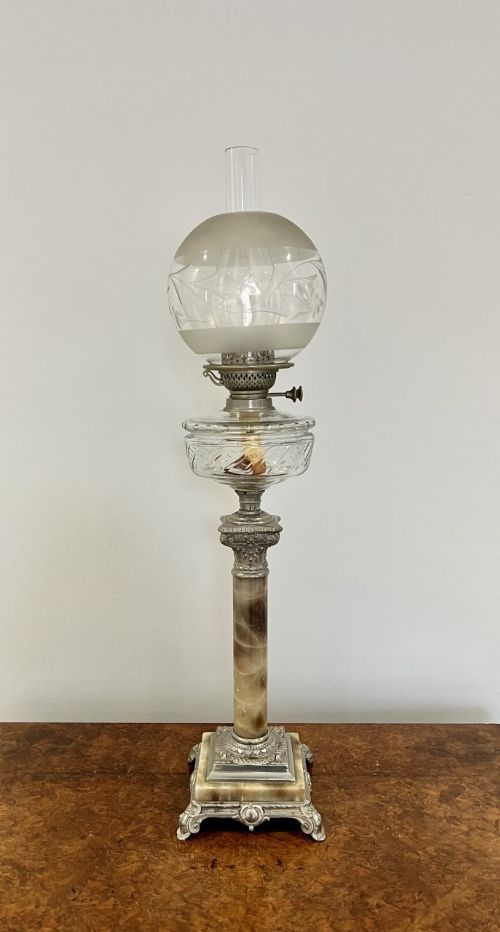
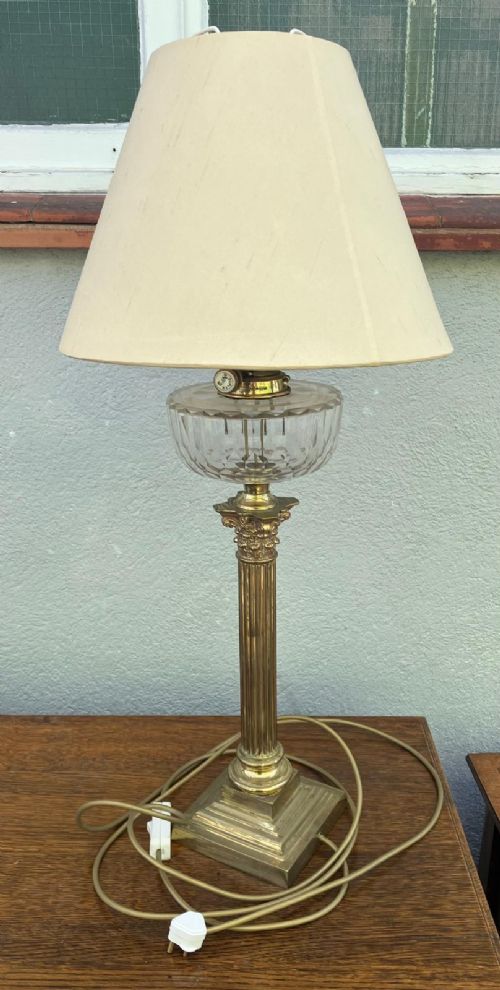
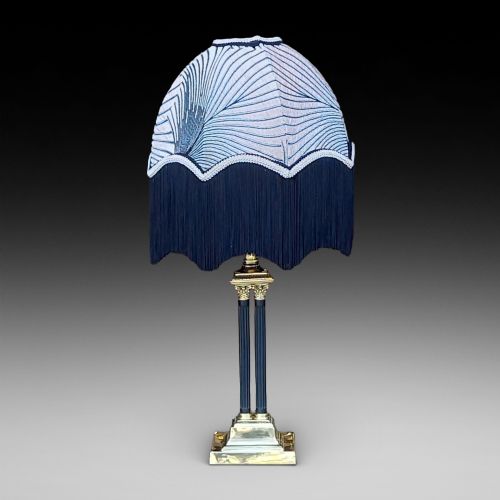
The version most commonly encountered on this page is the table lamp, frequently paired with oil fonts, glass shades, or electrical fittings. Brass and silver plated variants dominate the selection, spanning the Victorian and Edwardian eras alongside later twentieth century iterations.
Materials and Manufacture
Brass and silver plate provide the primary structural metals for these columns, often supported by weighted bases of marble or iron to ensure stability. Manufacturers utilised cast metal techniques to render the intricate acanthus leaf capitals and fluted shafts characteristic of the classical style.
Listings feature brass, silver plate, sterling silver, glass, and marble across Victorian, Edwardian, and Neoclassical periods.
Evaluating Quality
The distinction between standard production and top-tier execution rests upon the crispness of the cast acanthus leaves and the depth of the fluting on the shaft. Superior examples display sharp, hand-finished detailing on the capital rather than smoothed or softened cast edges.
Proportion and material integrity separate exceptional items from ordinary ones, particularly in the weight of the metal and the presence of maker marks. Well-executed bases, such as those featuring lion paw feet or marked silver components, indicate superior workshop origins.
Garrard & Co·Hinks and Sons·Mappin & Webb·Philippes Paris
The Corinthian Column Table Glossary
- Duplex burner
- A double-wick mechanism found on Victorian oil lamps that produced a brighter flame and required a wider glass shade.
- Neoclassical
- A style spanning the eighteenth and nineteenth centuries that revived the classical forms, symmetry, and proportions of antiquity.
- Sterling silver
- A silver alloy containing ninety-two point five percent pure silver, frequently hallmarked on quality candlesticks and lamp bases.
Corinthian Column Table: Frequently Asked Questions
How do I date a brass column lamp?
Dating relies on manufacturing methods, base construction, and associated components like burners or hallmarked collars. Victorian examples often feature heavier cast brass and specific oil mechanisms.
Later Edwardian and twentieth century versions may show modified wiring apertures or distinct plating characteristics. Examining any stamped maker marks or registry numbers provides further chronological clarity.
Were these originally oil lamps?
Many items began as oil lamps utilising glass fonts and duplex burners before later conversion to electricity. The presence of a stepped metal base or a reservoir collar typically indicates a former oil-burning function.
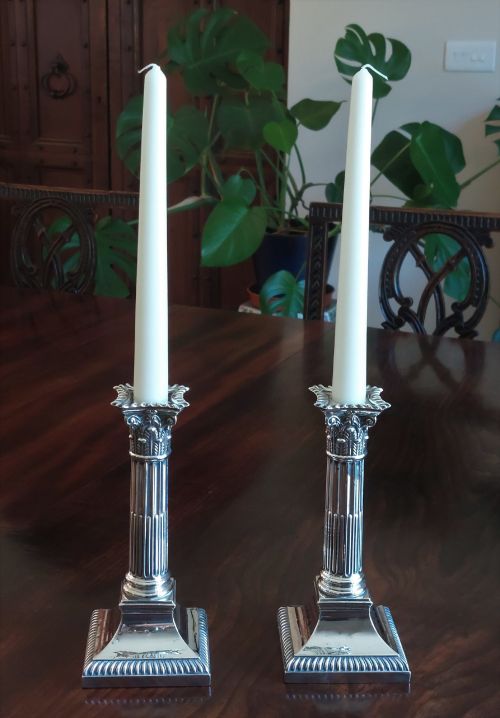
Candlesticks, by contrast, were manufactured solely for wax tapers and lack the internal fittings associated with lamps. Both forms share identical classical column architecture.
What is the difference between brass and silver plate?
Brass pieces consist of a solid copper and zinc alloy visible throughout the structure, sometimes polished to a bright finish or patinated with age. Silver plated items feature a thin layer of sterling silver fused over a base metal, usually brass or copper.
Silver plated examples offer the visual appearance of solid silver at a different weight and production cost. Makers often applied hallmarks or specific stamps to indicate the plating quality.
How should I clean a silver plated column?
Careful maintenance involves using a non-abrasive silver cloth to preserve the plated surface over the raised details of the capital. Aggressive polishing can wear away the thin silver layer, particularly on high points like the acanthus leaves.
Unlacquered brass benefits from mild metal cleaners formulated to retain the historic patina. Avoiding harsh chemical dips protects the integrity of both the metal and any weighted base inserts.